Category Archives: Soapbox

Perfect engines

We can’t build perfect engines and even if we could they would not be 100% efficient. A heat engine generates power [or does work] by absorbing heat from a source into a working fluid, often water,Image using the hot fluid to create motion, e.g. via a turbine, then discharging waste heat to a heat sink before pumping the fluid back to the heat source.  This is the operating cycle of most power stations.  The heat source might be a fossil fuel furnace, a nuclear reactor or a solar concentrator; and the heat sink is often the environment.

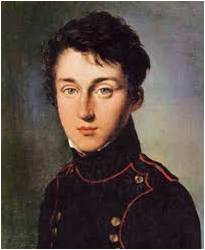
A Frenchman, Nicolas Leonard Sadi Carnot [1796-1832], deduced that the best efficiency achievable by a heat engine was given by one minus the ratio of the temperatures [in Kelvin] of its heat sink to heat source.

A perfect heat engine operating with a heat source at about 350°C [623K] and a heat sink at 20°C [293K] would have a Carnot efficiency of about 45%.  We can only hope to increase this efficiency by finding a naturally occurring very cold heat sink or by increasing the temperature of the heat source, which is why we are interested in strain measurement in very hot components (see post on ‘hot stuff’) –  we don’t want our super-efficient engines to break!

Two Earths

An enormous amount of time and money are expended on developing engineering simulations and establishing their credibility using information from experiments.  You could ask: why? After all for structural reliability we could just use more or stronger material to avoid unexpected failures.  One answer is that more or stronger material either costs more and, or weigh more.  The additional weight requires the use of more resources, including more energy for manufacturing and operation of engineering machines, structures and systems.  Engineers have a responsibility to support a shift by society to use less resources while achieving the same standard of living, because to provide the same standard of living enjoyed by the average European (North American) citizen to everyone on this planet would require the resources of two (four) more earths using our current technology*.  The latest pictures from the Curiosity Rover on Mars suggest that our nearest neighbour isn’t going to be of much use to us.

*Based on average ecological footprint of 2.5 acres per person in the developing world, 13.5 acres per person in the UK and 24 acres per person in the USA.  For more on this theme see Edward O. Wilson, ‘The Future of Life’, The 2001 John H. Chafee Memorial Lecture.

[Picture Credit: NASA Goddard Space Flight Center Image by Reto Stöckli (land surface, shallow water, clouds). Enhancements by Robert Simmon (ocean color, compositing, 3D globes, animation). Data and technical support: MODIS Land Group; MODIS Science Data Support Team; MODIS Atmosphere Group; MODIS Ocean Group Additional data: USGS EROS Data Center (topography); USGS Terrestrial Remote Sensing Flagstaff Field Center (Antarctica); Defense Meteorological Satellite Program (city lights).]

Why ‘Realize Engineering’?

Why ‘Realize Engineering’?  Well, if you look up ‘realize’ in the dictionary then one of the meanings, some way down the list, is ‘to be fully aware‘ and one of my aims in establishing this site is to make people more aware, and perhaps encourage them to become  fully aware, of some aspects of engineering.

There is much less talk about the public understanding of engineering than of science.  My intention is to make a small contribution towards correcting this imbalance.   In simple terms, engineering could be described as the application of science.  We have ‘popular science’ so why not ‘popular engineering’?  I have been working on how to engage undergraduates in principles of engineering (see EngageEngineering.org and EngineeringExamples.org), so this is natural extension.

The artwork in the header are series of paintings taken from a collection created by students at Okemos High School, Michigan as part of engineering and art collaboration in 2008.  For the complete set see: http://www.egr.msu.edu/me/artgallery/.