Category Archives: life philosophy

Achievements, happiness and the passage of time

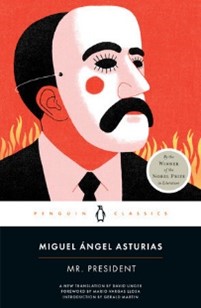
A couple of weeks ago, I wrote about time as ‘a giant wheel rotating through cycles of creation and destruction leading, over aeons, to the birth and death of entire worlds’ [see ‘Aeonian cycles of creation and destruction’ on October 18th, 2023].  I had written previously about Aristotle’s view of time as the measurement of change and how Newton believed that time passes even when nothing changes [see ‘We inhabit time as fish live in water’ on July 24th, 2019].  I recently read ‘The Wall’, a beautiful and thought-provoking, post-apocalyptic novel by Marlen Haushofer, in which the narrator states ‘Time only seemed to be passing quickly.  I think time stands quite still and I move around in it, sometimes slowly and sometimes at a furious rate.’  This aligns with the fish-in-water concept of time rather than the giant revolving wheel.  I recently had a conversation with a colleague about our perception of time as we looked back on our lives which made us feel that time has sped past whereas at the time it appeared to be passing slowly.  Perhaps our familiarity with the past, a landscape through which we have travelled, foreshortens it or is that I might have less than a thousand weeks left [see ‘One just raced past and I have only about 1000 left’ on September 8th, 2021] .  Haushofer’s narrator also says, ‘I had achieved little that I had wanted, and everything I had achieved I had ceased to want’.  In my working life, I have some empathy with this statement, particularly the second part.  I have moved through time at a furious rate, striving towards accomplishments; but now that I have most of them, they seem relatively unimportant.  They are certainly not the key to happiness which can be found anywhere through supporting and valuing others [see ‘A view from the middle’ on March 22nd, 2023] as well as in concentration so intense, for instance though reading or writing, that you lose your sense of time leading to a deep sense of happiness and well-being [see ‘You can only go there in your head’ on May 11th, 2022].  I wrote this post on a Sunday afternoon after spending a couple of hours sitting in the warm October sunshine on the campus of the University of Illinois Urbana Champaign reading ‘Mr President’ by Miguel Angel Asturias – both the reading and writing have left me in a happy state of mind.

Source:

Marlen Haushofer, The Wall, Vintage Classics/Penguin Random House, 2022.

Work, rest and play in Smallville

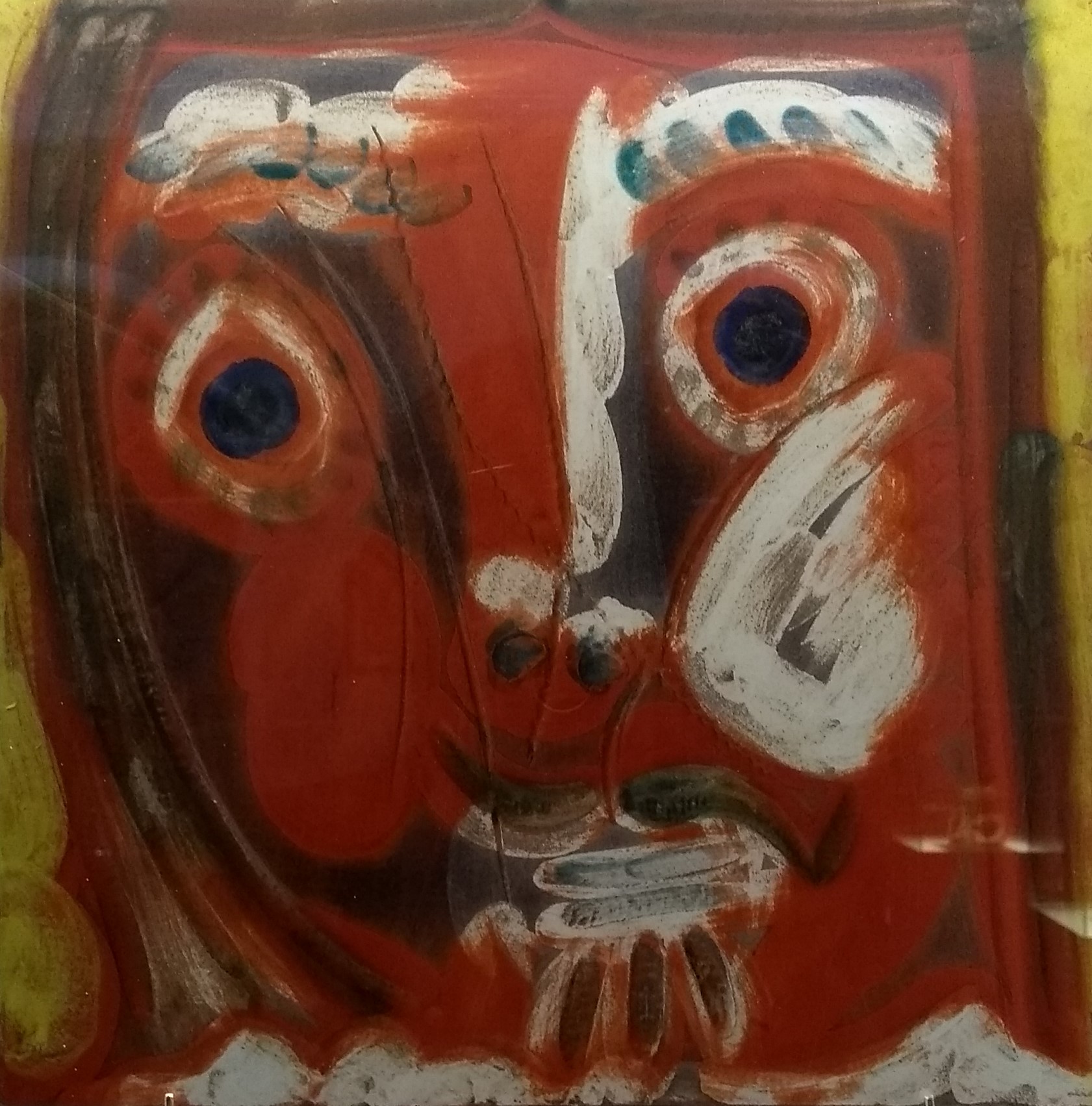
Decorative imageI am comfortable with the lack of certainty about us not being in a simulation [see ‘Are we in a simulation?‘ on September 28, 2022].  However, I know that some of you would prefer not to consider this possibility.  Unfortunately, recently published research has likely increased the probability that we are in a simulation because the researchers set up a simulation of a community of human-like agents called Smallville [Park et al, 2023].  The generative agents fuse large language models used in artificial intelligence with computational, interactive agents who eat, sleep, work and play just like humans and coalesce into social groups.  The simulation was created as a research tool for studying human interactions and emergent social behaviour which completely concurs with the argument for us already being part of a simulation created to study social behaviour.  Smallville only had 25 virtual inhabitants but the speed of advances in artificial intelligence and computational tools perhaps implies that a simulation of billions of agents (people) is not as far in the future as we once thought thus making it more credible that we are in a simulation.  The emergent social behaviour observed in Smallville suggests that our society is essentially a self-organising complex system that cannot be micro-managed from the centre.

Sources:

Oliver Roeder, Keeping up with the ChatGPT neighbours, FT Weekend, August 26/27 2023.

Camilla Cavendish, Charities could lead new age of community spirit, FT Weekend, August 26/27 2023.

Park JS, O’Brien JC, Cai CJ, Morris MR, Liang P, Bernstein MS. Generative agents: Interactive simulacra of human behavior. arXiv preprint arXiv:2304.03442. 2023.

Image: Ceramic tile by Pablo Picasso in museum in Port de Sóller Railway Station, Mallorca.


Napping, releasing the soul and brain maintenance

Decorative photograph of painting: The Punishment of Lust.I read recently about the renovation of a small Parisian flat into a single office for the writer, Simon Kuper (How I made my perfect office).  The furniture included a sofa by the window for his post-lunch 15-minute nap (20 minutes on a bad day).  There was a brief period when I regularly had a nap in my office in the middle of day.  Now, I regularly nap at the weekend in the afternoon, or a weekday in the early evening after dinner.  Research has found short daytime naps improve cognitive performance (Lovato & Lin, 2010) and may help to preserve brain health by slowing the rate at which the brain shrinks with age (Paz et al, 2023).  So, short naps are probably good for you, though longer naps have been associated with reductions in cognition, the ability to think and form memories (Li et al, 2016) as well as increased blood pressure (Vizmanos et al, 2023).  In his outstanding novel, ‘The Salt of the Earth‘, Jozef Wittlin describes sleep as releasing or giving freedom to the soul.  Perhaps it is the wandering of the soul that we sometime recall as dreams.  On a more sinister note, sleep is described as practice for death by Ernesto Sabato in his novel, ‘On Heroes and Tombs‘, when presumably our soul is released forever to drift to Nirvana as in Giovanni Segantini’s painting ‘The punishment of lust’ in which the souls of neglectful mothers are shown floating towards the mountains representing Nirvana, a Buddhist heaven.  In the light of the inevitability of death, I quite like the idea that we can practice for it; however, I prefer to think of naps preserving my aging brain and improving my cognition.

Image: photograph of ‘The punishment of lust’ by Giovanni Segantini in the Walker Gallery, Liverpool.

Busman’s holiday

Decorative image of fountain and palm treeA couple of weeks ago, I travelled to my first international conference following the pandemic lockdowns.  It was stimulating to hear presentations from well-established researchers who I had not seen in person for four or five years and to meet new researchers who had joined our community since 2019.  It was exciting to present our own research to an international audience for the first time and get instant feedback on it.  Of course, it helped that we met in Orlando, Florida.  If a change is as good as a rest then I had a four day rest from my usual work routines.  You could call it a holiday in the sense that a holiday is a day of festivity during which we celebrate in a joyful or exuberant way, according to the dictionary, and I felt we joyfully celebrated our research.  I gave three presentations on our work on low-cost, real-time crack monitoring described in ‘Seeing small changes is a big achievement’ on October 26th, 2022; on additive manufacture of reinforced flat plates (see ‘On flatness and roughness’ on January 19th, 2022); and on a further development of the research described in ‘Less certain predictions’ on August 2nd 2017.  Listening to other speakers caused my own thoughts to wander and I found myself using my phone as a mental prosthetic or expert system [see ‘Thinking out of the skull’ on March 18th, 2015] to provide me with information about definitions, to remind me about previous research, both ours and other people’s, as well as to refresh my memory on previous ideas via this blog [see ‘Amplified intelligence’ on January 4th, 2023].  Susan Greenfield, feared that such devices and activity might lead to formation of smaller neuronal assemblies in the brain and consequential loss of creativity [see ‘Digital hive mind’ on November 30th 2016]; instead, I found myself making faster connections and creating new ideas for future research.  However, I recorded them, as Leonardo di Vinci would have done – in my notebook!  My excuse is that my phone was too busy being an expert system and writing my notes by hand allowed my brain to connect the fragments of ideas and thoughts into some sort of coherency [see ‘Space between the words’ on July 6th, 2022].  Besides writing four posts for this blog in as many days, I have a list of new ideas to accelerate existing projects and start new ones.  So, whilst post-pandemic I will not be returning to business as usual in terms of international travel, a small number of infrequent trips would appear to be worthwhile, especially if our research helps move our economies towards their zero emissions targets.

Image: photograph from entrance to conference hotel.