Category Archives: Learning & Teaching

Pluralistic ignorance

This semester I am teaching an introductory course in Thermodynamics to undergraduate students using a blended learning approach [see ‘Blended learning environments‘ on November 14th, 2018].  The blend includes formal lectures, example classes, homework assignments, assessed coursework questions and an on-line course, which I delivered as a MOOC a couple of years ago [see ‘Engaging learners on-line‘ on May 25th, 2016].  It is not unusual in a large class, nearly two hundred students this year, that no one asks questions during the lecture; although, at the end of each lecture and example class, a small group of students with questions always forms.  The on-line course has extensive opportunities for asking questions and discussing issues with the instructor and fellow learners.  These opportunities  were used heavily when the course was offered as a MOOC  with 6600 comments posted or 1 every 7.7 minutes!  However, this year the undergraduates have not made any on-line comments and it was a similar situation last year.  Is this a case of pluralistic ignorance?  The term was coined by psychologists Daniel Katz and Floyd Henry Allport in 1931 to describe students who pretend to understand everything explained in class and don’t ask any questions because they believe everyone else in the class has understood everything and they don’t want to damage their reputation with their peers.  Perhaps we have all done it and been very grateful when someone has asked the question that we wanted to ask but did not dare.  Would be it ethical to pretend to be a student and post questions on-line that I know from the MOOC they are likely to want to ask?

Sources:

Patterson EA, Using everyday engineering examples to engage learners on a massive open online course, IJ Mechanical Engineering Education, in press.

Katz D & Allport FH, Students’ attitude, Syracuse, NY: Craftsmann, 1931.

Origgi G, Reputation: what it is and why it matters, Princeton, NJ: Princeton University Press, 2018.

Image: Author speaking at National Tsing Hua University, Taiwan

Is there a real ‘you’ or ‘I’?

I have written recently about time and consciousness [see ‘Time at the heart of our problems‘ on January 30th, 2019 and ‘Limits of imagination‘ on February 13th, 2019].  We perceive some things as almost constant or changeless, such as trees and landscapes; however, that is just a consequence of our perception of time.  Nothing that is in equilibrium, and hence unchanging, can be alive.  The laws of thermodynamics tell us that disequilibrium is fundamental in driving all processes including life.  Our perception of experience arises from registering changes in the flow of sensory information to our brains and as well as changes in the networks of neurons in our brains.  Hence, both time and complexity appear to be essential ingredients for consciousness. Even when we sit motionless watching an apparently unchanging scene, as a consequence of the endless motion of connections and signals in our brains, our minds are teeming with activity, churning through great jumbles of ideas, memories and thoughts.  Next time you are sitting quietly, try to find ‘you’; not the things that you do or experience but the elusive ‘I’.  We assume that the elusive ‘I’ is there, but most of us find nothing when we look for it.  Julian Baggini has suggested that the “I” is ‘a nothing, contentless centre around which experiences flutter like butterflies.’

Sources:

Baggini J, The pig that wants to be eaten and 99 other thought experiments, London: Granta Publications, 2008.

Czerski H, Storm in a teacup:the physics of everyday life, London: Penguin Random House, 2016.

Godfrey-Smith P, Other minds: the octopus and the evolution of intelligent life, London: William Collins, 2018.

Rovelli C, Seven brief lessons on physics, London, Penguin Books. 2016.

Limits of imagination

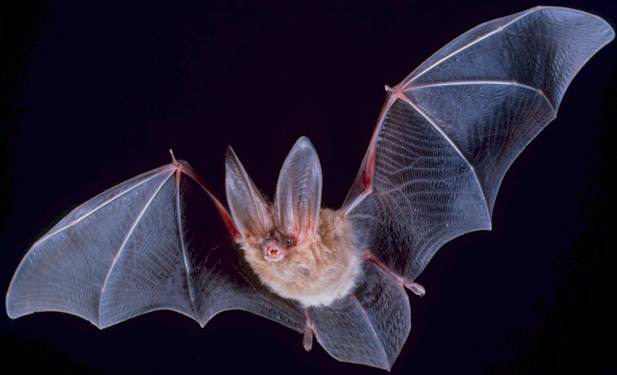
What’s it like being a bat?  ‘Seeing’ the world through your ears, or at least a sophisticated echo-location system. Or, what’s it like being an octopus?  With eight semi-autonomous arms that I wrote about a couple of weeks ago [see ‘Intelligent aliens?’ on January 16th, 2019]. For most of us, it’s unimaginable. Perhaps, because we are not bats or octopuses, but that seems to be dodging the issue.  Is it a consequence of our education and how we have been taught to think about science?  Most scientists have been taught to express their knowledge from a third person perspective that omits the personal point of view, i.e. our experience of science.  The philosopher, Julian Baggini has questioned the reason for this mode of expression: is it that we haven’t devised a framework for understanding the world scientifically that captures the first and third person points of view; is it that the mind will always elude scientific explanation; or is that the mind simply isn’t part of the physical world?

Our minds have as many neurons as there are stars in the galaxy, i.e. about a hundred billion, which is sufficient to create complex processes within us that we are never likely to understand or predict.  In this context, Carlo Rovelli has suggested that the ideas and images that we have of ourselves are much cruder and sketchier than the detailed complexity of what is happening within us.  So, if we struggle to describe our own consciousness, then perhaps it is not surprising that we cannot express what it is like to be a bat or an octopus.  Instead we resort to third person descriptions and justify it as being in the interests of objectivity.  But, does your imagination stretch to how much greater our understanding would be if we did know what is like to be a bat or an octopus?  And, how that might change our attitude to the ecosystem?

BTW:  I would answer yes, yes and maybe to Baggini’s three questions, although I remain open-minded on all of them.

Sources:

Baggini J, The pig that wants to be eaten and 99 other thought experiments, London: Granta Publications, 2008.

Rovelli C, Seven brief lessons on physics, London, Penguin Books. 2016.

Image: https://www.nps.gov/chis/learn/nature/townsends-bats.htm

Time at the heart of our problems

This week I started teaching thermodynamics to first year undergraduate students for the first time in twelve months.  I have had a break for a year because my course, which is only delivered once per year, was moved from first to second semester.  Although I have continued to teach postgraduate courses, it’s been like a sabbatical enforced by timetable changes.  Sadly, it’s over and I am back in the large lecture theatre in front of a couple of hundred of students – that makes it sound as if I don’t enjoy it which is not true but it does increase the intensity of the job because all of the other aspects of the role continue unabated.  So, for me time appears to accelerate as I attempt to jam more activities into a week.

Time lies at the heart of much of thermodynamics although we tend not to deal with it explicitly; however, it is implicit in our use of changes in the state of a system to understand it.  Quote Anaximander, the pre-Socratic philosopher & pupil of Thales of Miletus: ‘We understand the world by studying change, not by studying things’.  Time also lies at the centre of the tangle of problems found at the intersection of the theories of gravity, quantum mechanics and thermodynamics.  As Carlo Rovelli has remarked we are still in the dark about this tangle of problems; so, I will touch on it in my thermodynamics course but just to show students the limits of our knowledge and perhaps inspire one or two of them to think about tackling them in postgraduate studies.

Meanwhile, I plan tackle my challenges with time by slowing it down once a week with a walk in the Clwydian Hills where the landscape appears unchanging so that time stands still allowing me to relax.

Sources:

Rovelli C, Seven brief lessons on physics, London, Penguin Books. 2016.

Wohllerben P, The hidden life of trees, London, William Collins, 2017.