Author Archives: Eann Patterson

Knowledge explosions

Photo credit: Tom

When the next cohort of undergraduate students were born, Wikipedia had only just been founded [January 2001] and Google had been in existence for just over a decade [since 1998].  In their lifetime, the number of articles on Wikipedia has grown to nearly 6 million in the English language, which is equivalent to 2,500 print volumes of the Encyclopedia Britannica, and counting all language editions there are 48 million articles.  When Leonardo Da Vinci was born in 1452, Johan Gutenberg had just published his first Bible using moveable type.  By the time Leonardo Da Vinci was 20 years old, about 15 million books had been printed which was more than all of the scribes in Europe had produced in the previous 1500 years.  Are these comparable explosions in the availability of knowledge?  The proportion of the global population that is literate has changed dramatically from about 2%, when Leonardo was alive, to over 80% today which probably makes the arrival of the internet, Wikipedia and other online knowledge bases much more significant than the invention of the printing press.

Today what matters is not what you know but what you can do with the knowledge because access to the internet via your smart phone has made memorisation redundant.

Pluralistic ignorance

This semester I am teaching an introductory course in Thermodynamics to undergraduate students using a blended learning approach [see ‘Blended learning environments‘ on November 14th, 2018].  The blend includes formal lectures, example classes, homework assignments, assessed coursework questions and an on-line course, which I delivered as a MOOC a couple of years ago [see ‘Engaging learners on-line‘ on May 25th, 2016].  It is not unusual in a large class, nearly two hundred students this year, that no one asks questions during the lecture; although, at the end of each lecture and example class, a small group of students with questions always forms.  The on-line course has extensive opportunities for asking questions and discussing issues with the instructor and fellow learners.  These opportunities  were used heavily when the course was offered as a MOOC  with 6600 comments posted or 1 every 7.7 minutes!  However, this year the undergraduates have not made any on-line comments and it was a similar situation last year.  Is this a case of pluralistic ignorance?  The term was coined by psychologists Daniel Katz and Floyd Henry Allport in 1931 to describe students who pretend to understand everything explained in class and don’t ask any questions because they believe everyone else in the class has understood everything and they don’t want to damage their reputation with their peers.  Perhaps we have all done it and been very grateful when someone has asked the question that we wanted to ask but did not dare.  Would be it ethical to pretend to be a student and post questions on-line that I know from the MOOC they are likely to want to ask?

Sources:

Patterson EA, Using everyday engineering examples to engage learners on a massive open online course, IJ Mechanical Engineering Education, in press.

Katz D & Allport FH, Students’ attitude, Syracuse, NY: Craftsmann, 1931.

Origgi G, Reputation: what it is and why it matters, Princeton, NJ: Princeton University Press, 2018.

Image: Author speaking at National Tsing Hua University, Taiwan

Eternal non-existence

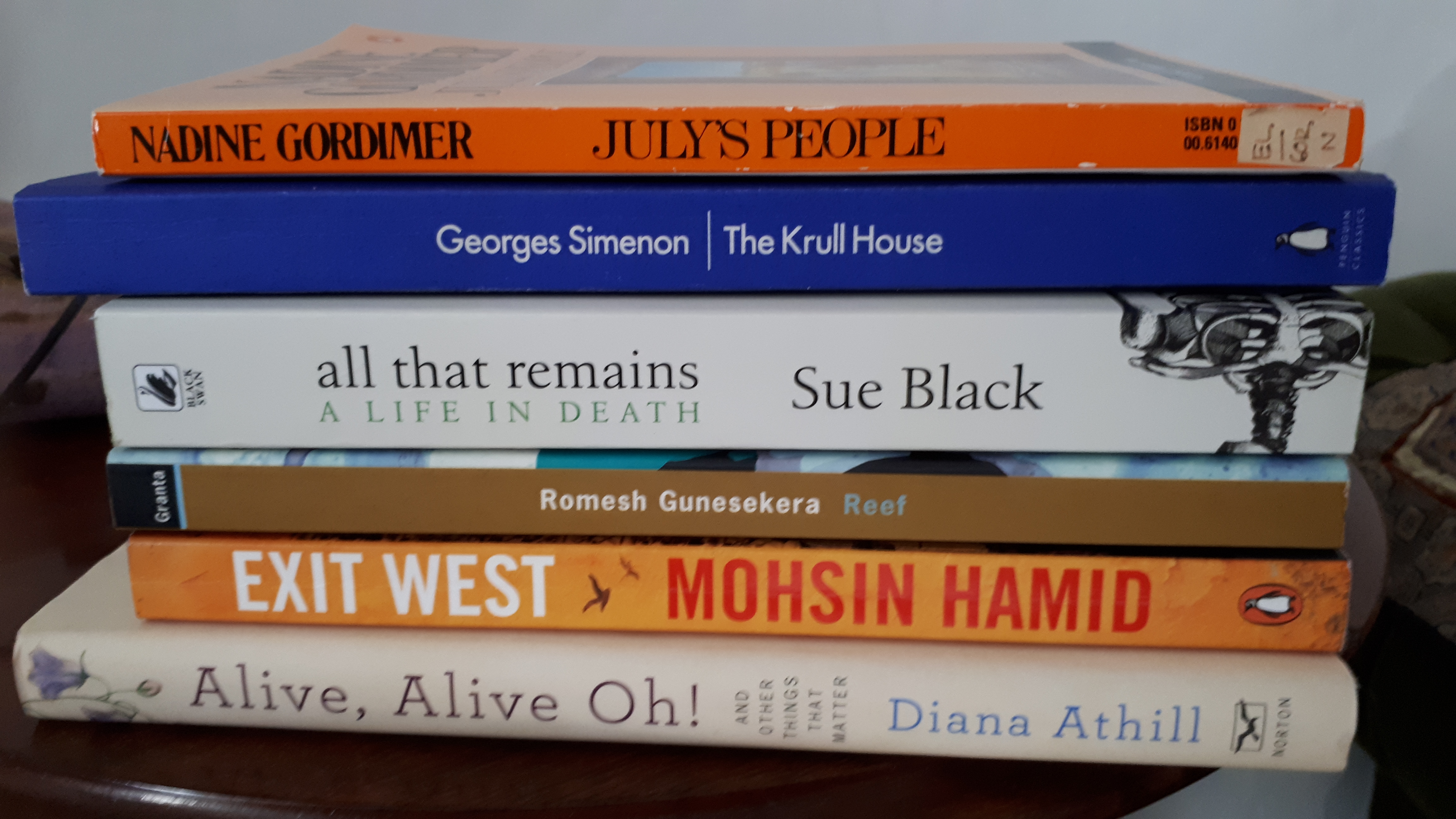
I was on holiday last week in the Lake District.  The weather was beautiful all week and we spent every day walking the hills around the Duddon Valley before sampling a different real ale each evening in the Manor Arms in Broughton-in-Furness.  I also found time to read a small pile of books in which a recurring theme seemed to be death, perhaps because I was sensitised to it by the most substantial book on the pile: ‘All that remains: a life in death‘ by Sue Black, who is a leading professor of anatomy and forensic anthropology. In her brilliant memoir, she identifies three stages: dying, death and being dead.  She worries most about the first stage, dying, which in common with most people, she would like to skip through as quickly as possible.  However, she is intrigued by the threshold that separates dying from being dead and would like to experience it when the time comes; although that sounds like professional curiosity to me and I would be happy to skip through that too.  As she points out, those fears that we might have about the third stage, being dead, depend on our belief in what happens to us after death.  Not many people write books at the age 99, so I was curious to read a collection of essays by Diana Athill who was born in 1917 and published ‘Alive, Alive Oh!‘ in 2016.  The final essay is entitled ‘Dead right’ and is about her recollection of a contribution to a discussion on a television programme about death made by the photographer, Rankin.  The contributor said ‘that not existing for thousands and thousands of years before his birth had never worried him for a moment, so why should going back into non-existence at his death cause him dismay?’.

Hands-in-pockets

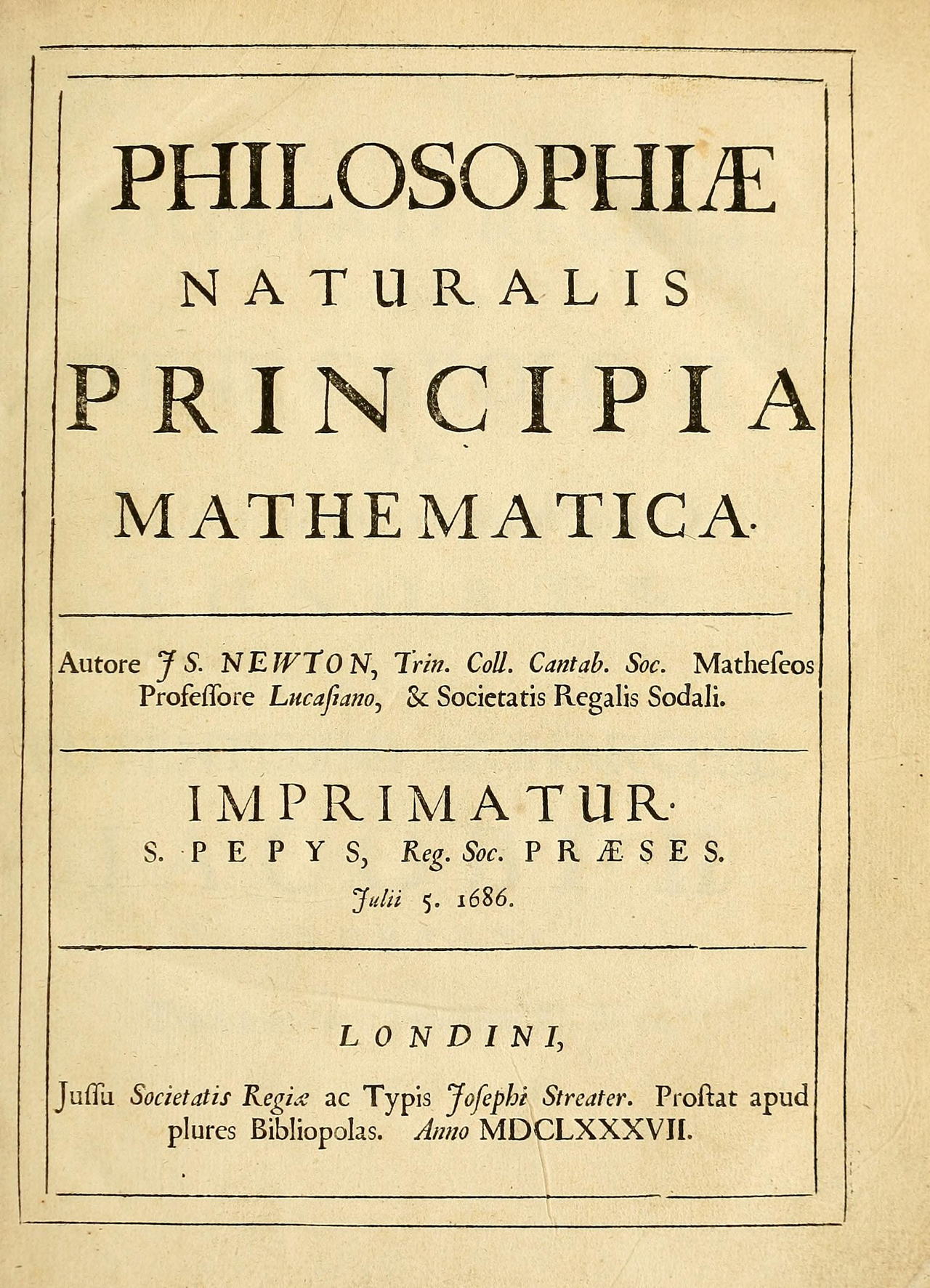
I often have the opportunity to take a ‘hands-in-pockets’ tour of a laboratory or facility during the course of visits to world-class research institutions.  ‘Hands-in-pockets’ means that you can look must but you must not touch anything or take photographs.  Some of these tours are more exciting than others; one very fast computer looks very much like another and one very expensive microscope looks very much like another.  However, a couple of weeks ago, we visited the library of Christ Church Oxford for five minutes and there, to my amazement and delight, lying almost casually on a table were first editions of two of the books that form the foundation of modern science.  Isaac Newton’s ‘Philosophiae Naturalis Principia Mathematica’ published in 1687 and Darwin’s ‘On the Origin of the Species’ published in 1859.  Now, we understood why the librarian had been reluctant to let us take a peek.  My hands stayed firmly in my pockets but the temptation to turn the page of the Origin of Species, which was open, or to open Newton’s great work was huge.  Instead, we walked slowly around the room, which besides us and a skeleton of a horse was empty, soaking up the atmosphere.  We left quietly, thanking the librarian at the bottom of the stairs for letting us take a peek.  I didn’t discover why they have a skeleton of horse in the library with their great collection of books – I didn’t feel I could ask the librarian as we left!