Author Archives: Eann Patterson

Happenstance, not engineering?

okemos-art-2extract

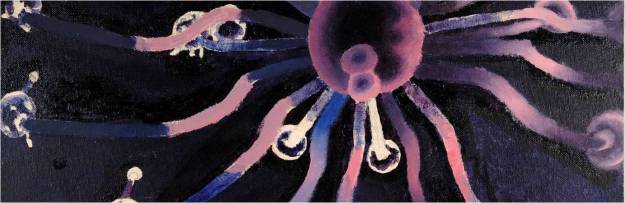
A few weeks ago I wrote that ‘engineering is all about ingenuity‘ [post on September 14th, 2016] and pointed out that while some engineers are involved in designing, manufacturing and maintaining engines, most of us are not.  So, besides being ingenious, what do the rest of us do?  Well, most of us contribute in some way to the conception, building and sustaining of networks.  Communication networks, food supply networks, power networks, transport networks, networks of coastal defences, networks of oil rigs, refineries and service stations, or networks of mines, smelting works and factories that make everything from bicycles to xylophones.  The list is endless in our highly networked society.  A network is a group of interconnected things or people.  And, engineers are responsible for all of the nodes in our networks of things and for just about all the connections in our networks of both things and people.

Engineers have been constructing networks by building nodes and connecting them for thousands of years, for instance the ancient Mesopotamians were building aqueducts to connect their towns with distance water supplies more than four millenia ago.

Engineered networks are so ubiquitous that no one notices them until something goes wrong, which means engineers tend to get blamed more than praised.  But apparently that is the fault of the ultimate network: the human brain.  Recent research has shown that blame and praise are assigned by different mechanisms in the brain and that blame can be assigned by every location in the brain responsible for emotion whereas praise comes only from a single location responsible for logical thought.  So, we blame more frequently than we praise and we tend to assume that bad things are deliberate while good things are happenstance.  So reliable networks are happenstance rather than good engineering in the eyes of most people!

Sources:

Ngo L, Kelly M, Coutlee CG, Carter RM , Sinnott-Armstrong W & Huettel SA, Two distinct moral mechanisms for ascribing and denying intentionality, Scientific Reports, 5:17390, 2015.

Bruek H, Human brains are wired to blame rather than to praise, Fortune, December 4th 2015.


Will it all be over soon?

milkywayNASAAs you may have gathered from last week’s post [Man, the Rubbish-Maker on October 26th, 2016], I have been reading Italo Calvino’s Complete Cosmicomics.  In one story, ‘World Memory’ the director of a project to document the entire world memory in the ‘expectation of the imminent disappearance of life on Earth’ is explaining to his successor that ‘we have all been aware for some time that the Sun is halfway through its lifespan: however well things went, in four or five billion years everything would be over’.  The latter is one of the scientific conclusions around which Calvino weaves these short stories and this one put into perspective the concerns expressed by some of my students on both my undergraduate course and MOOC in thermodynamics the prospect of a cosmic heat death resulting from the inevitable consequences of the second law of thermodynamics [see my post ‘Cosmic Heat Death‘ on February 18th, 2015].  The second law requires ‘entropy of the universe to increase in all spontaneous processes’.   Entropy was defined by Rudolf Clausius about 160 years ago as the heat dissipated in a process divided by the temperature of the process.  The dissipated heat flows into random motion of molecules from which it is never recovered.  So, as William Thomson observed, this must eventually create a universe of uniform temperature – an equilibrium state corresponding to maximum entropy where nothing happens and life cannot exist.   Entropy has been increasing since the Big Bang about 13.5 billion years ago.  And as Calvino writes, the sun is about halfway through its life – it is expected to collapse into a white dwarf in 4 to 5 billion years when its supply of hydrogen runs out.  These are enormous timescales: the first human cultures appeared about 70,000 years ago [see my post ‘And then we discovered thermodynamics‘ on February 3rd, 2016]  and history would suggest that our civilization will disappear long before the sun expires or cosmic heat death occurs.  A more immediate existential threat is that our local production of entropy on Earth destroys the delicate balance of conditions that allows us to thrive on Earth.  See my post on Free Riders on April 6th, 2016 for thoughts on avoiding this threat.

Sources:

Italo Calvino, The Complete Cosmicomics, London: Penguin Books, 2002.


Man, the Rubbish Maker

167-6734_IMGBruce Sterling wrote that our current civilisation would be best described as ‘Man, the Rubbish Maker’ if we were to be judged by our efforts that will best survive the passage of time.  Paleontologists have found flint-knapping workshops more than two million years old that have out-lasted any record of the speech, culture or beliefs of the craftsmen that laboured in them.  Pollution and waste is not consumed and hence tends to persist while useful things wear out.  In a short story called ‘Daughters of the Moon’ published in 1968 as part of his third collection of Cosmicomics, Italo Calvino describes a world in which cars wear out more quickly than the soles of your shoes.  He goes on to describe a region where the road petered out in a hilly area created by ‘the layers of things that had been thrown away: everything that the consumerist city expelled once it had quickly used it up so it could immediately enjoy the pleasure of handling new things’.  Calvino was imagining a future world but we are rapidly approaching his vision, or perhaps we are already there.  Our junk, rubbish, and trash, is a form of entropy – an increase in the level of disorder created by the processes that provide our man-made lifestyle and required as a consequence of the second law of thermodynamics [see my post ‘Unavoidable junk‘ published on January 14th, 2013].  And ‘entropy requires no maintenance’, to quote Sterling, so much of our rubbish will still be here long after we have disappeared.

If we want to avoid Calvino’s vision of cities surrounded by layers of discarded things, then we have to learn to love old but serviceable belongings.  They are good enough and will suffice.  If they break then we should have them repaired, preferably locally in order to stimulate our economy and reduce our ecological footprint rather than replacing them with something made abroad.  This will require engineers to think more about repairs when designing artefacts and consumers to learn to appreciate the patina of age and usage as a virtue, something of beauty.

Sources:

Bruce Sterling, Shaping Things, Boston: MIT Press, 2005.

Italo Calvino, The Complete Cosmicomics, London: Penguin Books, 2002.

Edwin Heathcote, Make and Mend, Financial Times, 30/31 March, 2013.

Cognition is beautiful

wp_20150725_031Today is the mid-point of the MOOC on Energy: Thermodynamics in Everyday Life that I am delivering both for our first-year undergraduate students at the University of Liverpool and anyone anywhere in the world who wants to sign up for free.  Not surprisingly, some MOOC learners have been struggling with some of the topics, which include statistical thermodynamics and require some elementary calculus.  A few learners have complained and implied that I should not be attempting to cover such challenging material, to which I have responded that my aim is to educate not to entertain.  Many more learners have made counter-comments that can be summarised by the words of writer and theologian, John Hull in his Notes on Blindness: ‘Cognition is beautiful.  It is beautiful to know.’

I think that these words hold true at many levels, from a child realizing how to match shaped pegs to shaped holes, a student acquiring knowledge and understanding in an engineering science course to a professor discovering new knowledge and understanding in a research programme.  For many of us, the beauty of cognition, often associated with a moment of dawning realisation, is the reward for the effort required to truly understand.

Source: I read about John Hull’s audio diary in ‘Rain: four walks in English weather‘ by Melissa Harrison published by Faber and Faber, London, 2016.