Tag Archives: sustainability

Conflict Resolution

conflict pyramidEngineers need to be experts in resolving conflicts…

Every man-made device that moves required energy to make it and uses energy when it moves. Heavier devices have greater inertia than small ones and hence more energy is needed to set them in motion – think about peddling an old-fashioned steel-framed bike compared to a modern alloy one. So, designing for sustainability requires engineers to minimise the quantity of raw materials and energy used to manufacture a device AND to minimize its weight if the device moves as part of its function.

Now, here comes the conflict.

Sustainability also implies that devices should have a long, maintenance-free service life so that resources used in maintenance and replacement are minimized. Service life is usually limited by fatigue and, or wear and the probability of these failure mechanisms occurring can be reduced by lowering stress levels. However, stress is inversely proportional to cross-section area and so can be reduced by adding material, i.e. increasing the mass of the device which will also increase its inertia, or resistance to motion. The probability of failure can be reduced by using stronger, more sophisticated materials that are lightweight and almost always more expensive, e.g. composites. Customers also want performance and additional expense might be acceptable if it is accompanied by additional performance – some people will pay for a carbon-fibre frame for their bicycle. Elegant engineering design requires resolution of the conflict between cost, safety and reliability, performance and sustainability.

This is why engineers are trained in conflict resolution or as it is more commonly known: problem-solving.
Are electric cars back?

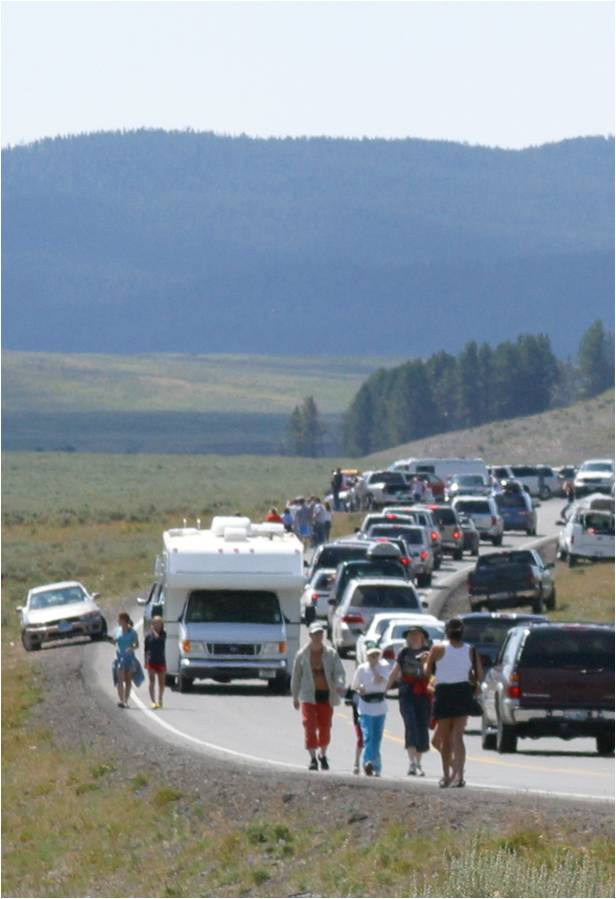
roadchaosDid you know that before Henry Ford developed the Model T Ford motorcar, the nearly 40% of automobiles on US roads were electric vehicles? I think we will be heading back in this direction if we are to have any hope of achieving reductions in carbon dioxide emissions. The implications for the national electricity grid of a major shift to plug-in cars would be very serious and has been the subject of several recent studies including a third year undergraduate dissertation that I have been supervising and from which came the opening factoid.

It is relatively easy, through not without obstacles, to envision a shift to all-electric cars; after all there are several models on the market now. However, an all-electric aircraft seems further in the future, if only because of the weight of the batteries required. Engineers would talk about the energy density, i.e. the amount of energy that can be extracted from a kilogram of kerosene compared to a kilogram battery. However, perhaps the future is not far away because the New Scientist reported earlier in the month [3rd May, 2014] that Airbus had completed the test flight of an electric plane, the E-fan. It is a two-seater plane with a pair of 65 kilogram lithium battery packs driving a pair of 30 kilowatt motors attached to the fans. The E-fan will cruise at 185 kilometres per hour and flies for an hour. Relative to a modern computer jet, this performance is similar to the early plug-in cars relative to their internal-combustion-engined rivals. But, it is an indication of bigger things to come. In the meantime, if you want an E-fan then a new division of Airbus called Voltair will be producing them by 2017.

I mentioned undergraduate dissertations because they have filled a sizeable chunk of my waking hours for a few weeks. This is an annual ritual in the UK during May when final-year undergraduate students are busy submitting and defending their dissertations. I had a pile of twelve dissertations to read and assess. Eight of them belonged to students that I have supervising in weekly one-to-one meetings since last October and the remainder were dissertations for which I was the assessor. All of the students that I supervised were studying either Mechanical or Aerospace Engineering and so the topics of their projects were associated mainly with energy and, or transportation. Some of these projects are provided by engineering companies (those with an asterisk in the list below), which guarantees their topicality and relevance, while others spin-out from my interests and research activities. So many of the topics in the list below will come as no surprise to regular readers of this blog.

Dissertation projects supervised during 2013-14:

Investigation into a redesign of graphite re-entrant seals for a nuclear power station*

Conceptual design for a carbon sequestration system for automobiles

Recommendations for achieving a low carbon airline industry

Strain-based defect analysis of industrial pipe-work*

Investigation of random frequency excitation of an aerospace body panel

Assessment of preload control of threaded fasteners in motorcycle production*

Recommendations for technology-based approaches to reduced ecological footprints

Investigation of low carbon power for plug-in electric vehicles

Lost at sea

leaving usa

Loading our shipping container to leave USA

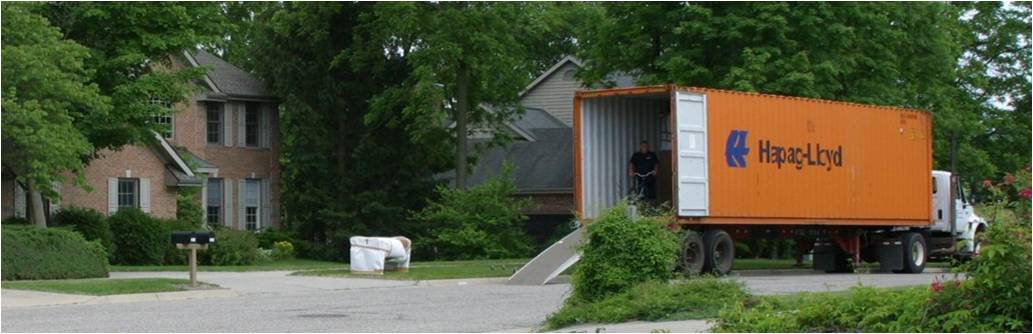
Our inability to find flight MH370 was still very prominent in the national media when I was in China last month.  The search for the aircraft and the false alarms caused by floating rubbish at sea has raised awareness about the amount of junk floating around our oceans, for instance 10,000 shipping containers are lost at sea every year,  or more than 1 every hour.  However, there are about 17 million containers in the world, so we only lose about 0.05% per annum which is a negligible amount unless its the one containing all your household goods as you move continents!

I was interested to find a high level of environmental awareness in China.  Alongside the reports on the search for flight MH370 the China Daily had a centre-page spread on Thursday 24th April, 2014 about ‘How pollution affects marine life’ with a focus on the garbage patches in the Pacific and North Atlantic oceans.  The North Atlantic Garbage Patch is more than 100 kilometres in diameter with about 200,000 pieces of debris per square kilometre trapped in the gyre. These are big numbers and if you break it down to small areas then it is one piece of debris per five square metres, which a box 2.24 x 2.24m or 7 x 7 ft.  This doesn’t sound so bad until you consider the impact on wildlife, for instance 86% of all sea turtles are affected by entanglement or ingestion of marine debris and an autopsy on a sperm whale found dead in Spanish waters concluded that the cause of death was ingestion of 24 meters of plastic.  About 300 million tonnes of plastic are produced globally per year of which it is estimated about 6 million tonnes (2%) ends up in the oceans, with 80% being washed into the sea from rivers or blown by the wind from rubbish dumps.

The second law of thermodynamics [see my post on June 5th, 2013 on Impossible Perfection] limits the efficiency of all processes with the result that engineers are used to not worrying about losses of 10% or less so that the losses to the ocean of 0.05% and 2% mentioned above would be considered negligible but the enormous scale of human processes mean that the losses are having a significant impact on the fauna of the planet.  Engineers need to lead society towards a more harmonious and protective relationship with the rest of the planet.

Source: http://www.billiebox.co.uk/facts-about-shipping-containers/

Knowledge-economy

bigagSmall landholding farmers often have a wealth of local knowledge about their landscape and crop varieties that allows them to deliver food to the mouths of local customers more efficiently than industrial agriculture [see my post entitled ‘Productive Cheating on November 25th, 2013].  This has been termed ‘knowledge-based agriculture’ as opposed to the ‘energy-based agriculture’ used by agri-business with its dependence on fossil fuels and chemical fertilizers, which are also fossil fuel based.  Mark Bittman [in the New York Times on October 15th, 2013] argues it is easier to achieve sustainable food production using a knowledge-based rather than an energy-based approach.

The same is true of engineering design for sustainability.  Engineers need to exploit their creativity and knowledge to generate elegant designs with minimal ecological footprints, i.e. designs need to be knowledge-based or intensive rather than energy-intensive.

Politicians are fond of extolling the virtue of having a knowledge-based economy. I am not sure many of them would articulate it in terms of knowledge-based agriculture or engineering, as I have above, but it is probably the best available route to a sustainable society.

Happy New Year to all my readers and followers.

Source: http://www.nytimes.com/2013/10/15/opinion/how-to-feed-the-world.html?ref=markbittman&_r=0