Tag Archives: fossil fuel

Productive cheating?

I cut out a Dilbert cartoon from the New York Times a few weeks ago that I found amusing and shared it with my new Head of School.  Dilbert informs his boss that he will be taking advantage of the new unlimited vacation policy by being away for 200 days in the coming year but will still double his productivity.  His boss replies that there is no way to measure productivity for engineers.

Of course, bosses are very interested in measuring productivity and marketing executives like to brag about the productivity or efficiency of whatever it is they are selling.  Engineers know that it is easy to cheat on measures of productivity and efficiency, for instance, by carefully drawing the boundaries of the system to exclude some inputs or some wasteful outputs [see my post on ‘Drawing Boundaries’ on December 19th, 2012 ].  So claims of productivity or efficiency that sound too good to be true probably aren’t what they seem.

Also in the New York Times [on October 15th, 2013] Mark Bittman discussed the productivity of the two food production systems found in the world, i.e. industrial agriculture and one based on small landholders, what the ETC group refers to as peasant food webs.  He reports that the industrial food chain uses 70% of agricultural resources to provide 30% of the world’s food while peasant farming produces the remaining 70% with 30% of the resources.  The issue is not that industrial agriculture’s claims for productivity in terms of yields per acre are wrong but that the industry measures the wrong quantity.  Efficiency is defined as desired output divided by required input [see my post entitled ‘National efficiency‘ on May 29th, 2013].  In this case the required output is people fed not crop yield and a huge percentage of the yield from industrial agriculture never makes to people’s mouths [see my post entitled ‘Food waste’ on January 23rd, 2013].

Sources:

http://www.nytimes.com/2013/10/15/opinion/how-to-feed-the-world.html?ref=markbittman&_r=0

http://www.etcgroup.org/content/poster-who-will-feed-us-industrial-food-chain-or-peasant-food-webs
Clean fossil fuel?

The amount of energy stored in methane hydrate could be twice that of all other fossil fuel reserves based on data from the US Geological Survey, the New Scientist reported on 31st August, 2013 in an article entitled ‘Buried Treasure’.  At this point, most of you are probably wondering what methane hydrate is and where it is stored.  Microbes on the seabed eating organic matter produce methane molecules that at high pressure and low temperature combine with the water to form a hydrate, which is white crystal.  Large deposits of methane hydrate deposits are believed to lie along continental margins, mostly in ocean sediments.

Natural gas and shale gas (‘Fracking’ on August 28th, 2013) are also methane, which releases less carbon dioxide when it is burned than coal or gas and hence is regarded as cleaner.  However, methane hydrate deposits might have an additional advantage because some research has shown that the methane molecule trapped in the hydrate crystal can be replaced by a carbon dioxide one.  So we might be able to extract methane and simultaneously store carbon dioxide.  Sounds too good to be true and the second law of thermodynamics will ensure that there is a price to be paid somewhere and somehow (see post entitled ‘Sonic Screwdriver’ on April 17th, 2013 for more the 2nd law).

http://www.newscientist.com/article/mg21929320.800-frozen-fuel-the-giant-methane-bonanza.html

https://www.llnl.gov/str/Durham.html

http://www.jogmec.go.jp/english/oil/technology_015.html?recommend=1

Risky predictions

flood

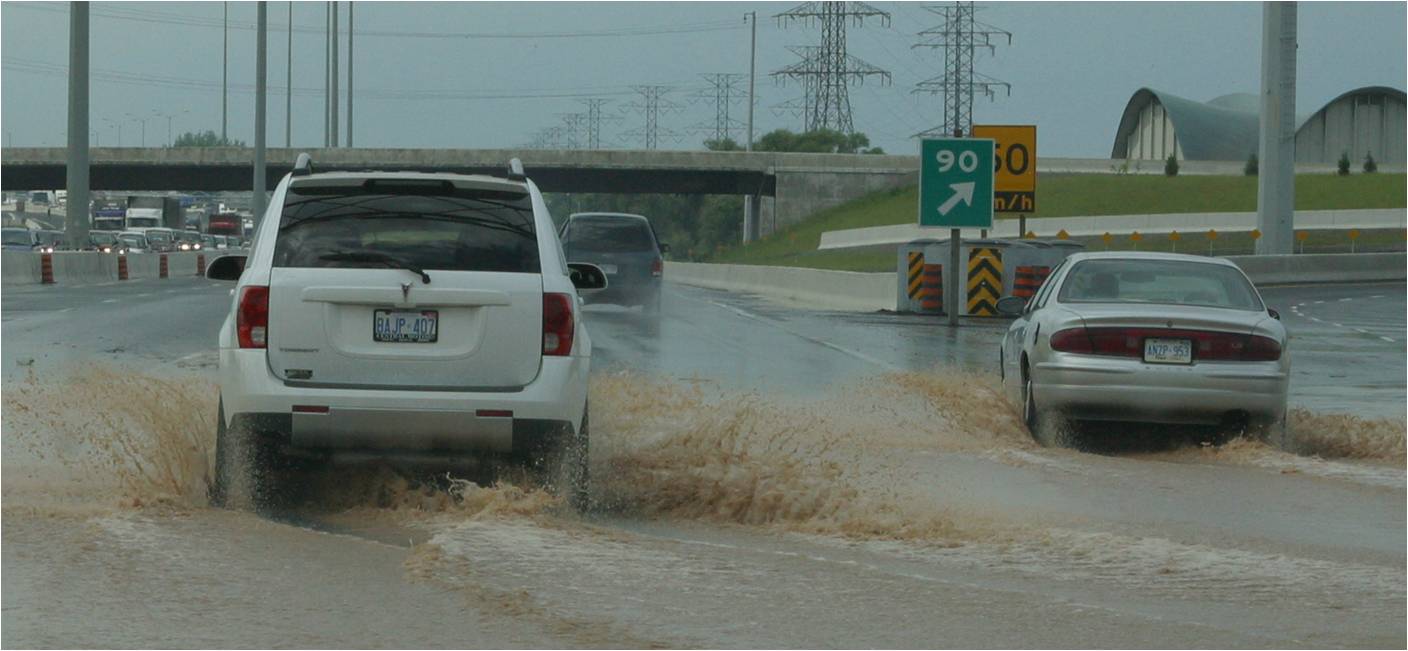
Risk is a much mis-understood word.  In a technical sense, it is the probability of something happening multiplied by the consequences when it does [see post on Risk Definition, September 20th, 2012].  Tight regulation and good engineering could reduce the probability of earthquakes induced by fracking and such earthquakes tend not to produce structural damage, i.e. low consequences, so perhaps it is reasonable to conclude that the risks are low because two small quantities multiplied together do not produce a big quantity [see last week’s post on ‘Fracking’, 28th August, 2013].

The more common definition of risk is the probability of a loss, injury or damage occurring, i.e. severity is ignored.  Probability is used to describe the frequency of occurence of an event.  A classic example is tossing a fair coin, which will come down heads 50% of the time.  This is a simple game of chance that can be played repeatedly to establish the frequency of the event.  It is impractical to use this approach to establish the probability of fracking causing an earthquake, so instead engineers and scientists must simulate the event using computer models.  One approach to simulation is to generate a set of models, each based on slightly different set of realistic conditions and assumptions, and look at what percentage of the models predict earthquakes, which can be equated to the probability of a fracking-induced earthquake.  When the set of conditions is generated randomly, this approach is known as Monte Carlo simulation.  Weather forecasters use simulations of this type to predict the probability of rain or sunshine tomorrow.

The reliability of a simulation depends on the model adequately describing the physical world.  We can test this (known as validating the model) by comparing predicted outcomes with real-world outcomes [see post on 18th September, 2012 on ‘model validation’].  The quality of the comparison can be expressed as a level of confidence usually as a percentage.  Crudely speaking, this percentage can be equated to the frequency with which the model will correctly predict an event, i.e. the probability that the model is reliable, so if we are 90% confident then we would expect the model to correctly predict an event 9 out of 10 times. In other words, there would be a 10% ‘risk’ that the model could wrong.

In practice we cannot easily calculate the probability of a fracking-induced earthquake because it is such a complex process. Validating a model of fracking is also a challenge because of the lack of real examples so that establishing confidence is difficult.  As a consequence, we tend be left weighing unquantified risks in a subjective manner, which is why there is so much debate.

If you made it this far – well done and thank you!   If you want more on weather forecasting and extending these ideas to economic forecasting see  John Kay’s article in the Financial Times on August 14th, 2013 entitled ‘Spotting a banking crisis is not like predicting the weather’ [ http://www.ft.com/cms/s/0/fdd0c5bc-0367-11e3-b871-00144feab7de.html#axzz2dNrTKPDy ].

Fracking

The British Prime Minister, David Cameron has argued in an article in the Sunday Telegraph (on August 11th, 2013) that if we don’t back fracking technology then the country will miss an opportunity to help families with their bills and make the country more competitive.  In his article the Prime Minister only makes the economic case in favour of using fracking to extract shale gas.  He completely ignores the environmental costs of these economic gains, which will always be present as in any industrial process – the second law of thermodynamics tells us to expect these costs – a form of increased entropy.  The environmental costs of fracking are still disputed.  Companies and politicians with something to gain from its successful implementation argue that the costs are very low or insignificant.  However, recent research has concluded that more than 100 earthquakes were triggered in a single year in Ohio due to fracking-related activities (J. Geophysical Research: Solid Earth, doi.org/nh5).  The largest of these quakes was of magnitude 3.9 and was caused by pumping pressurised waste water into a deep well.  There are also concerns that waste water from fracking might contaminate groundwater.

A joint report of the Royal Society and the Royal Academy of Engineering has concluded that the fracking process can be successfully managed without significant risks to the environment or society.  However, in France fracking has been banned.  So, the arguments flow in both directions.  As a society we are addicted to energy, and fossil fuels in particular, and hence we need sources of oil and gas.  The risks involved in extracting shale gas by fracking are probably no greater than those associated with oil or natural gas; its just that they tend to occur closer to people’s backyard, which makes people more sensitive to them.  Actually, the technology has been around and used for a long time; see John Kemp’s column at Reuters for an explanation of the process and its history.  However, if we intend to use it on a larger scale then we need to guard against unexpected consequences and be ready to deal with the mess when things go wrong.  When engineers succeed in these two goals then no one will notice but when they fail the public and many politicians will be quick to attribute blame to them, whereas it likely will be our addiction to fossil fuel that is to blame.