Tag Archives: creativity

Poetasting engineers

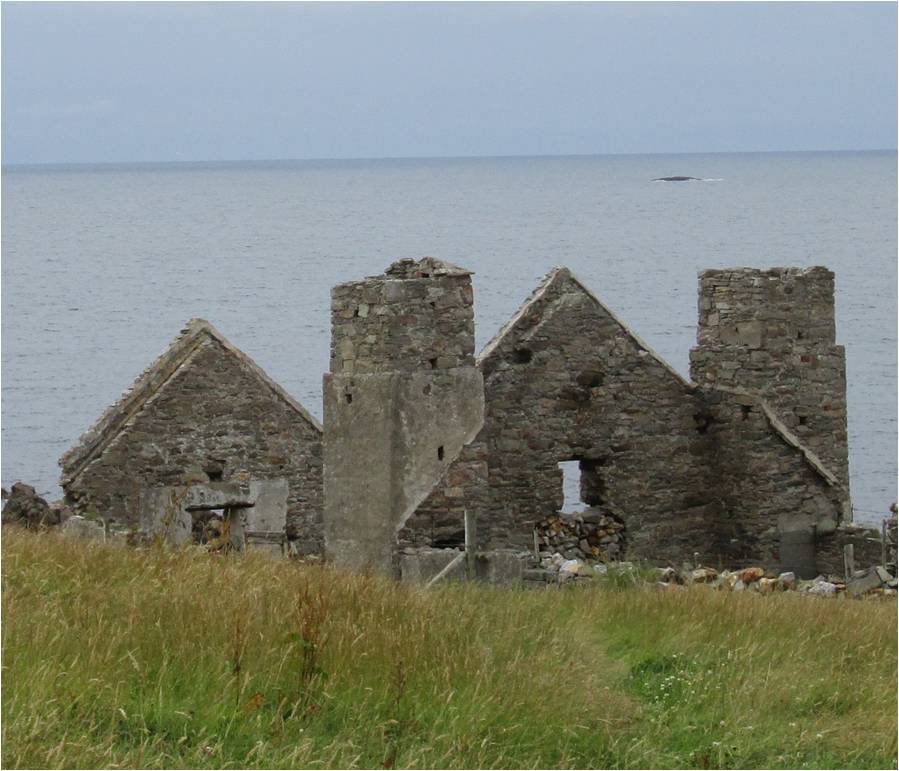
donegal ruinA few weeks ago we spent a long weekend in Dublin. Its a capital city on a small scale but well-endowed with world-class museums, galleries and civic grandeur with good victuals available nearly everywhere.  We are frequent visitors to Dublin and, for me, no visit would be complete without half-an-hour or so spent sitting in the National Library listening to recordings of Yeats’ poems being read out loud.  You can listen on-line by visiting the ‘Verse and Vision‘ exhibit at the National Library of Ireland website.  I find reading poetry really challenging but I enjoy listening to someone else reading it.

My link to John Updike’s poem ‘Ode to Entropy‘ in my post entitled ‘Cosmic Heat Death‘ didn’t work – sorry about that!  It is reproduced in full on Clutterbuck.  I made another mistake last week and unintentionally published two posts, which perhaps reduced the impact of my request for ‘Good reads for budding engineers‘.  I have had no responses yet…

Staying with poetry.  Engineers appear to have a poor reputation for writing poetry.  Hilary Mantel in her short story ‘How shall I know you‘ describes reading clubs founded ‘by master drapers and their shop-girl wives; by poetasting engineers, and uxorious physicians with long winter evenings to pass.‘  Poetasting means writing indifferent verse.  Admittedly writing good poetry is not part of the role of an engineer but writing clear and concise prose is an essential skill.  Unfortunately most young engineers and many older colleagues are the prose equivalent of poetasters –  they write terribly turgid text.  Our inability to communicate in sparkling prose means that our profession appears uninspiring to potential recruits and remains hidden and obscure to most of society.  Climate change, poor air quality, autonomous machines and ubiquitous big data  are amongst the many challenges facing society for which we need engineering and science-literate citizens and lawmakers.  The responsibility for educating society lies with engineers who understand the technology and must strive to communicate more effectively [see my post entitled the ‘Charismatic Engineer‘ on June 4th, 2014].

Source: Hilary Mantel, ‘Assassination of Margaret Thatcher’ Henry Holt & Co, New York, September 2014.

Photo credit: Tom

‘Culture eats strategy for breakfast’

130-3071_IMGMy title is unashamedly borrowed from Richard Plepler, CEO of the premium US cable network, HBO.  He was quoted in an interview reported in the Financial Times on January 11th, 2015 [Lunch with the FT by Matthew Garrahan].  It was said in the context of discussing how a company can encourage creativity.  I like it because it sums up my own approach to nurturing an environment in which high-quality innovative research can flourish.  The role of the leader is to establish and maintain that environment in which everyone must feel able to express their opinions and then once the decision is made be prepared to unite in achieving the goal.  This requires a level of transparency that many leaders find hard to implement and ability to listen to dissenting views that most leaders find difficult or impossible to tolerate. Good leaders create a culture in which people feel safe expressing their views.  To quote Richard Plepler again “Someone once said to me, ‘You made the room safe to talk.’ And I said. ‘If you want to win, what other way is there to be?'”.

Engineering is a creative profession in which we need to worry more about culture and less about strategy.  Of course, bringing about culture change is much harder than writing a new strategy!

Cosmic heat death

MSUSpartans_Logo.svgWhen I was at Michigan State University, Lou Anna Simon, the President was fond of talking about constructive tension as a source of innovation and progress. In other words, creative or productive work arises out of differences, for instance between aspirations and reality, or between supply and demand.  Rudolf Clausius in the 1850’s identified the irreversibility of heat flow across a temperature difference from hot to cold [see last week’s post on ‘Why is thermodynamics so hard?].  Sadi Carnot worked out the productivity of this difference in terms of the maximum efficiency with which work could be extracted from it [see my post ‘Impossible perfection‘ on June 5th, 2013].

William Thomson [1827-1907] followed a much more sinister line of thought and concluded that if all heat flows from hot to cold then eventually everything must end up at a uniform temperature, i.e. no differences.  He argued that no temperature differences implies no work could be extracted.  And nothing at all happens.  This is known as ‘cosmic heat death’.

A fellow Scotsman, James Clerk Maxwell [1831-1879] believed that this challenged human free will.  He proposed a loophole in the second law of thermodynamics to demonstrate its falsity and invalidate the cosmic heat death argument.  Imagine Maxwell’s demon, as it became known, controlling a trapdoor separating two clouds of gas initially at the same temperature, which means the gas molecules in the two clouds have the same average internal energy.  The demon allows ‘hot’ molecules (i.e. those with higher than average internal energy) to one pass way through the trapdoor and ‘cold’ molecules (i.e. those with lower than average internal energy) to move the other way. After a period of time, all the ‘hot’ molecules will be on one side of the trapdoor and all the ‘cold’ molecules will be on the other side.  Heat has moved from colder (initial average temperature) to hotter (on one side of the trapdoor) and the second law has been contravened.

Maxwell created hope for the inventors of perpetual motion machines! [see my post entitled ‘Dream machine‘ on February 4th , 2015]  But then along came Leó Szilárd in 1929, who pointed out that the demon would have to expend energy [do work] to identify the internal energy of the molecules and to open the trap-door.  The second law was saved and cosmic heat death became a prospect once again although a very, very distant one.  Some modern physicists, though not Professor Brian Cox, reject the possibility of cosmic heat death by suggesting that the universe is too complex and our understanding too incomplete to allow Thomson’s simple reasoning to be applied.  John Updike protested against the idea in his poem ‘Ode to Entropy‘.  And on a human timescale, it is hard to believe that all tensions will ever be resolved.

Sources:

Ball, P., A demon-haunted theory, Physics World, April, 2013, p.36-9

Updike, J., ‘Ode to Entropy‘ available in the Faber Book of Science edited by John Carey 2005

Cox, B., Death of the Universe, World Space Week Special BBC Wonders of the Universe, 2013

All things being equal

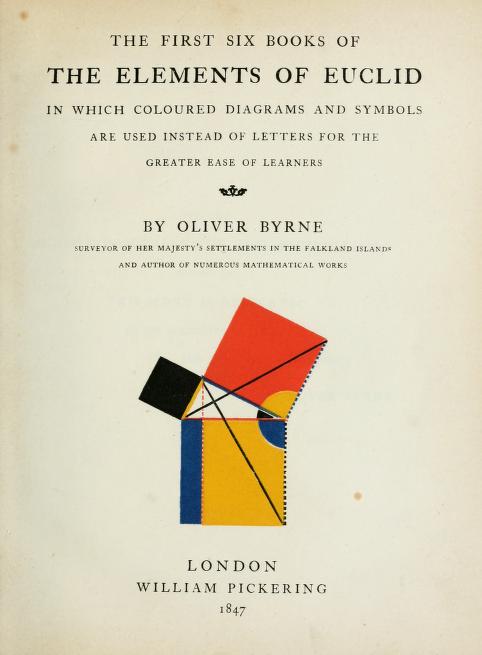
firstsixbooksofe00eucl_0007Some of the greatest insights and inventions are obvious once they have been pointed out to you and you wonder how you could not have spotted them yourself. Is it luck or genius that allows someone to be the first to have a great idea? The quest for more efficient engines to power the industrial revolution led the likes of Sadi Carnot, Rudolf Clausius, William Rankine, William Thomson and James Watt to experiment and think deeply about thermodynamics or what might be called energy science or energy engineering. They established the First Law of thermodynamics (energy is always conserved) and Second Law of thermodynamics (entropy increases in all processes) of thermodynamics but initially missed the more fundamental, and arguably simpler, Zeroth Law (two systems in thermal equilibrium with a third must also be in thermal equilibrium each other). Rankine, working around 1850, is often attributed with identifying the Zeroth Law but probably the credit should go to Euclid (380-260 BC) who appears to have got there first in the fifth of his series of six books, ‘Elements’ [see my post entitled ‘Lincoln on equality‘ on February 6th, 2013).

The first English translation of ‘Elements’ is believed to have been by Sir Henry Billingsley in 1570.  A later version by Oliver Byrne was published in 1847 and you can read it on-line.  Go to page 173 to find a version of the Zeroth Law which can be paraphrased as ‘Things that are equal to the same things are equal to each other’.

Oliver Byrne, was Surveyor of Her Majesty’s Settlements in the Falkland Islands which presumably left him plenty of time to be the ‘author of numerous mathematical works’ as the title page to his book states.  The title page also tells us that ‘coloured diagrams and symbols are used instead of letters for the greater ease of learners’.  The bold primary colours and straight lines remind me of the paintings in the recent Mondrian exhibition at the Tate Liverpool. Maybe Piet Mondrian (1872 – 1944) was inspired by Oliver Byrne’s beautiful book, which was an early example of innovative graphic design and as well as an attempt to make mathematical concepts more accessible – something many writers of modern textbooks make little serious effort to do!