Category Archives: Soapbox

Anything other than lager, stout or porter!

While we were sitting in the Red Deer in Sheffield enjoying a couple of pints of Iron & Steel Bitter from the Chantry Brewery in Rotherham, my long-time Swiss collaborator, and sometime correspondent on this blog, asked me: what’s the difference between an ale and a beer?  And, I had to admit that I couldn’t provide a definitive answer to satisfy his curiosity.  So, I am going to have another go, now.  Beer is an alcoholic drink made from a cereal grain and, according to the Oxford English Dictionary, ale is any beer other than lager, stout, or porter!

However, ‘real ale is a beer brewed from traditional ingredients (malted barley, hops water and yeast), matured by secondary fermentation in the container from which it is dispensed, and served without the use of extraneous carbon dioxide‘ according to CAMRA, the Campaign for Real Ale.  So the Iron & Steel Bitter that we enjoyed at the Red Deer was a real ale.

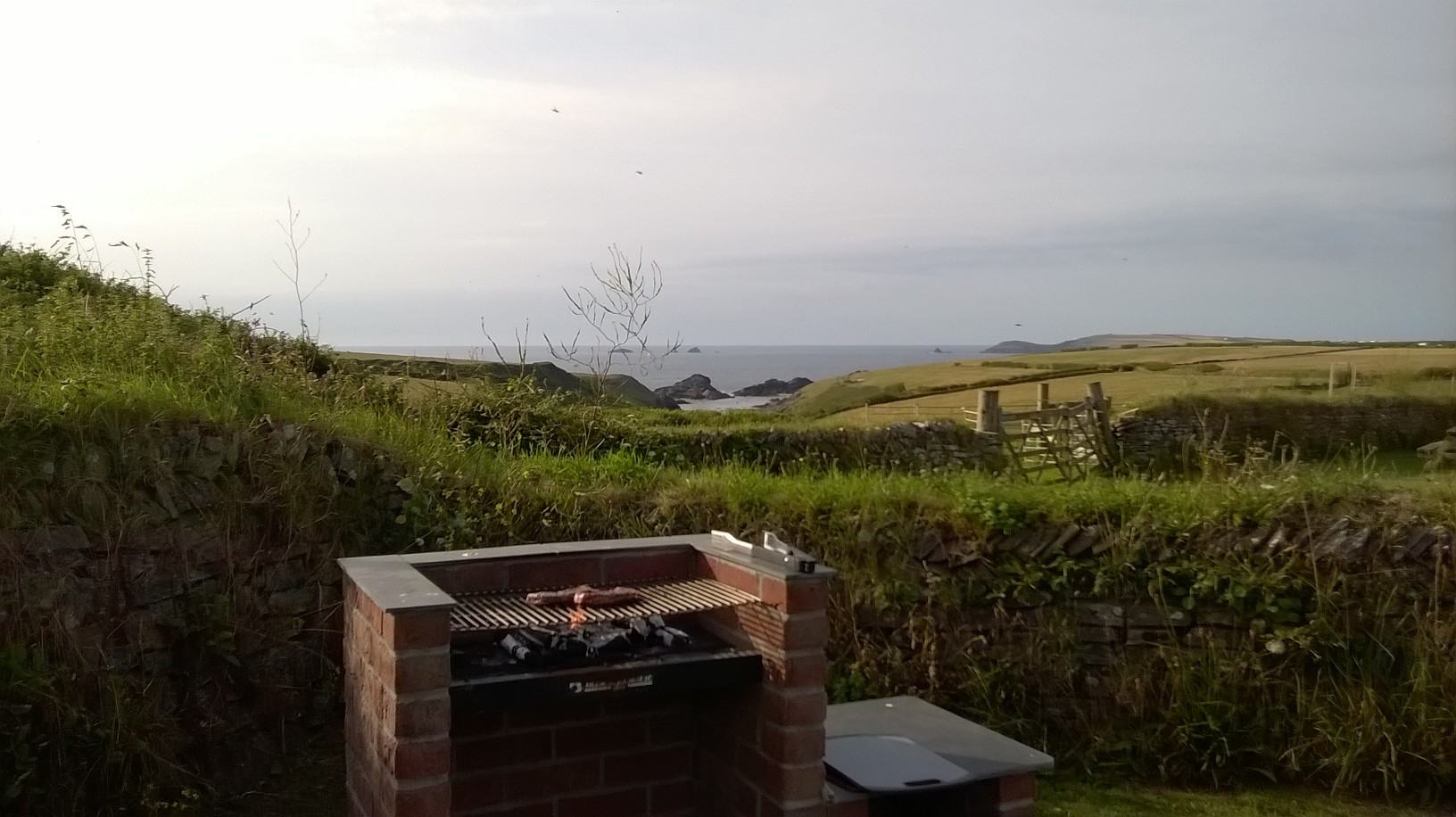
My digital detox during July [see my post entitled ‘In digital detox‘ on July 19th, 2017] included  sampling bottled ales from local West Country breweries and the photograph shows my favorites ranked from left to right.  Many were enjoyed while overseeing the BBQ in the picture below; however, the time in the Red Deer involved some rather more productive brain-storming for the MOTIVATE project [see my post entitled ‘Getting smarter‘ on June 21st, 2017].

Details of beers in photograph: Pirates Gold from Wooden Hand Brewery; Jail Ale from Dartmoor Brewery; Original Beer from Butcombe Breweries; Rebel Red from Rebel Brewing and Summer Lightening Hop Back Brewery

Re-engineering engineering

More than a decade ago, when I was a Department Head for Mechanical Engineering, people used to ask me ‘What is Mechanical Engineering?’.  My answer was that mechanical engineering is about utilising the material and energy resources available in nature to deliver goods and services demanded by society – that’s a broad definition.  And, mechanical engineering is perhaps the broadest engineering discipline, which has enable mechanical engineers to find employment in a wide spectrum areas from aerospace, through agricultural, automotive and biomedical to nuclear and solar energy engineering.  Many of these areas of engineering have become very specialised with their proponents believing that they have a unique set of constraints which demand the development of special techniques and accompanying language or terminology.  In some ways, these specialisms are like the historic guilds in Europe that jealously guarded their knowledge and skills; indeed there are more than 30 licensed engineering institutions in the UK.

In an age where information is readily available [see my post entitled ‘Wanted: user experience designers‘ on July 5th, 2017], the role of engineers is changing and they ‘are integrators who pull ideas together from multiple streams of knowledge’ [to quote Jim Plummer, former Dean of Engineering at Stanford University in ‘Think like an engineer‘ by Guru Madhaven].  This implies that engineers need to be able work with a wide spectrum of knowledge rather than being embedded in a single specialism; and, since many of the challenges facing our global society involve complex systems combining engineering, environmental and societal components, engineering education needs to include gaining an understanding of ecosystems and the subtleties of human behaviour as well as the fundamentals of engineering.  If we can shift our engineering degrees away from specialisms towards this type of systems thinking then engineering is likely to enormously boost its contribution to our society and at the same time the increased relevance of the degree programmes might attract a more diverse student population which will promote a better fit of engineering solutions to the needs of our whole of global society [see also ‘Where science meets society‘ on September 2nd 2015).

For information on the licensed engineering institutions in the UK see: https://www.engc.org.uk/about-us/our-partners/professional-engineering-institutions/

Hurrying feet in crowded camps

Five years ago I wrote about the potential ‘Population Crunch‘ [September 15th, 2012] that could lead to a large increase in the size and number of cities – perhaps upto 1500 new cities emerging over the next few decades as the global population rises from 7.6 billion to 9.8 billion by 2050 [see UN revised report, 2017].  It is a significant challenge to provide an acceptable quality of life to the citizens of these new cities as well as existing ones.  People have been concerned about the density of population in cities and its impact on individuals for more than a century.  In 1910, W.H. Hudson in ‘A Shepherd’s Life’ [Penguin Books, 1910] wrote, somewhat tongue-in-cheek, about London: ‘Some over-populated planet in our system discovered a way to relieve itself by discharging its superfluous millions on our globe – a pale people with hurrying feet and eager, restless minds, who live apart in monstrous, crowded camps, like wood ants that go not out to forage for themselves’  Nothing seems to have changed!

Blinded by the light

It has become a habit during our summer vacation to read the novels short-listed for Bailey’s Women’s Prize for Fiction.  Unusually this year, we were not only unanimous in our choice of the best novel but we also agreed with the judges and selected the ‘The Power‘ by Naomi Alderman.  In another of the books, Do Not Say We Have Nothing by Madeleine Thien, a Chinese composer called Sparrow thinks ‘about the quality of sunshine, that is, how daylight wipes away the stars and planets, making them invisible to human eyes, might daylight be a form of blindness? Could it be that sound was also be a form of deafness? If so, what was silence?’.  I felt some resonance between these thoughts and John Hull’s writings on blindness and my earlier blog posting on ‘Listening with your eyes shut‘ [on May 31st, 2017].  In our everyday life, we are bombarded with sounds from people living around us, from traffic and from devices in our homes and places of work.  We rarely experience silence; however, when we do, perhaps on holiday staying in a remote rural location, then a whole new set of sounds becomes apparent: waves breaking on the shore in the distance, the field mouse rooting around under the floorboards, or the noises of cattle enjoying the lush grass in the field next door.  Okay, so you have to be in the right place to hear these sounds of nature but you also need silence otherwise you are deaf to them, as Sparrow suggests.

The same is true for knowledge and understanding because our minds have finite capacity [see my post entitled ‘Silence is golden‘ on January 14th, 2014].  When you are bombarded with information and data it is easy to become overwhelmed and unable to structure the information in way that makes it useful or meaningful.  In our connected society, information has become like white noise, or daylight obscuring the stars and planets.  Information is blinding us to knowledge and understanding.  We need to aggressively filter the information flow in order to gain insight and knowledge.  We should switch off the digital devices, which bombard us with information constantly, to leave our minds free for conceptual and creative thinking because that’s one of the few tasks in which we can outperform the smartest machine [see my post entitled ‘Smart machines‘ on February 26th, 2014].

In a similar vein see: ‘Ideas from a balanced mind‘ on August 24th, 2016 and ‘Thinking out-of-the-skull‘ on March 18th, 2015.