Author Archives: Eann Patterson

The very nature of art is affirmative

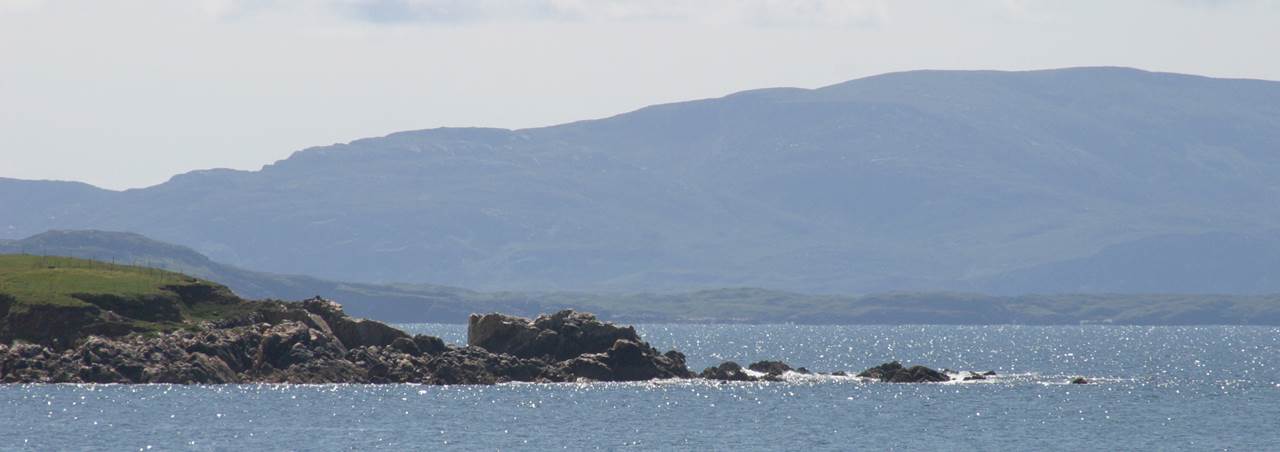
zennor headWP_20160714_009I have been away on vacation, disconnected from all sources of electronic communication and trying  not to think about engineering.  Hence, I don’t have much to write about except to enthuse about magnificent coastal walks in Devon and Cornwall that provided opportunities to achieve the kind of mental detachment described in last week’s post.  In St Ives, the beauty and tranquillity of the Barbara Hepworth Museum and Sculpture Garden impressed us so much that we went back for a second visit.  The title of this post is taken from a 1970 quote from Barbara Hepworth that was reproduced on the museum wall and reflects my reaction to her sculptures in their garden setting:  ‘I think the very nature of art is affirmative, and in being so it reflects the laws and evolution of the universe’.
 

Steadiness and placidity

Picture5Writing a weekly blog must be a little like being a newspaper columnist except that I am not part of team of writers and so there is no one to stand in for me when I go away.  Instead I have to get a few weeks ahead before I go away. So I will be on vacation when you read this post and I hope that I will have achieved a certain level of ‘steadiness and placidity’ to quote Michael Faraday.  Faraday used to escape to Hastings, on the south coast of England, for breaks away from the hustle and bustle of London.  He would take walks [see my post on August 26th, 2015 entitled ‘Take a walk on the wild side‘] and spend time on the seashore [see my post on May 4th, 2016 entitled ‘Horizon Therapy‘] to achieve ‘a kind of mental detachment, an ability to separate himself from things as they are and accept the given – certainties and uncertainties’ [from his biography by James Hamilton], which he described as ‘steadiness and placidity’.

Source:

Hamilton, J., A life of discovery: Michael Faraday, giant of the scientific revolution. New York: Random House, 2002.


Escape from eternal punishment

145-4502_IMGIn her introduction to the ‘World’s Wife’ by Carol Ann Duffy, Jeanette Winterson says the ‘punishment of the Gods turns out to be a 24/7 always-on meaningless managerial job, where no matter how many emails you answer, your inbox will be full again the next day’. As a professor, I am fortunate not to have the meaningless job part of this punishment but I do sometimes feel that my inbox fills up no matter how many emails I answer.  Actually, I suspect that the filling rate is related to my answering rate but it appears to be a complex feedback relationship.

Many of us compound the punishment by shackling ourselves to the inbox via our smartphones. You may not see it as a punishment to be constantly in touch with everyone but it is probably a handicap. We have a limited bandwidth to handle information and people tend to over-communicate and lack understanding. We need to reduce the level of communication and increase the level of understanding.

I am breaking the relentless cycle of communication by taking a holiday for a couple of weeks.  There will be some horizon therapy [see my post entitled ‘Horizon Therapy‘ on May 4th, 2016] and mind-wandering [see post entitled ‘Mind wandering‘ on September 3rd, 2014]  as well as doing pretty much nothing.

Source:

Carol Ann Duffy, The World’s Wife with an introduction by Jeanette Winterson, London: Picador Classic, 2015.

Picture2

Innovation out of chaos

Picture1‘We are managing in chaos…our competition never knows what we are going to come up with next.  The fact is neither do we.’  This a quote from the 1996 UK Innovation Lecture given by William Coyne who was VP for Research at 3M at the time.  I used it a couple of months ago at a technical conference, where I was invited to be a panel member for discussion on innovation.  This state of chaos from which innovation arises is characteristic of ‘organic’ organizations that lack formal job definitions, encourage lateral interactions and greater responsibility for individuals.  Conversely, innovation is stifled in ‘mechanistic’ organizations that are characterized by specialisms, powerful functional roles, vertical management interactions, a command hierarchy and a complex organizational chart.

So, I suggested that innovation can be stimulated by removing or loosening organizational and intellectual constraints.  The latter means allowing people to think differently and not hiring people who look or think like you.  Of course, this is not easy – it requires a subtle balance of sustainable orderliness! However, as a member of the audience remarked ‘innovative organizations have fun!’.  And maybe this gets to the heart of the issue, too much order leads to boring predictability while too much disorder is scary but the right level of disorder or entropy is exciting and stimulates creativity.

Source:

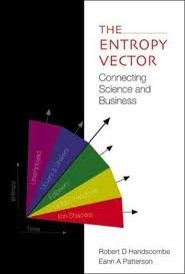
Handscombe RD & Patterson EA, The Entropy Vector: Connecting Science and Business, Singapore: World Scientific Publishing, 2004.

entropy_vector