Tag Archives: Royal Society

Small is beautiful and economic

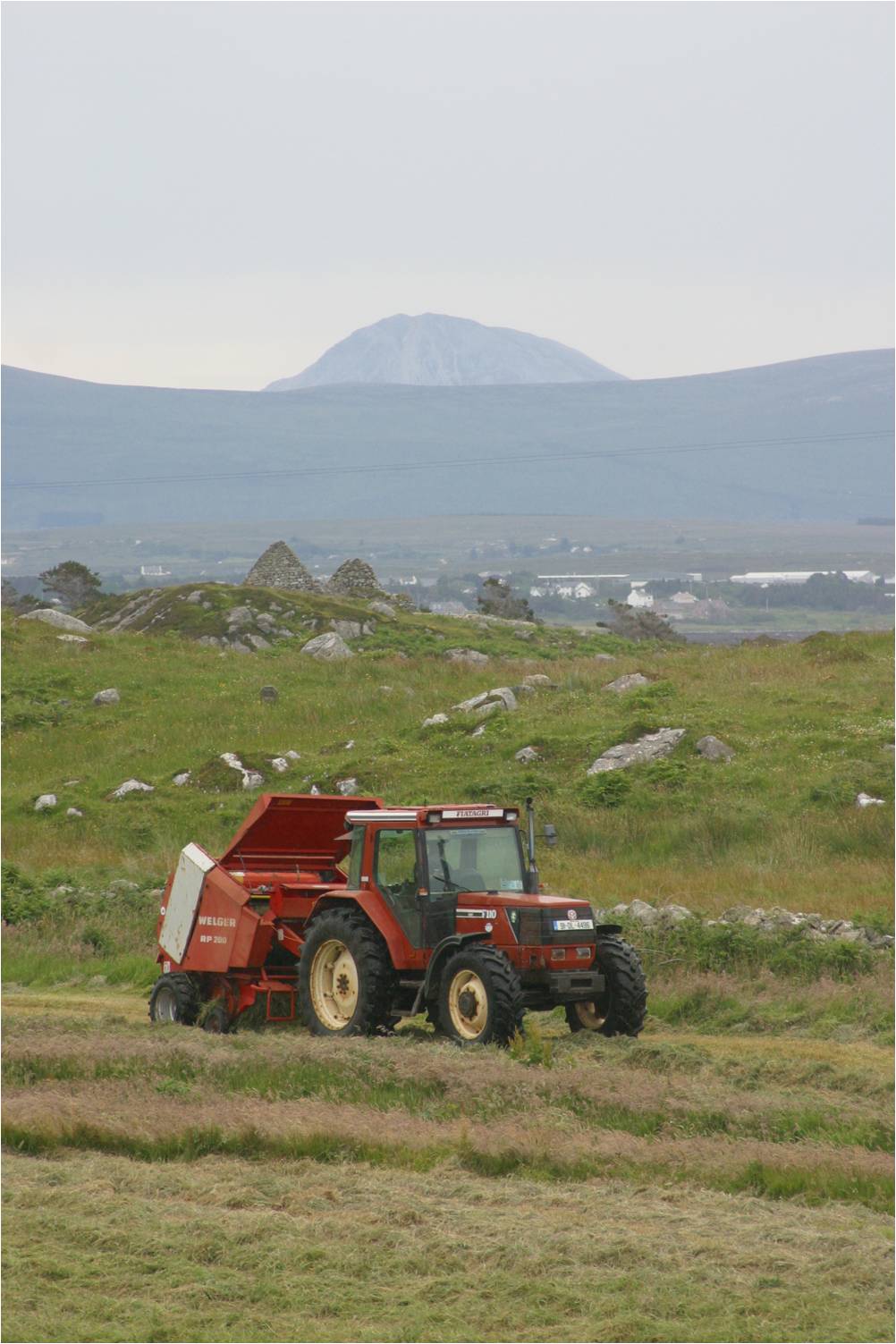
tractorFarm tractors have been growing bigger and bigger, though perhaps not everywhere – the photograph was taken in Donegal, Ireland earlier this year.  The size of tractors is driven by the economics of needing a driver in the cab. The labour costs are high in many places, so that the productivity per tractor driver has to be high too.  Hence, the tractors have to move fast and process a large amount of the field on each pass.  This leads to enormous tractors that weigh a lot and exert a large pressure on the soil, which in turn results in between 1 and 3% of the farm land becoming unproductive because crops won’t grow in the severely compressed soil. But what happens if we eliminate the need for the driver by using autonomous vehicles? Then, we can have smaller vehicles working 24/7 that do less damage and are cheaper, which means that a single machine breakdown doesn’t bring work to halt. We can also contemplate tailoring the farming of each field to the local environmental and soil conditions instead a mono-crop one-size fits all approach. These are not my ideas but were espoused by Peter Cooke of the Queensland University of Technology at a recent meeting at the Royal Society on ‘Robotics and Autonomous Systems’.

It is a similar argument for modular nuclear power stations. Most of the world is intent on building enormous reactors capable of generating several GigaWatts of power (that’s typically 3 with nine zeros after it) at a cost of around £8 billion (that’s 8 with nine zeros) so about 50 pence per Watt. Such a massive amount of power requires a massive infrastructure to deliver the power to where it is need and a shutdown for maintenance or a breakdown potentially cuts power to about a million people. The alternative is small modular reactors built, and later dismantled, in a factory that leave an uncontaminated site at a lower capital cost and which provide a more flexible power feed into the national grid. Some commentators (see for example Editor’s comment in Professsional Engineer, November 2015)believe that a factory could be established and rolling modular reactors off its production line on the same timescale as building a GigaWatt station.

Regular readers will recognise a familiar theme found in Small is beautiful and affordable in nuclear powerstations on January 14th, 2015, Enabling or disruptive technology for nuclear engineering on January 28th, 2015 and Small is beautiful on October 10th, 2012; as well as the agricultural theme in Knowledge-economy on January 1st, 2014.
Connecting robotic touch and vision

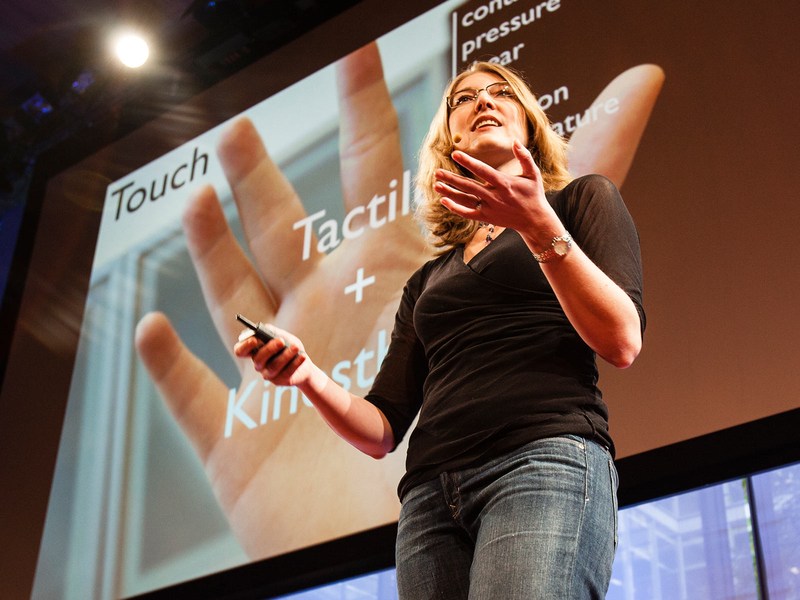
katherine kuchenbeckerSome months ago I wrote about soft robots that could delicately pick up fragile objects [see my post entitled ‘Robots with a delicate touch’ on June 3rd, 2015]. These robots, developed by George Whiteside’s research group, went some way towards mimicking the function of our hands.  However, these robots are numb because they have no sense of touch.  Think about how hard it would be to strike a match or pick up an egg without your sense of touch. Katherine Kuchenbecker from the University of Pennsylvania is working on robots with tactile sensors that detect pressure and vibrations.  This sensitivity transforms their ability to perform delicate tasks such as picking up an egg, or perhaps more significantly perform surgery.  I listened to Professor Kuchenberger speak at a meeting at the Royal Society on ‘Robotics and Autonomous Systems’ where she put us off our lunch with some gory videos on robot-assisted surgery. You can watch them at her website. Her vision is of robots that connect vision and touch, which is of course what we do effortlessly most of the time.

The ‘other’ CO2 problem

163-6306_IMGMost of us are aware of the rising levels of anthropogenic carbon dioxide in the atmosphere and its impact on climate change but what about the potential loss of our oxygen supply? Far fewer of us are aware of what is sometimes referred to as the ‘other’ carbon dioxide problem, which is the acidification of the oceans. Carbon dioxide dissolves in the surface of the ocean when the concentration in the water is lower than in the atmosphere. Joanne Hopkins of the National Oceanography Centre in Liverpool describes this as the reverse of bubbles escaping when you open a fizzy drink, because the concentration of carbon dioxide in the air is less than in the drink. Carbon dioxide is also taken up in the ocean by tiny marine plants, known as phytoplankton, which convert it into organic matter and oxygen. Tiny marine animals, known as zooplankton, eat the phytoplankton and in turn are eaten and so on. Phytoplankton are important not just because they are the bottom of the food chain but also because they produce about half the oxygen that we breathe. The problem is that dissolved carbon dioxide is shifting the pH balance of the oceans which is beginning to cause demineralisation of microorganisms the ocean. At a recent Royal Society Regional Meeting in Bristol, Professor Daniela Schmidt described this as analogous to osteoporosis, a ‘brittle’ bone disease suffered by humans. Many years ago, my research group worked with a pathologist, Dr Dennis Cotton to examine whether it was possible that osteoporosis sufferers could break their leg and fall over rather than fall over and break their leg. In other words, could osteoporosis change the material properties of bone so dramatically that the structural integrity was insufficient for everyday activities such as getting out of bed or walking upstairs? Our answers at the time were inconclusive, at least in the generic case. Professor Schmidt is working with another team of engineers to examine the structural integrity of microorganisms in the oceans and the impact of demineralisation. The concern is that they could become structurally unstable and die and this could lead to a major reduction in our oxygen supply.

Ok, there is a lot of uncertainty about the series of interactions described above, about the magnitude of the effects and about the ability of ecosystems to adapt to the new conditions. However, the potential consequences are so catastrophic that we should not ignore them. Urgent action is needed to reduce our production of carbon dioxide, and since our governments appear incapable of action we have to take individual responsibilty as advocated by Kofi Annan and reported in my post entitled ‘New Year Resolution’ on December 31st, 2014.

By the way, look out for the announcement of the $2M Wendy Schmidt Ocean Health XPrize on July 20th to one of five teams of scientists for the best sensor for making real-time measurements of ocean acidity.

Sources:

Bell R, The removal of a service we can’t do without’, The Observer, 25.01.15.

Schmidt D, Some don’t like it hot, Geology, 42(9):831-832, 2014.

Brodie et al, The future of the northeast Atlantic benthic flora in a high CO2 world, Ecology and Evolution, 4(13):2787-2798, 2014.

Cotton DWK, Whitehead CL, Vyas S, Cooper C & Patterson EA, Are hip fractures caused by falling and breaking or breaking and falling? Photoelastic stress analysis, Forensic Science Int. 65: 105-112, 1994.

Fields of flowers

It’s not often that someone presents you with a completely new way of looking at the world around us but that’s what Dr Gregory Sutton did a few weeks ago at a Royal Society Regional Networking Event in Bristol where he is a University Research Fellow funded by the Royal Society. He told us that every flower is a conductor sticking out of the ground which on a sunny day has an electric field around it of the order of 100 volts per metre. Bees can identify the type of flower that they are approaching based on the interaction between this field and the electrostatic field generated around them as they fly. Bees are covered in tiny hairs and he believes that they use these to sense the electric field around them. The next research question that he is tackling is how bees are affected by the anthropogenic electric fields from power lines, mobile phones etc.

The plots of the electric field around a flower really caught my attention. You can see one in the thumbnail photo. I walked across Brandon Hill in Bristol after the talk to meet a former PhD student for dinner. I kept stopping on the way to try to detect this field with the hairs on the back of my hand. It was a beautiful sunny day but I was not sensitive enough to feel anything. Or maybe I was sensing it but my brain is not programmed to recognise the sensation. We discussed it over dinner and marvelled at the bees’ ability to process the information from its multiple sensors in the light of our knowledge of the computing power required to handle what it is fashionable to call ‘Big Data’ from man-made sensors.

Once again Nature humbles us with its ingenuity and makes our efforts look clumsy if not feeble. Dr Sutton’s insights have given me a whole new way to attempt to connect with Nature while I am on deep vacation.

Sorry about the pun in the title. I couldn’t resist it.

Source:

Clarke D, Whitney H, Sutton G & Robert D, Detection and Learning of Floral Electric Fields by Bumblebee, Science, 5 April 2013: 66-69. [DOI:10.1126/science.1230883].