Tag Archives: PhD thesis

Experiencing success vicariously

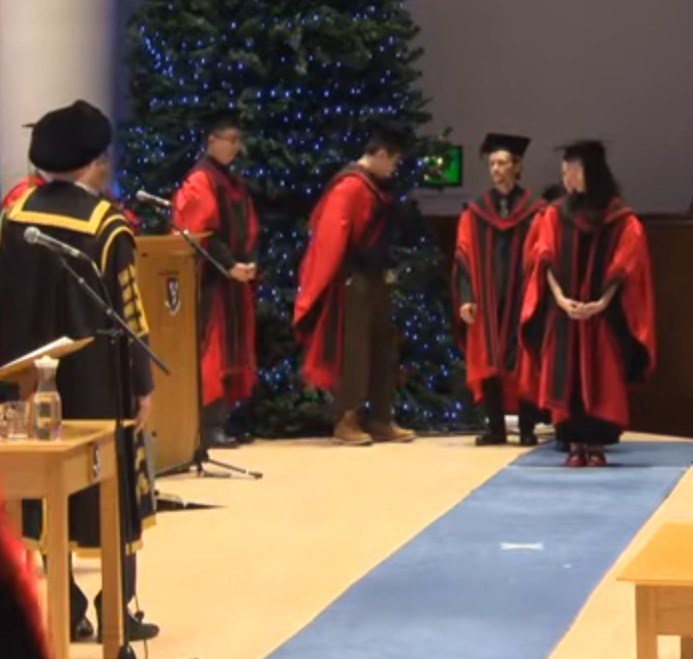
Decorative image of a graduation ceremonyThe final PhD student for whom I will act as lead supervisor is scheduled to finish this month.  I have graduated forty PhD students since I was appointed a lecturer in 1985.  I am still in touch with many of them – they are divided between industry and universities with a bias towards industry (about 60%).  For the first twenty years, I was a sole academic supervisor often with an industrial supervisor providing support.  Then I moved to the US where a PhD committee provides supervisory guidance to the student and supervisor.  By the time I returned to the UK, about fifteen years ago, it had become accepted practice to appoint a second supervisor for each PhD student.  So, although I decided a couple of years ago not to accept any new PhD students as lead supervisor, I am acting as second supervisor for five students.  This is a great role since you have less responsibility, but you are engaged with the exciting research.  The topics vary from understanding the nanoscale mechanics of particles interacting with cells (see, for example, ‘Label-free real-time tracking of individual bacterium‘ on January 25, 2023 through to ‘Structural damage assessment using infrared detectors in fusion environments‘ on March 15, 2023), and just starting this year, innovative methods for communicating confidence in computational models.  Although the research is exciting, at a training session for supervisors during the CDT Winter School that I attended in January (see ‘Experiencing success vicariously‘ on January 7, 2026), we discussed our roles as supervisors and in particular that the research project is not the principal outcome of the PhD.  Instead, the development of the PhD student is the principal outcome.  It’s all about nurturing and mentoring people and the reward is experiencing their success vicariously.

Image: still from a video of a graduation ceremony at the University of Liverpool on December 9, 2025.  As Dean of the School of Engineering, I am at the lectern presenting PhD graduates, but I am hidden behind the Vice-Chancellor who has his back to the camera on the extreme left of the image.  You can watch the video at https://www.liverpool.ac.uk/graduation/the-ceremony/watch-graduation/catch-up/school-of-engineering/9-december-2025-10am/ .
Enduring, authentic, ancient and modern

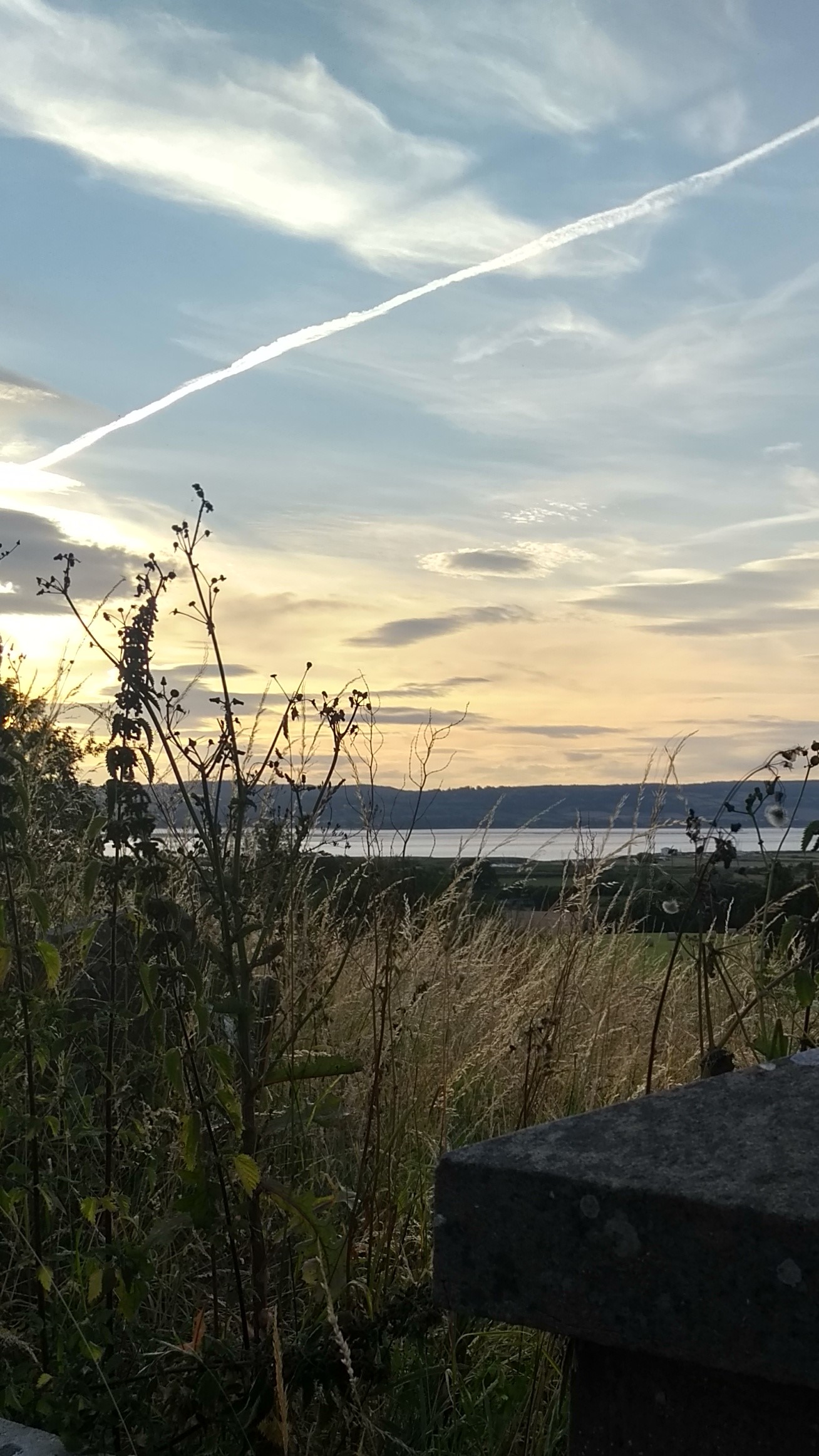
Decorative photograph across SevernTwo weeks ago, over a period of forty-eight hours, I visited four churches. An unusual event for me.  We travelled from Liverpool to Bristol one afternoon to attend a Thanksgiving Service the following morning for an extraordinary engineer and a lovely man, Eddie O’Brien.  The evening before the service, we stayed in a village pub in Oldbury-on-Severn and after dinner walked up the hill to the 13th century church dedicated to St Arilda.  It was locked so we strolled around the overgrown churchyard along a narrow mowed path and enjoyed the view across the Severn to Wales.  The following morning we drove into Bristol city centre to attend the Thanksgiving Service which was held in the Zetland Evangelical church.  The church was plain, unpretentious and packed.  The service was led by a retired pastor who preached with a gentle, thoughtful passion about Eddie’s life and its meaning.  I knew only one, possibly two, facets of his life: his professional life as an engineer and leading exponent of experimental mechanics; and his life as a student.  Eddie was twenty years my senior and thirty years ago I supervised his MPhil and PhD in experimental mechanics.  He was in his fifties and I was in my thirties – it was a challenge for both of us and we learnt from each other.  When he graduated he presented me with a copy of his PhD thesis that he had hand-bound in leather himself.  We left Bristol after the service and drove north across the Severn Bridge to Tintern Abbey where we stopped for lunch looking out over an empty cricket pitch across a green enclosed valley before exploring the ruins of the Cistercian abbey.  The abbey was founded in 1131 and in 1536 it was surrendered to Henry VIII during the dissolution of the monasteries.  The lead from the roof was removed and five hundred years of decay started creating the ruins you can wander around today.  Back in Liverpool, the following evening we went, with our neighbours, to a ‘Music at the Met’ concert at the Liverpool Metropolitan Cathedral called ‘Music for a King’ and featuring uplifting pieces, including ‘Zadok the Priest’ and ‘Crown Imperial’.  The bold grandeur of the concrete structure, richly coloured stained glass, thunderous organ and combined choirs of the anglican and catholic cathedrals contrasted starkly with the simple service of Thanksgiving for Eddie O’Brien we had attended the previous day when we sang hymns recalled from childhood, including ‘The Lord’s My Shepherd’.

Image: view across River Severn to Wales from St Arilda’s churchyard.

When less is more from describing digital twins to protoplasm

Word cluster diagramI spent several days last week reading drafts of PhD theses from two of my students.  I have three PhD students who are scheduled to finish their studies before Easter when they plan to start jobs that they have already been offered.  So, there is some urgency to their writing besides the usual desire to finish after three years or more of work on the same topic and the end of their funding.  Their relatively undiluted study of their topic can make it difficult for PhD students to see the big picture and write accessible descriptions of their research.  I have also encountered this challenge in describing our recent work on integrating digital twins to form an engineering metaverse.  There are dozens of published definitions of digital twins whereas the reverse holds for metaverses – no one really knows what they are.  Mary Midgley wrote, in her book ‘Beast and Man’, that descriptions should not be an account of everything about an entity or event but just enough to bring to our minds the appropriate conceptual scheme or construct that will tell us everything we need to know.  Our challenge as communicators is identifying the conceptual scheme that is needed, in other words selecting what matters and nothing else.  I like her example of an inappropriate description: “a section of protoplasm, measuring 1.76 meters vertically, emerged at 2:06 P.M. from hole in building at point x on plan and moved northward, its extremities landing alternately on concrete substratum, finally entering hole in further building, at point y on plan, at 2:09 P.M.”  If you need a conceptual scheme to understand this sentence, then try ‘a person walked across the road’.

Source: Mary Midgley, Beast and Man – the roots of human nature. Abingdon, Oxon. Routledge Classics, 2002.

Image: Cluster #1: simulation along product life cycle from Semeraro C, Lezoche M, Panetto H & Dassisti M, Digital twin paradigm: a systematic literature review, Computers in Industry, 130: 103469, 2021 who found thirty definitions of digital twins and created five such clusters of definitions.

Reasons for publishing scientific papers

A few months ago I wrote about how we are drowning in information as a result of the two million papers published in journals every year [see ‘We are drowning in information while starving for wisdom‘ on January 20th, 2021]. As someone who has published about 10 papers each year for the last couple of decades, including three this year already, I feel I should provide some explanation for continuing to contribute to the deluge of papers. I think there are four main reasons for publishing scientific papers. First, to report a discovery – a new contribution to knowledge or understanding.  This is the primary requirement for publication in a scientific journal but the significance of the contribution is frequently diminished both by the publisher’s and author’s need to publish which leads to many papers in which it is hard to identify the original contribution. The second reason is to fulfil the expectations or requirements of a funding agency (including your employer); I think this was probably the prime driver for my first paper which reported the results of a survey of muskoxen in Greenland conducted during an expedition in 1982. The third reason is to support a promotion case, either your own or one of your co-authors; of course, this is not incompatible with the reporting original contributions to knowledge but it can be a driver towards small contributions, especially when promotion committees consider only the quantity and not the quality of published papers. The fourth reason is to support the careers of members of the research team; in some universities it is impossible to graduate with a PhD degree in science and engineering without publishing a couple of papers, although most supervisors encourage PhD students to publish their work in at least one paper before submitting their PhD thesis, even when it is not compulsory. Post-doctoral researchers have a less urgent need to publish unless they are planning an academic career in which case they will need a more impressive publication record than their competitors. Profit is the prime reason for most publishers to publish papers.  Publishers make more money when they sell more journals with more papers in them which drives the launch of new journals and the filling of journals with more papers; this process is poorly moderated by the need to ensure the papers are worth reading.  It might be an urban myth, but some studies have suggested that half of published papers are read only by their editor and authors.  Thirty years ago, my PhD supervisor, who was also my mentor during my early career as an academic, already suspected this lack of readers and used to greet the news of the publication of each of my papers as ‘more stuffing for your chair’.

Source:

Patterson, E.A., 1984, ‘Sightings of Muskoxen in Northern Scoresby Land, Greenland’, Arctic, 37(1): 61-63

Rose Eveleth, Academics write papers arguing over how many people read (and cite) their papers, Smithsonian Magazine, March 25th, 2014.

Image: Hannes Grobe, AWI, CC BY-SA 2.5 <https://creativecommons.org/licenses/by-sa/2.5&gt;, via Wikimedia Commons.