 Some months ago I wrote about the likelihood that we are in a simulation [see ‘Are we in a simulation?‘ on September 28th, 2022] and that we cannot be sure whether are or not. For some people, this will raise the question that if we are in a simulation, then what is real? In his book, Reality+, David J Chalmers provides a checklist of properties possessed by real things, namely: existence, causal powers, mind-independence, non-illusoriness and genuineness. The possession of these properties could be established by answering the five questions in the box below and we would expect real objects to possess one or more of these properties. Objects that are found in a virtual world generated by a simulation are real objects because they have at least one, and often many of these properties, such as causal powers and independence from our minds. We can consider them to be digital objects, or structures of binary information or bits. This leads to a form of the ‘It-from-bit’ hypothesis because it implies that molecules are made of atoms, atoms are made of quarks, and quarks are made of bits – unless of course we are not in a simulation but we will probably never know for certain.
Source: David J Chalmers, Reality+: virtual worlds and the problems of philosophy, Penguin, 2022.
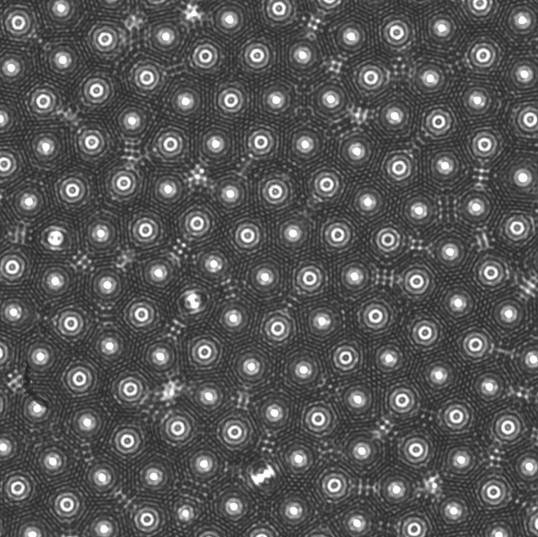
Image shows a self-assembly of 10 micron spheres viewed out-of-focus in bright-light optical microscope.

 Realize Engineering