Tag Archives: Engineering

Energy efficiency

We were sent a summary of our annual gas and electricity consumption recently by our local utility company. The utility quantified our consumption of both gas and electricity in units of kilowatt-hours (kWh). It is usual to be sold electricity in kilowatt-hours but most people are confused by this unit. Perhaps because they learnt at school that the units of energy are Joules in the SI system and the power rating of appliances is usually given in Watts. They might know that a Watt is a Joule of energy per second, so what is a kilowatt-hour? Well it is about 3.6 x 10⁶ Joules or 3.6 MJ, because it is 1000 Joules per second (= Watt) for one hour. So, I think the utility company should be telling me how many MegaJoules (MJ) we have consumed. After all we are used to seeing the energy content of our food quoted in kiloJoules (kJ), as well as calories.

The situation with our gas consumption is rather different because the utility does not supply energy but gas. The amount of energy that I get from it depends on what I do with it. If I burn it under conditions of constant volume, e.g. in a closed rigid container with exactly the correct concentration of oxygen then it will generate more energy in terms of heat than when it is burnt in constant pressure conditions, such as at atmospheric pressure in air. This is because in constant pressure conditions some of the energy released by combustion is used to expand the exhaust gases against the constant pressure, i.e. to do work, and only what is left is released as heat. So the utility should sell the gas by weight. If they sold it by volume then I would be paying more for the same amount of gas (i.e. number of hydrocarbon molecules) when the supply pressure was reduced.

Oil companies don’t sell gasoline or diesel in Joules for the same reason but they can sell by volume because it is always supplied to our cars at atmospheric pressure and the volume of a liquid is essentially constant.

We like to compare the efficiency of cars in terms of miles per gallon, or kilometres per litres. Efficiency can be loosely defined as what you want divided what you have to put in [See my post entitled ‘National Efficiency‘ on May 29th, 2013]. So for a car, what you want is kilometres travelled and what you put in is litres of fuel. However, when we are all driving plug-in electric cars then we will probably talk about how many kilometres per megajoule our car achieves [see my post entitled ‘Are electric car back?‘ on May 28th, 2014] . Unfortunately, while we are in transition with plug-in hybrids, car manufacturers like to quote very attractive kilometres per litre and ignore the electricity supplied via the plug – as if it were free!

Image courtesy KKN Liebstadt NPP from http://www.nucleartourist.com/systems/ct.htm
Watched kettle never boils

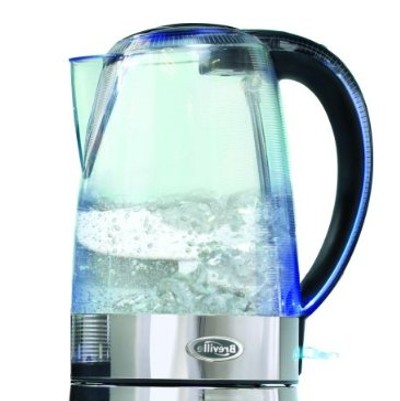
boiling kettleThe phrase ‘a watched kettle never boils’, or a watched pot as Americans might prefer say, is a familiar phrase.  We have probably all stood waiting for water boil thinking it is taking a long time.  This might be in part because the rate of boiling does indeed slow down during the heating process and then speed up towards the end.

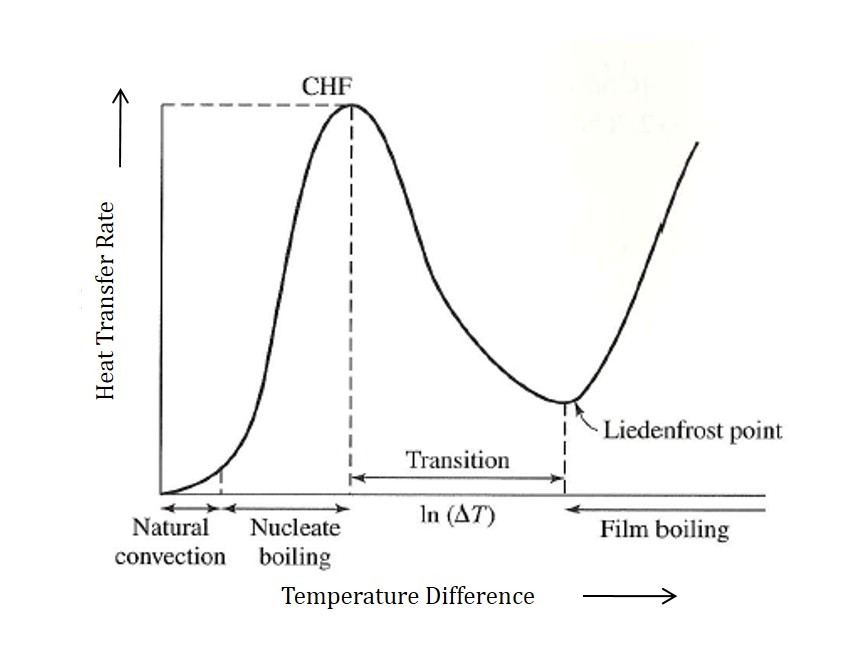
When an electric kettle is first switched on the element in the bottom of the kettle heats up causing heat to be transferred by conduction to the water.  The water adjacent to the element rises in temperature becomes less dense, moves towards the surface and transfers heat by natural convection to the contents of the kettle.  As the temperature of the water rises, tiny bubbles form on the element due to local boiling.  Bubbles are dislodged by new ones forming and float up to the surface giving the appearance that complete boiling is imminent.  However, as the temperature rises further the element becomes completely covered by a film of vapour that insulates the element from the water and slows down heat transfer to the water.  This delays boiling until the element has pumped enough energy (heat) into this film for heat transfer to occur across it from the element to the water. Sections of the film tend to break away and belch onto the surface of the water.  This process of large bubble formation and belching on the surface usually establishes itself fairly quickly once the first one has broken free and we see the familiar violent boiling of the kettle.

So the watched kettle has boiled but only after what might have seem like an interminable delay.  If you have a transparent electric kettle then you can watch this happen, otherwise you could watch a YouTube video – possible the most boring video on YouTube?

The process described above is known as the Liedenfrost effect and is illustrated graphically in the chart below, which is based on Figure 6.16 in ‘The Design and Simulation of Thermal Systems‘ by NV Suryanarayana and Oner Arici published by McGraw-Hill.  There are a number of more comprehensive explanations available, for example by Jearl Walker.  The Leidenfrost effect is also responsible for the way water disperses in liquid droplets across a very hot surface instead of evaporating as steam, see this Youtube clip for more explanation.

boiling graph


The Charismatic Engineer

stanfordcloisterEngineers do not have a great reputation for being charismatic leaders or communicators. In both print and speech we have a tendency towards being precise and concise, which often also means boring. However communicating is probably the most important part of the job for many engineers and for this charisma is important. The German historian and sociologist, Max Weber observed that people voluntarily comply with three types of authority: traditional, rational-legal and charismatic. Traditional authority is the type vested in age-old rules and conventions; so not much chance of engineers possessing much of this type of authority. Rational-legal authority derives from the bureaucratic or administrative system, the ‘laws’ enacted by it and their implementation by those appointed within the system; so again not much hope for engineers except within some engineering organisations. Charismatic authority is possessed by individuals who appear to be extraordinary or have ‘at least specifically exceptional powers or qualities’. I think engineers have a decent chance of this last type of authority. As a profession, we have pretty extraordinary powers. Just look at our ability to provide round-the-clock water, food, energy, shelter and transportation in densely populated cities. Never mind adapting systems to cope with natural disasters or designing vehicles to land on Mars. So as individuals we need to develop exceptional qualities of integrity and communication, if we want society, or even just the CEO, to listen to and accept our advice.

Many engineers will shy away from the line that I have expressed above, preferring to hide in the test lab or behind their computer screen. This is in part because engineers are trained as problem-solvers and solving problems often requires a degree of solitude and silence that is not compatible with high profile communication. This conflict is shared by many scientists, who are often judged by their publication profile rather than their scientific achievements in part because it is easier to count publications that to assess the significance of achievements. Some of us enjoy the solitude of writing blogs, lectures and papers. I find the process deepens my understanding and goes a long way to resolving the conflict between communicating and problem-solving. However, it can be difficult in a modern professional life to create the necessary calm for problem-solving creativity.

Marily Oppezzo and Dan Schwartz at Stanford University have shown that taking a walk can stimulate creativity. So perhaps monks knew this when they built magnificent cloisters adjacent to many great cathedrals and monasteries in Europe. However, you don’t need a beautiful set of cloisters, the Stanford researchers found that creativity increased by the same amount whether their subjects strolled in Stanford’s lovely leafy campus or walked on a treadmill opposite a blank wall. So next time you feeling challenged by the preparation of a charismatic talk or you are stuck solving a problem, take stroll. The Stanford team found that eight minutes was enough to produce an appreciable improvement in creativity.

And oh, yes. Don’t forget to leave behind all your electronic devices when you walk. Their silence is crucial. See my post entitled ‘Silence is golden’ on January 14th, 2014.

Sources:

Robert P Crease, ‘Critical Point: Why don’t they listen?’ Physics World, May 2014

Max Weber, ‘Economy and Society’, 1922

Gretchen Reynolds, ‘Take a walk to stimulate creativity’, INYT, May 7th, 2014

Oppezzo, M., J. Schwartz, D., Give your ideas some legs: the positive effect of walking on creative thinking, Experimental Psychology: Learning, Memory & Cognition, April 2014.

Felicity Mellor, Shhhh?  Scientists need to talk about not talking, The Guardian Newspaper blog January 15th, 2014 also The power of silence, Physics World, April 2014

Are electric cars back?

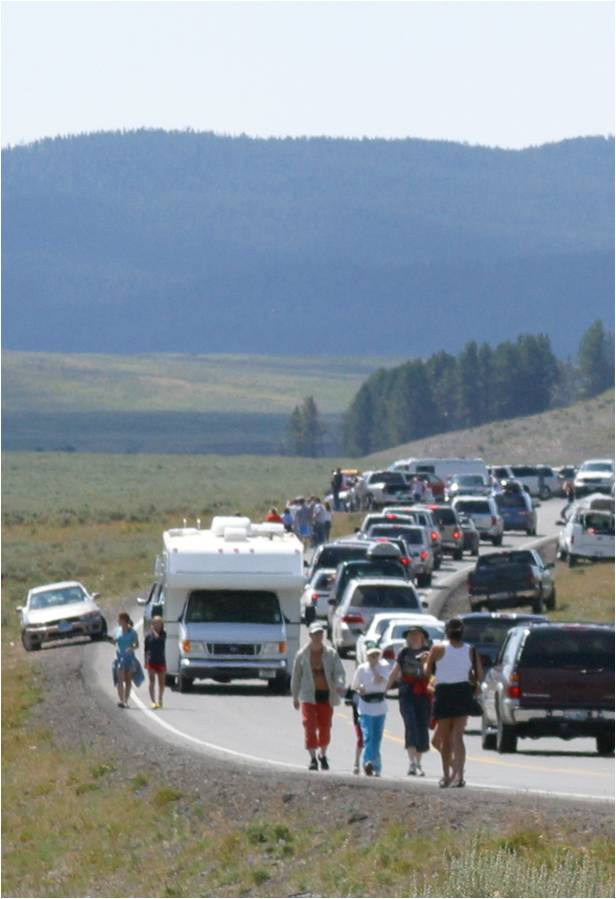
roadchaosDid you know that before Henry Ford developed the Model T Ford motorcar, the nearly 40% of automobiles on US roads were electric vehicles? I think we will be heading back in this direction if we are to have any hope of achieving reductions in carbon dioxide emissions. The implications for the national electricity grid of a major shift to plug-in cars would be very serious and has been the subject of several recent studies including a third year undergraduate dissertation that I have been supervising and from which came the opening factoid.

It is relatively easy, through not without obstacles, to envision a shift to all-electric cars; after all there are several models on the market now. However, an all-electric aircraft seems further in the future, if only because of the weight of the batteries required. Engineers would talk about the energy density, i.e. the amount of energy that can be extracted from a kilogram of kerosene compared to a kilogram battery. However, perhaps the future is not far away because the New Scientist reported earlier in the month [3rd May, 2014] that Airbus had completed the test flight of an electric plane, the E-fan. It is a two-seater plane with a pair of 65 kilogram lithium battery packs driving a pair of 30 kilowatt motors attached to the fans. The E-fan will cruise at 185 kilometres per hour and flies for an hour. Relative to a modern computer jet, this performance is similar to the early plug-in cars relative to their internal-combustion-engined rivals. But, it is an indication of bigger things to come. In the meantime, if you want an E-fan then a new division of Airbus called Voltair will be producing them by 2017.

I mentioned undergraduate dissertations because they have filled a sizeable chunk of my waking hours for a few weeks. This is an annual ritual in the UK during May when final-year undergraduate students are busy submitting and defending their dissertations. I had a pile of twelve dissertations to read and assess. Eight of them belonged to students that I have supervising in weekly one-to-one meetings since last October and the remainder were dissertations for which I was the assessor. All of the students that I supervised were studying either Mechanical or Aerospace Engineering and so the topics of their projects were associated mainly with energy and, or transportation. Some of these projects are provided by engineering companies (those with an asterisk in the list below), which guarantees their topicality and relevance, while others spin-out from my interests and research activities. So many of the topics in the list below will come as no surprise to regular readers of this blog.

Dissertation projects supervised during 2013-14:

Investigation into a redesign of graphite re-entrant seals for a nuclear power station*

Conceptual design for a carbon sequestration system for automobiles

Recommendations for achieving a low carbon airline industry

Strain-based defect analysis of industrial pipe-work*

Investigation of random frequency excitation of an aerospace body panel

Assessment of preload control of threaded fasteners in motorcycle production*

Recommendations for technology-based approaches to reduced ecological footprints

Investigation of low carbon power for plug-in electric vehicles