Tag Archives: Engineering

Emergent properties

storm over canyonPerhaps my strongest memory of being taught at school is that of the head of chemistry combining hydrogen and oxygen using an old glass drinks bottle and a burning taper.  The result was explosive, exciting and memorable.  It certainly engaged the attention of everyone in the class.  As far as I am aware, the demonstration was performed at least once per year for decades; but modern health and safety regulations would probably prevent such a demonstration today.

One of the interesting things about combining these two gases at room temperature is that the result is a liquid: water.  This could be construed as an emergent property because an examination of the properties of water would not lead you to predict that it was formed from two gases.  The philosopher C.D. Broad (1887-1971) coined the term ’emergent properties’ for those properties that emerge at a certain level of complexity but do not exist at lower levels.

Perhaps a better example of emergent properties is the pressure and temperature of steam.  We know that water molecules in a cloud of steam are whizzing around randomly,bouncing into one another and the walls of the container – this is the kinetic theory of gases.  If we add energy to the steam, for instance by heating it, then the molecules will gain kinetic energy and move around more quickly.  The properties of pressure and temperature emerge when we zoom out from the molecules and consider the system of the steam in a container.  The temperature of the steam is a measure of the average kinetic energy of the molecules and the pressure is the average force with which the molecules hit the walls of the container.

Manuel Delanda takes these ideas further in a brilliant description of modelling a thunderstorm in his book Philosophy and Simulation: The Emergence of Synthetic Reason.  There are no equations and it is written for the layman so don’t be put off by the title.  He explains that emergent properties can be established by elucidating the mechanisms that produce them at one scale and then these emergent properties become the components of a phenomenon at a much larger scale. This allows engineers to construct models that take for granted the existence of emergent properties at one scale to explain behaviour at another, so for example we don’t need to model molecular movement to predict heat transfer. This is termed ‘mechanism-independence’.

Ok, that’s deep enough for one post!  Except to mention that Capri & Luisi have proposed that life is an emergent property that is not present in the constituent parts of living things and which only appears when the parts are assembled.  Of course, it also disappears when you disassemble a living system, i.e. dissect it.

Sources:

Chapter 1 ‘The Storm in the Computer’ in Philosophy and Simulation: The Emergence of Synthetic Reason by Manuel Delanda, published by Continuum, London, 2011 (pages 7-21).

Fritjof Capra and Luigi Luisi, The Systems View of Life: A Unifying Vision, Cambridge University Press, 2014.

Where science meets society

Harley_Davidson first electric motorcycle [http://www.harley-davidson.com/content/h-d/en_US/home/motorcycles/project-livewire.html#gallery]

Harley-Davidson’s first electric motorcycle

‘Where scientific advances impact on the health, wealth and well-being of individuals’ is a longer version but I like the pithy version in my title: ‘Where science meets society’.  They are both descriptions of engineering.  Not the dictionary-style definition of my earlier post [‘Skilled in ingenuity‘ on August 19th, 2015] but a much better tag line to go with those discussed in ‘Engineers sustain society‘ on May 27th, 2015.

Engineers design, build and maintain systems that deliver capabilities.  Society and individuals are usually not interested in the system just the capability, unless the system is particular aesthetic or advertising creates the need to own something, i.e. the system becomes a fashion accessory.   Consumers are usually more interested in the reliability and life expectancy of the system, or in other words, they would like the absolute certainty that the capability will be available whenever and for as long as it is required.  This expectation is problematic for engineers because nothing is certain and entropic degradation ensures nothing remains the same forever.  Creative thinking is needed to generate elegant solutions that are cheaper than those of your competitors and this should ensure that engineers are never replaced by artificial intelligence [see my post entitled ‘Engineers are slow, error-prone…‘ on April 29th, 2015].  Engineering might not be a job for life, because nothing is certain, but a bright future, at least until consumers become post-modernists with a tolerance of uncertainty and ambiguity.

Sources:

Thumbnail: http://www.harley-davidson.com/content/h-d/en_US/home/motorcycles/project-livewire.html#gallery

Skilled in ingenuity

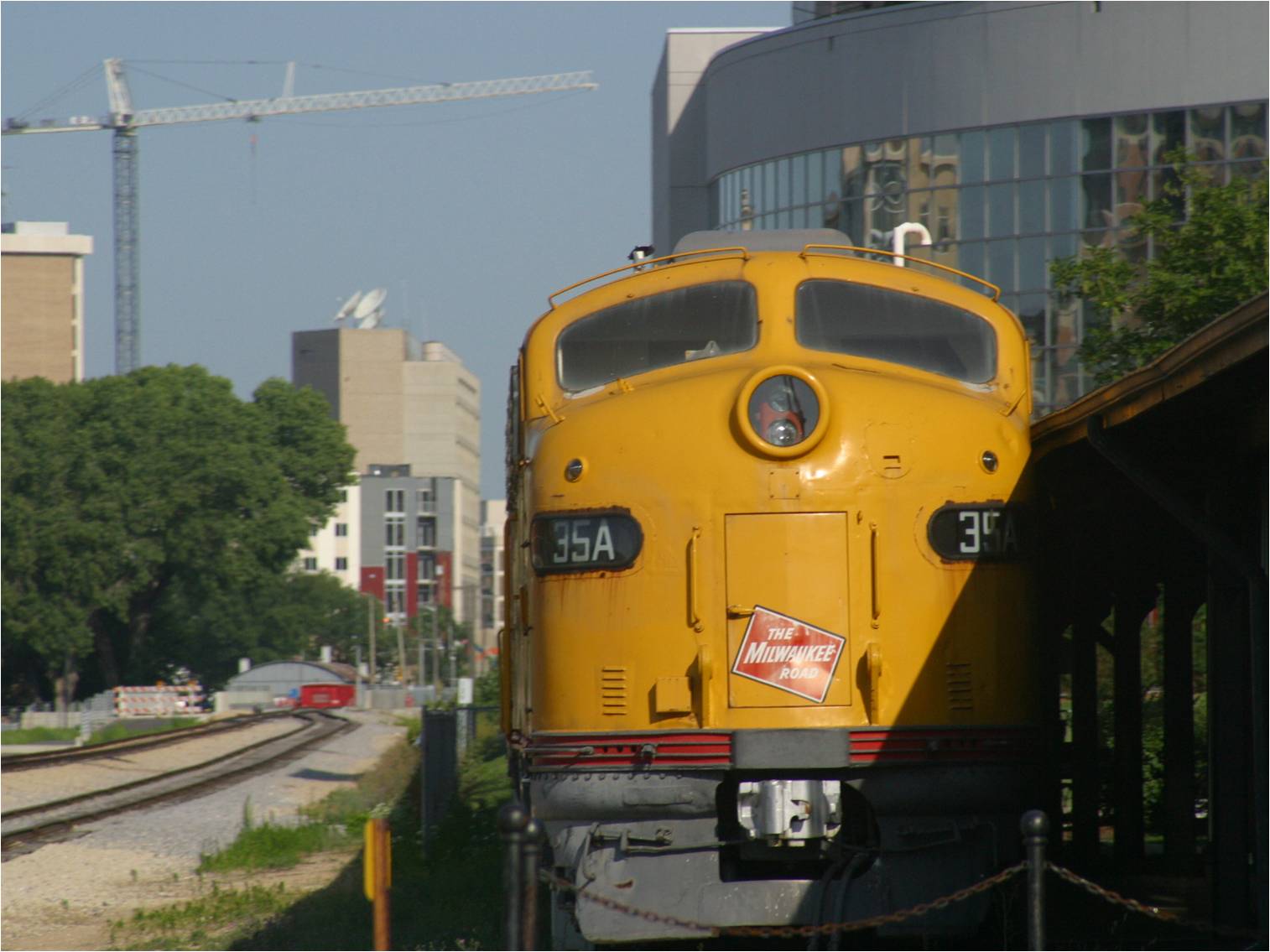
traininstationIf you look up the word engineering in the dictionary then the first few definitions will probably refer to engines, structures and such like, but the third or fourth definition might describe it as ‘the action of working artfully to bring something about‘.  The origins of the word ‘engineering’ lie in the Latin word ‘ingeniare’, which means to contrive or devise.  Unfortunately, engines have been a phenomenal success and are now synonymous with our profession.  I say unfortunately, because it hides from the general public that we do far more that contrive and devise engines as sources of power.  The vast majority of engineers have nothing to do with engines and instead work artfully to bring about all of the other things in our man-made world.

The Roman poet, Lucretius in his poem De Rerum Natura (On the nature of things) wrote ‘Nothing in the body is made in order that we may use it. What happens to exist is the cause of its use’.  In other words things did not evolve in nature to meet a demand but instead uses were found for what evolved.  Engineering is the reverse of this: its use is the cause of the existence of everything.  Well, perhaps not quite because people find uses for devices which were not thought of by even the most artful designer.

Sources:

http://www.oxforddictionaries.com/definition/english/engineering

No closed systems in nature

WP_20150722_008 (2)While I was away on vacation last month, WordPress sent an email congratulating me on the third anniversary of the start of this blog.  This stimulated me to look at the statistics on the most frequently read, or at least viewed, of the approximately 160 postings that I have written.  Top of the list is an early posting which asks the question ‘Are there any closed systems in nature?’ (see post entitled ‘Closed systems in Nature?’ on December 21st, 2012).  Since this question has generated more interest than any of my subsequent postings, it seems appropriate, after 30 months, to attempt an answer.

Alexander Bogdanov (1873-1928), and independently Karl Ludwig von Bertalanffy (1901-1972), recognized that all living systems are open systems in the thermodynamic sense, which operate far-from equilibrium and require a continual flux of matter and energy to sustain life.  By contrast, closed thermodynamic systems tend to settle into a state of equilibrium, i.e. with no differences in energy, no chemical reactions in progress and no unbalanced forces.

The cybernetist, William Ross Ashby (1903-1972) suggested that living systems are energetically open but operationally closed, i.e. closed to information and control.  In other words, a cell, or any other living organism, needs no information from the environment to be itself. All the information for a bee to be a bee is contained inside a bee (for more on the bee theme see ‘Entropy management for bees and flights‘ on November 5th, 2014 and ‘Fields of flowers’ on July 8th, 2015).  These concepts, of being energetically open and operationally closed, form the essence of the characteristics of biological life as described by Capra and Luisi, whom I have loosely quoted in the previous sentence.

So, to answer my original question, there are no closed living systems in nature.  We can take this a step further: in 1927  Charles Elton defined an ecosystem in terms of the flow of energy and matter from one organism to another. Consequently, the only waste generated by an ecosystem as a whole is the entropy associated with respiration, which allows the system to satisfy the second law of thermodynamics, and the waste is replaced with energy from the sun through photosynthesis.  The sum of all ecosystems is the biosphere.  So, it can be construed that everything on Earth is part of one giant open system – this is essentially the Gaia hypothesis.

Sources:

Gorelik, G., Principal ideas of Bogdanov’s tektology: the universal science of organisation, General Systems, 20:3-13, 1975.

Bertalanffy, L. von, General Systems Theory, New York: Braziller, 1968.

Ashby, W.R., Design for a Brain, New York: Wiley, 1952.

Capra, F., Luisi, P.L., The Systems View of Life – A unifying vision, Cambridge: Cambridge University Press, 2014.

Elton, C.S, Animal Ecology, London: Sidgwick & Jackson, 1927 (reprinted 2001, University of Chicago Press).

Lovelock, J., Gaia, Oxford: Oxford University Press, 1979.