Tag Archives: art

Pebbles – where are yours?

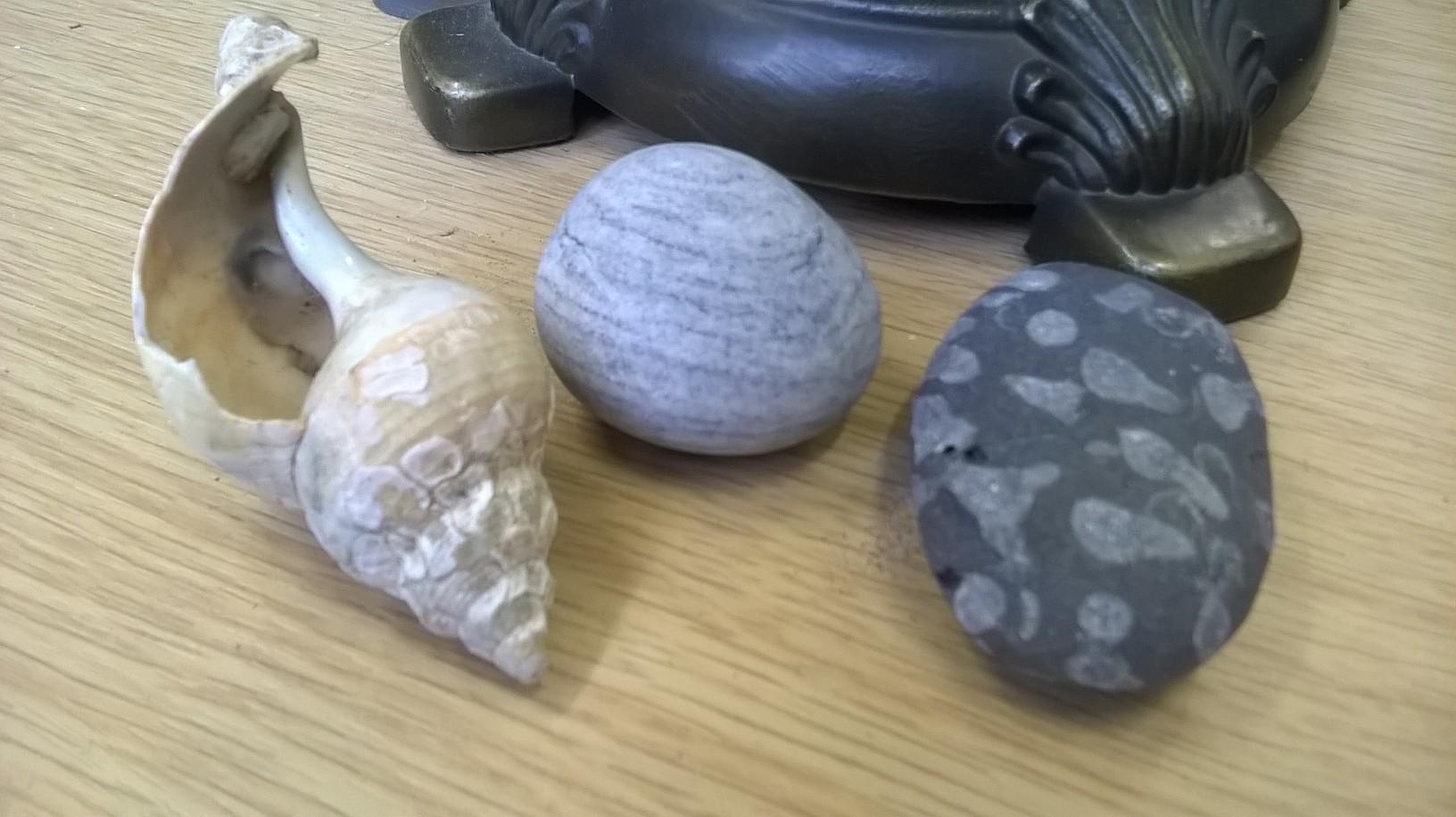
The picture shows a little collection of pebbles and a shell that sits on the desk in my office.  There are similar collections in various locations at home and some of my coats have a pebble permanently in one pocket – there’s even a shell on the dashboard of our car.  They have all been picked up during walks on beaches [see my post entitled ‘Take a walk on the wild side‘ on 26th August 2015] and serve as reminders of the ‘slowness’ enjoyed on vacation [see my post ‘Slow down, breathe your own air‘ on December 23rd, 2015].  Barbara Hepworth owned a similar collection of stones that you can see in the Hepworth Wakefield.  On the subject of this habit she wrote in 1961: ‘Many people select a stone or a pebble to carry for the day.  The weight and form and texture felt in our hands relates us to the past and gives us a sense of a universal force.  The beautifully shaped stone, washed up by the sea, is a symbol of continuity, a silent image of our desire for survival, peace and security.’  I could not express it better so I didn’t try.

The quote is from a contribution to the film Barbara Hepworth directed by John Read, BBC TV, 1961 and can be found in Barbara Hepworth: Writings and Conversations, edited by Sophie Bowness, London: Tate Publishing, 2015.
Steamy show

The Australian Academy of Technology and Engineering published a report sometime ago called ‘Technology is really a way of thinking‘.  They were right.  Once you become an engineer, then you can’t help looking at everything through the same ‘technology’ lens.  Let me give you an example.

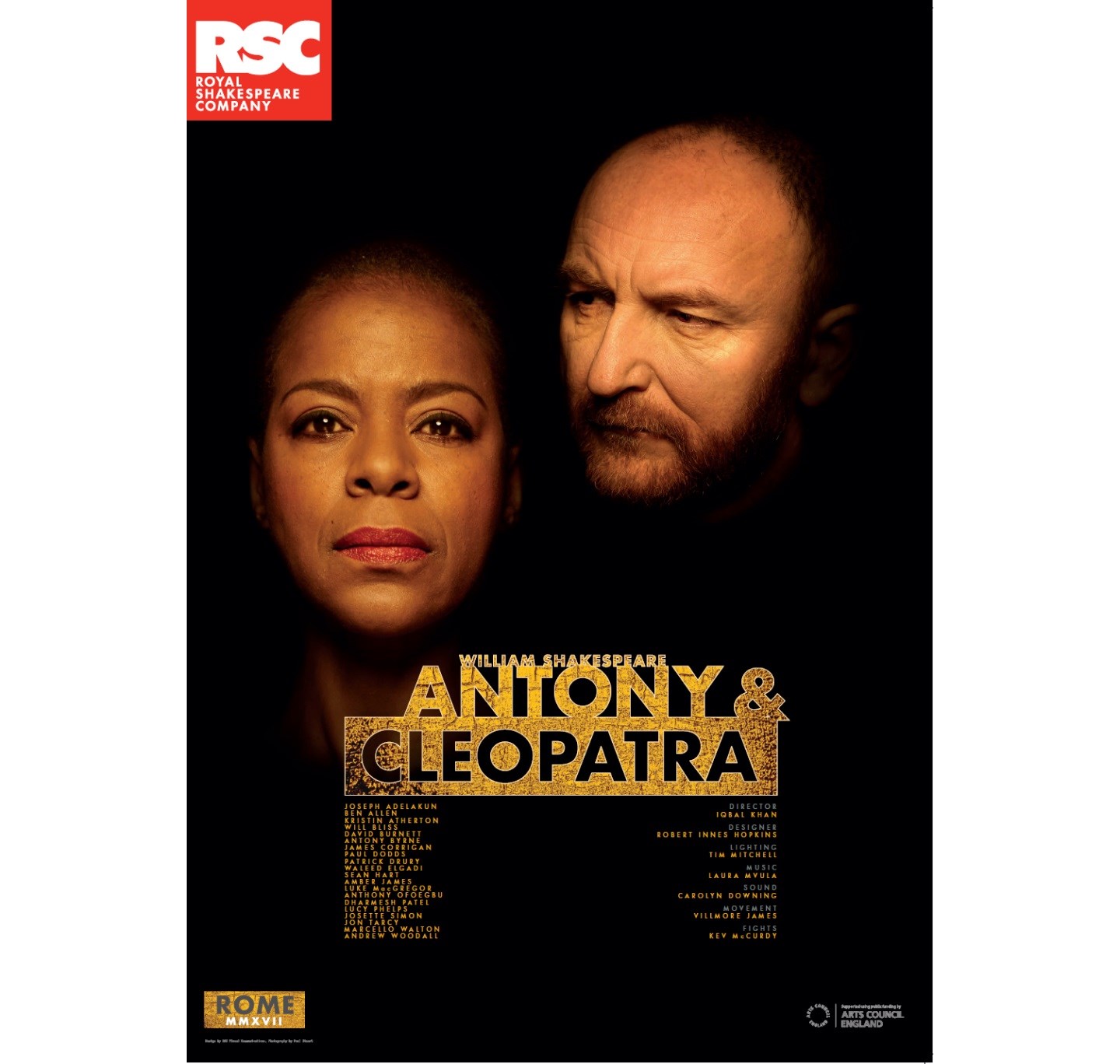
A couple of weekends ago we went to see  ‘Anthony and Cleopatra‘ performed by the Royal Shakespeare Company in Stratford-upon-Avon.  It was a magnificient spectacle and a captivating performance, especially by Josette Simon as Cleopatra.  Before the performance started, we couldn’t help noticing the columns of steam forming in the auditorium from the ceiling downwards.  Initially, we thought that they were a stage effect creating an atmosphere in the theatre; but then I realised, it was ‘steam’ forming as the air-conditioning pushed cold air into the auditorium.  It’s the same effect that sometimes causes alarm on an aircraft, when it appears that smoke is billowing into the cabin prior to take-off.

The air in the theatre was a mixture of air and water vapour that was warm enough that the water was completely gaseous, and hence, invisible.  However, when the air-conditioning pumped cold air into the theatre, then the mixture of air and water was cooled to below the dew point of the water vapour causing it to condense into small droplets that were visible in the auditorium’s downlighters, forming the columns of ‘steam’.  Of course, the large mass of warm air in the auditorium quickly reheated the cold air, causing the droplets to evaporate and the columns of steam to disintegrate.  Most people just enjoyed the play; it’s just the technologists that were preoccupied with what caused the phenomenon!

If you want a more technical explanation, in terms of partial pressures and psychrometry, then there is an Everyday Engineering Example lesson plan available : 5E lesson plan T10 – psychrometric applications.

Picture: https://www.rsc.org.uk/shop/item/30200-anthony-and-cleopatra-poster-2017/

The red crane

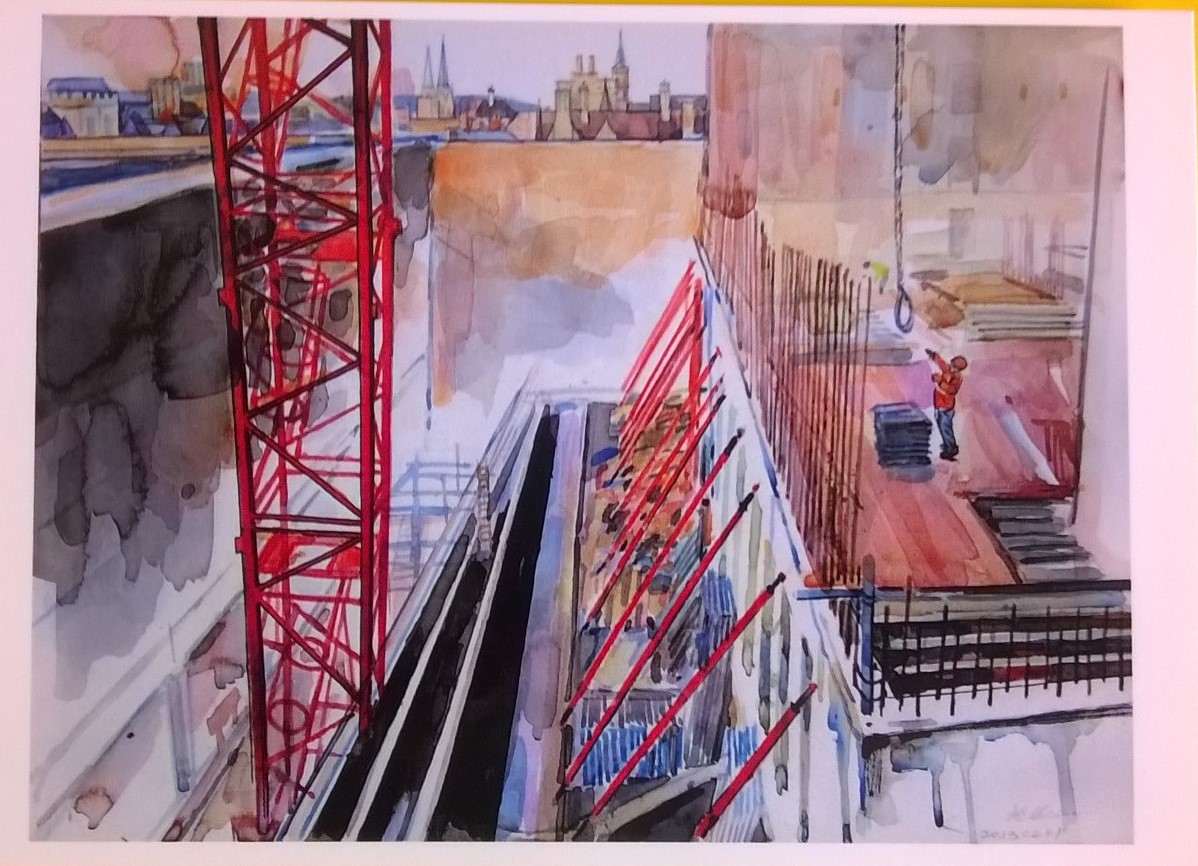
The red crane by Weimen He

One of my favourite institutions to visit is the Bodleian’s Weston Library in Oxford.  I have written before about their rotating exhibition in the Treasury of unique books and manuscripts from their collection [see my post entitled ‘Pope and Austen‘ on September 9th, 2015].  A recent visit did not disappoint and included one of John Le Carré’s manuscripts showing his extensive editing as well as early texts written on birch bark.  However, it was in the shop that something really caught my eye.  The fusion of art and engineering in a postcard depicting a painting called ‘The red crane’, by artist in residence, Dr Weimen He, capturing the moments in time during the refurbishment of the library.  This level of fusion is rare in my experience and perhaps the ethos that created it is one of the reasons the Weston Library is such a pleasure to visit.

The Roman architect, Vitruvius identified the three principles of good structural design to be ‘firmitas, utilitas, venustas’ or durability, utility and beauty.  Too often utility, including value for money, trumps beauty and shortens horizons for durability; so that little is contributed to our culture and nothing worthwhile will be left for future generations.

BTW there is a very large bookshop next door to the Weston Library and I couldn’t resist buying ‘The Story of a Brief Marriage‘ by Anuk Arudpragasam.  It’s a beautiful novel of consciousness about love and war.

Listening with your eyes shut

I am in the London Underground onboard a train on my way to a conference on ‘New Approaches to Higher Education’ organised by the Institution of Engineering and Technology and the Engineering Professors’ Council.  The lady opposite has her eyes closed but she is not asleep because she opens them periodically as we come into stations to check whether it’s her stop.  I wonder if she is trying to reproduce John Hull’s experience of the depth of sounds as a blind person [see my post entitled ‘Rain brings out the contours in everything‘ on February 22, 2017].  For the second time in recent weeks, I close my eyes and try it for myself.  It is surprising how in a crowded train, I can’t hear anyone, just the noise made by the train.  It’s like a wobble board that’s joined by a whole percussion section of an orchestra when we go around a bend or over points.  The first time I closed my eyes was at a concert at the Philharmonic Hall in Liverpool.  My view of the orchestra was obstructed by the person in front of me so, rather than stare at the back of their head, I closed my eyes and allowed the music to dominate my mind.  Switching off the stream of images seemed to release more of my brain cells to register the depth and richness of Bach’s Harpsichord Concerto No. 5.  I was classified as tone deaf at school when I was kicked out of the choir and I learned no musical instruments, so the additional texture and dimensionality in the music was a revelation to me.

Back to the London Underground – many of my fellow passengers were plugged into their phones or tablets via their ears and eyes.  I wondered if any were following the MOOC on Understanding Super Structures that we launched recently.  Unlikely I know, but it’s a bit different, because it is mainly audio clips and not videos.  We’re trying to tap into some of the time many people spend with earbuds plugged into their ears but also make the MOOC more accessible in countries where internet access is mainly via mobile phones.  My recent experiences of listening with my eyes closed, make me realize that perhaps we should ask people to close their eyes when listening to our audio clips so that they can fully appreciate them.  If they are sitting on the train then that’s fine but not recommended if you are walking across campus or in town!