Reading offline

138-3816_IMGDavid Mikics, writing in the New York Times, reports recent research suggests that reading books is an important aspect of coming to know who we are.  It is a private experience that is best done without distractions, i.e. all of your attention capacity is employed on the book [see my post entitled ‘Silence is golden‘ on January 14th, 2014 for more on attention capacity].  Our brains can achieve a much deeper level of thought and engagement when they are focussed on a single task without distractions.  This just does not happen when reading on-line because there are too many distractions.  Some research has shown that office-workers are distracted every three minutes and that it takes about 20 minutes to achieve a high level of engagement in a task.  So it is easy to see the attraction for bosses of replacing white-collar workers by smart machines [see my post entitled ‘Smart Machines‘ on February 26th, 2014].

But David Mikics suggests that reading a novel is important for deeper reasons associated with learning lessons about humanity that are not available elsewhere.  Novels take us on a journey with another self and allow us to look into people’s inner lives.  None of this can be achieved reading short blogs or watching short videos on-line and is perhaps why reading a good novel on holiday is such a cathartic and popular activity.

But don’t stop reading my blog instead click the ‘follow’ button if you have not already and then you can be distracted every Wednesday!

http://www.nytimes.com/2013/05/05/opinion/sunday/a-focus-on-distraction.html

March Madness

basketballSome of you will be familiar with ‘March Madness’ which starts next week.  It is a couple of weeks in March when US universities play a knockout basketball competition.  At Michigan State University, where I used to be a professor, there would be huge disappointed if we did not make it into the final sixteen and great excitement if we were in the final four or even the final.

Basketballs can be a useful, and in the USA in March topical, prop to use in teaching dynamics.  In the lesson plan below angular momentum is used to investigate a basketball rolling over an obstacle, which could be someone’s foot rather than wooden block used in the example.  Of course, with 91 days to go until the start of the FIFA World Cup in Brazil, you could easily switch to a football.

5EplanNoD9_Impulse&momentum_methods

See the Everyday Examples page on this blog for more lesson plans and more background on Everyday Examples.

Emergent inequality

115-1547_IMGI wrote a few weeks ago about my visit to a conference on high-performance computing and big data [see ‘Mining Data‘ on February 12th, 2014].  We are able to use high performance computers to create simulations of complex engineering systems before we embark on the usual costly, and sometimes catastrophic, construction of the real system.  Some complex systems exhibit emergent behaviour, meaning that although we understand and can model the individual components when we connect them together the system behaves a new and unexpected manner, which is why it is good practice to simulate a system before building it.  Manuel Delanda has written eloquently on the topic of emergence in simulations in The Emergence of Synthetic Reason.  I encourage my first year thermodynamics students to read at least the first chapter which an amazing tour-de-force that ranges effortless from spontaneous flows of energy at the molecular level to the formation of thunderstorm systems.

Nature has many systems that could be described as emergent at some level or other.  For instance, the ants in an anthill go about their simple interactions but have no idea about how the anthill works or, perhaps more amazingly, the rafts that an ant colony can form using their bodies during a flood, as shown in recent research by Jessica Purcell and her co-workers at the University of Lausanne. With the exception of the queen, there is no leader in an anthill and all of the ants appear to be equal.  The same is not true in human society where currently 1% of the population own nearly half of the world’s wealth.

Seven out of ten people live in a country where inequality has increased in the last 30 years according to a recent Oxfam report.  This is bad news for everyone, including the wealthy because Richard Wilson and Kate Pickett have shown that in developed countries, there is a correlation between the incidences of mental illnesses and the level of income difference between the rich and poor.  A more recent study of the US found that depression was more common in states with greater income inequality, after taking account of age, income and educational differences.   Wilson and Pickett conclude that we become less nice and less happy people in more unequal societies regardless of our position in the social spectrum.

Sources:

http://in.reuters.com/article/2013/10/09/creditsuisse-wealth-idINL6N0HZ0MD20131009

http://opinionator.blogs.nytimes.com/2014/02/02/how-inequality-hollows-out-the-soul/

http://www.huffingtonpost.com/2013/11/01/income-inequality-depression_n_4190926.htm

http://www.huffingtonpost.com/winnie-byanyima/a-plan-for-tackling-inequ_b_4768096.html

Smart machines

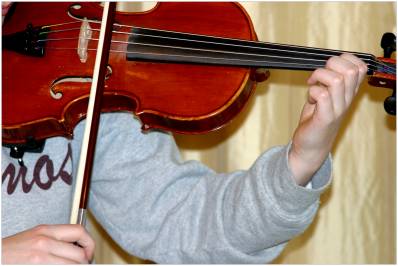
violinMy enthusiasm for the concert we went to some weeks ago is only just beginning to fade [see Rhapsody in Blue posted on 5th February, 2014].  I have one of Michel Camilo’s pieces still going around in head [listen here].  On the subject of playing the piano, people are trying to build robots that can play the piano using rubbery fingers although they have had more success with a robot that can play a violin [see this Youtube clip].

These robots might be clunky or primitive compared to a maestro like Michel Camilo, but nevertheless smart machines are coming.  Professor Noriko Arai is developing a computer, called Todai-Kun, that could ace college entrance exams.  She hopes that by 2021 Todai-Kun will pass the entrance exam for Tokyo University, which is the top university in Japan.  It is tough for graduates to find jobs at the moment, so imagine what it will be like if computers are as smart as graduates!

Mechanisation destroyed jobs on the farm, robots have replaced assembly-line workers and now smart computers are going to replace white collar workers.  In the future, if you want a well-paid job you are likely to need niche skills that involve a combination of creativity, innovation, problem-solving and leadership.  I am probably biased but that sounds like a professional engineer.

In the same context, David Brooks has suggested that, what he calls the ’emotive traits’ will be required for success, i.e. a voracious lust of understanding, an enthusiasm for work, the ability to grasp the gist and an empathetic sensitivity for what will attract attention, which with the exception of the last one also sound like the attributes of a professional engineer.

I have used the violin playing robot as the focus for a 5E lesson plan on the Kinematics of Rigid bodies in 3-dimensions see: 5EplanNoD10_Kinematics_of_rigid_bodies_in_3D .  Not quite an ‘Everyday Example’ but one with which many students can connect.

Sources:

http://www.nytimes.com/2013/12/30/world/asia/computers-jump-to-the-head-of-the-class.html?_r=0

http://www.nytimes.com/2014/02/04/opinion/brooks-what-machines-cant-do.html?_r=0