Lost at sea

leaving usa

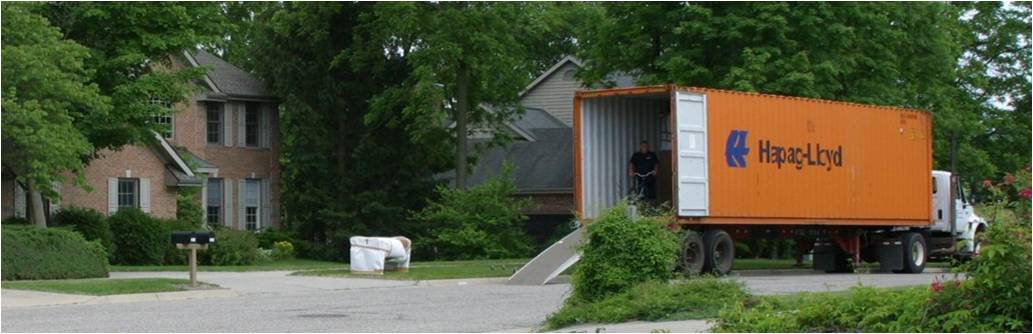
Loading our shipping container to leave USA

Our inability to find flight MH370 was still very prominent in the national media when I was in China last month.  The search for the aircraft and the false alarms caused by floating rubbish at sea has raised awareness about the amount of junk floating around our oceans, for instance 10,000 shipping containers are lost at sea every year,  or more than 1 every hour.  However, there are about 17 million containers in the world, so we only lose about 0.05% per annum which is a negligible amount unless its the one containing all your household goods as you move continents!

I was interested to find a high level of environmental awareness in China.  Alongside the reports on the search for flight MH370 the China Daily had a centre-page spread on Thursday 24th April, 2014 about ‘How pollution affects marine life’ with a focus on the garbage patches in the Pacific and North Atlantic oceans.  The North Atlantic Garbage Patch is more than 100 kilometres in diameter with about 200,000 pieces of debris per square kilometre trapped in the gyre. These are big numbers and if you break it down to small areas then it is one piece of debris per five square metres, which a box 2.24 x 2.24m or 7 x 7 ft.  This doesn’t sound so bad until you consider the impact on wildlife, for instance 86% of all sea turtles are affected by entanglement or ingestion of marine debris and an autopsy on a sperm whale found dead in Spanish waters concluded that the cause of death was ingestion of 24 meters of plastic.  About 300 million tonnes of plastic are produced globally per year of which it is estimated about 6 million tonnes (2%) ends up in the oceans, with 80% being washed into the sea from rivers or blown by the wind from rubbish dumps.

The second law of thermodynamics [see my post on June 5th, 2013 on Impossible Perfection] limits the efficiency of all processes with the result that engineers are used to not worrying about losses of 10% or less so that the losses to the ocean of 0.05% and 2% mentioned above would be considered negligible but the enormous scale of human processes mean that the losses are having a significant impact on the fauna of the planet.  Engineers need to lead society towards a more harmonious and protective relationship with the rest of the planet.

Source: http://www.billiebox.co.uk/facts-about-shipping-containers/

In China

beijingI am on a short trip to China and if you are reading this post then it means that I have been unable to access my blog from China.  Normal service should resume next week.  The picture came from a previous visit!

100 Everyday Engineering Examples

bookletsSTOP PRESS – more than 100 Everyday Engineering Examples published in more than 40 lesson plans on a new webpage.

I have been including 5E lesson plans as part my recent posts.  These lesson plans are primarily for people teaching first-year engineering undergraduates, which is pulling me away from the intended focus of this blog. So, I have decided to publish all of the lesson plans that I have written & edited on a separate page.  There are more than 100 Everyday Engineering Examples in the more than forty lesson plans.  If that is not enough Everyday Engineering Examples then you can find more at ENGAGE

Now back to Realizing Engineering – we live in an almost entirely engineered world. Engineers, as a profession, are so good at their job that most people are unaware of their influence on society.  Look around you. Engineers will have designed the machines and transport infrastructure to supply most of what you can see as well as what you are probably sitting in and on.

The Royal Academy of Engineering has produced an ebook to expand on this theme of ‘Engineering in Society’ for first year engineering undergraduates but I think its suitable for anyone considering a career in Engineering.

Singing in the rain

Followers of this blog might have deduced that I live within sight of the sea, which means that it is nearly always windy.  After a rain storm the streets of the city are usually littered with broken umbrellas.  I suspect that most of these belong to the many tourists that visit Liverpool, because local residents know that the wind will wreck any umbrella that you are brave enough or foolish enough to put up.

It is relatively straightforward to estimate the forces involved in holding an umbrella up in a gale by using control volume analysis.  The lesson plan below includes this Everyday Engineering Example together with two more control volume analyses.

Momentum 5EplanNoF5_momentum

The title of the posting is pretty tenuous this week: Gene Kelly sings ‘Singin’ in the rain’ without an umbrella in the film of the same name, see www.youtube.com/watch?v=D1ZYhVpdXbQ – well its difficult to be creative all of the time, or even some of the time!

See also the Everyday Engineering Examples page on this blog for more lesson plans and more background on Everyday Engineering Examples.