Category Archives: Thermodynamics

Watched kettle never boils

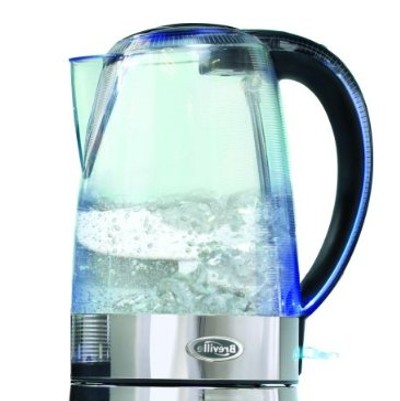
boiling kettleThe phrase ‘a watched kettle never boils’, or a watched pot as Americans might prefer say, is a familiar phrase.  We have probably all stood waiting for water boil thinking it is taking a long time.  This might be in part because the rate of boiling does indeed slow down during the heating process and then speed up towards the end.

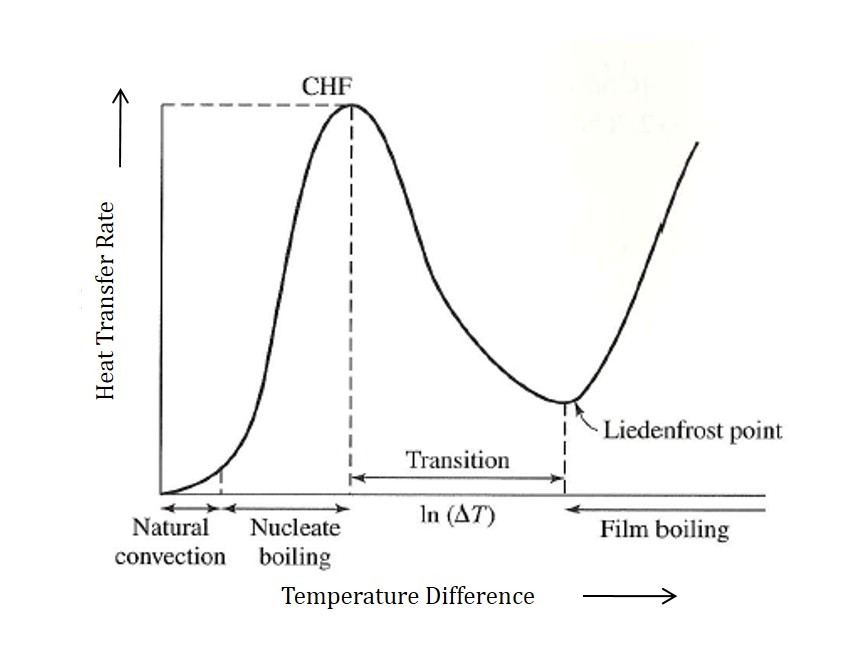
When an electric kettle is first switched on the element in the bottom of the kettle heats up causing heat to be transferred by conduction to the water.  The water adjacent to the element rises in temperature becomes less dense, moves towards the surface and transfers heat by natural convection to the contents of the kettle.  As the temperature of the water rises, tiny bubbles form on the element due to local boiling.  Bubbles are dislodged by new ones forming and float up to the surface giving the appearance that complete boiling is imminent.  However, as the temperature rises further the element becomes completely covered by a film of vapour that insulates the element from the water and slows down heat transfer to the water.  This delays boiling until the element has pumped enough energy (heat) into this film for heat transfer to occur across it from the element to the water. Sections of the film tend to break away and belch onto the surface of the water.  This process of large bubble formation and belching on the surface usually establishes itself fairly quickly once the first one has broken free and we see the familiar violent boiling of the kettle.

So the watched kettle has boiled but only after what might have seem like an interminable delay.  If you have a transparent electric kettle then you can watch this happen, otherwise you could watch a YouTube video – possible the most boring video on YouTube?

The process described above is known as the Liedenfrost effect and is illustrated graphically in the chart below, which is based on Figure 6.16 in ‘The Design and Simulation of Thermal Systems‘ by NV Suryanarayana and Oner Arici published by McGraw-Hill.  There are a number of more comprehensive explanations available, for example by Jearl Walker.  The Leidenfrost effect is also responsible for the way water disperses in liquid droplets across a very hot surface instead of evaporating as steam, see this Youtube clip for more explanation.
boiling graph


Are electric cars back?

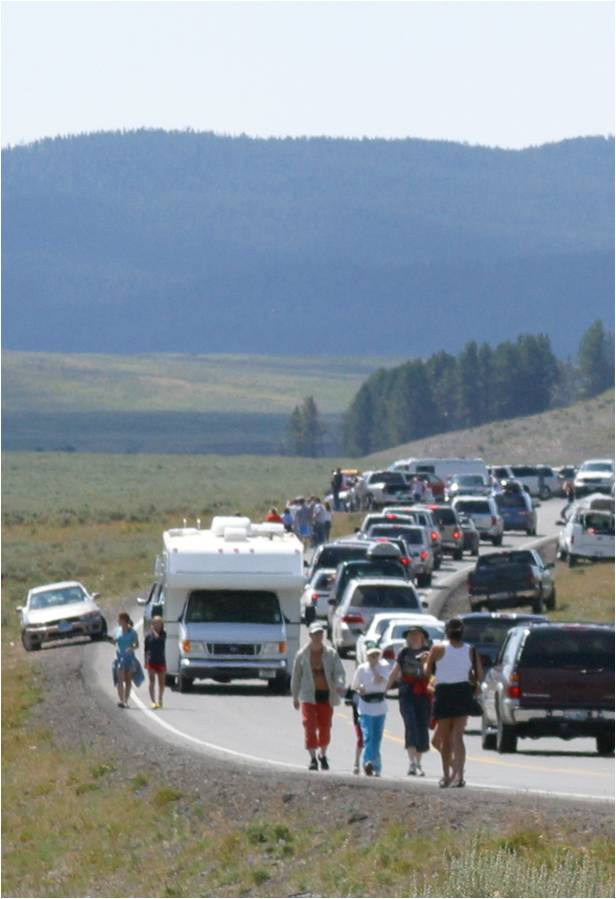
roadchaosDid you know that before Henry Ford developed the Model T Ford motorcar, the nearly 40% of automobiles on US roads were electric vehicles? I think we will be heading back in this direction if we are to have any hope of achieving reductions in carbon dioxide emissions. The implications for the national electricity grid of a major shift to plug-in cars would be very serious and has been the subject of several recent studies including a third year undergraduate dissertation that I have been supervising and from which came the opening factoid.

It is relatively easy, through not without obstacles, to envision a shift to all-electric cars; after all there are several models on the market now. However, an all-electric aircraft seems further in the future, if only because of the weight of the batteries required. Engineers would talk about the energy density, i.e. the amount of energy that can be extracted from a kilogram of kerosene compared to a kilogram battery. However, perhaps the future is not far away because the New Scientist reported earlier in the month [3rd May, 2014] that Airbus had completed the test flight of an electric plane, the E-fan. It is a two-seater plane with a pair of 65 kilogram lithium battery packs driving a pair of 30 kilowatt motors attached to the fans. The E-fan will cruise at 185 kilometres per hour and flies for an hour. Relative to a modern computer jet, this performance is similar to the early plug-in cars relative to their internal-combustion-engined rivals. But, it is an indication of bigger things to come. In the meantime, if you want an E-fan then a new division of Airbus called Voltair will be producing them by 2017.

I mentioned undergraduate dissertations because they have filled a sizeable chunk of my waking hours for a few weeks. This is an annual ritual in the UK during May when final-year undergraduate students are busy submitting and defending their dissertations. I had a pile of twelve dissertations to read and assess. Eight of them belonged to students that I have supervising in weekly one-to-one meetings since last October and the remainder were dissertations for which I was the assessor. All of the students that I supervised were studying either Mechanical or Aerospace Engineering and so the topics of their projects were associated mainly with energy and, or transportation. Some of these projects are provided by engineering companies (those with an asterisk in the list below), which guarantees their topicality and relevance, while others spin-out from my interests and research activities. So many of the topics in the list below will come as no surprise to regular readers of this blog.

Dissertation projects supervised during 2013-14:

Investigation into a redesign of graphite re-entrant seals for a nuclear power station*

Conceptual design for a carbon sequestration system for automobiles

Recommendations for achieving a low carbon airline industry

Strain-based defect analysis of industrial pipe-work*

Investigation of random frequency excitation of an aerospace body panel

Assessment of preload control of threaded fasteners in motorcycle production*

Recommendations for technology-based approaches to reduced ecological footprints

Investigation of low carbon power for plug-in electric vehicles

Lost at sea

leaving usa

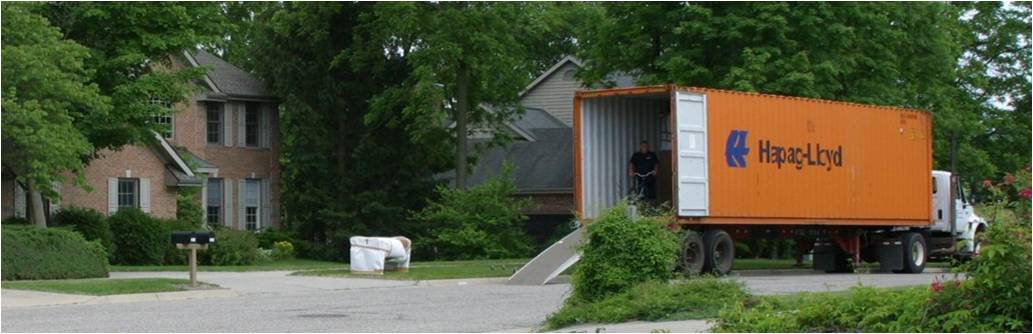
Loading our shipping container to leave USA

Our inability to find flight MH370 was still very prominent in the national media when I was in China last month.  The search for the aircraft and the false alarms caused by floating rubbish at sea has raised awareness about the amount of junk floating around our oceans, for instance 10,000 shipping containers are lost at sea every year,  or more than 1 every hour.  However, there are about 17 million containers in the world, so we only lose about 0.05% per annum which is a negligible amount unless its the one containing all your household goods as you move continents!

I was interested to find a high level of environmental awareness in China.  Alongside the reports on the search for flight MH370 the China Daily had a centre-page spread on Thursday 24th April, 2014 about ‘How pollution affects marine life’ with a focus on the garbage patches in the Pacific and North Atlantic oceans.  The North Atlantic Garbage Patch is more than 100 kilometres in diameter with about 200,000 pieces of debris per square kilometre trapped in the gyre. These are big numbers and if you break it down to small areas then it is one piece of debris per five square metres, which a box 2.24 x 2.24m or 7 x 7 ft.  This doesn’t sound so bad until you consider the impact on wildlife, for instance 86% of all sea turtles are affected by entanglement or ingestion of marine debris and an autopsy on a sperm whale found dead in Spanish waters concluded that the cause of death was ingestion of 24 meters of plastic.  About 300 million tonnes of plastic are produced globally per year of which it is estimated about 6 million tonnes (2%) ends up in the oceans, with 80% being washed into the sea from rivers or blown by the wind from rubbish dumps.

The second law of thermodynamics [see my post on June 5th, 2013 on Impossible Perfection] limits the efficiency of all processes with the result that engineers are used to not worrying about losses of 10% or less so that the losses to the ocean of 0.05% and 2% mentioned above would be considered negligible but the enormous scale of human processes mean that the losses are having a significant impact on the fauna of the planet.  Engineers need to lead society towards a more harmonious and protective relationship with the rest of the planet.

Source: http://www.billiebox.co.uk/facts-about-shipping-containers/

100 Everyday Engineering Examples

bookletsSTOP PRESS – more than 100 Everyday Engineering Examples published in more than 40 lesson plans on a new webpage.

I have been including 5E lesson plans as part my recent posts.  These lesson plans are primarily for people teaching first-year engineering undergraduates, which is pulling me away from the intended focus of this blog. So, I have decided to publish all of the lesson plans that I have written & edited on a separate page.  There are more than 100 Everyday Engineering Examples in the more than forty lesson plans.  If that is not enough Everyday Engineering Examples then you can find more at ENGAGE

Now back to Realizing Engineering – we live in an almost entirely engineered world. Engineers, as a profession, are so good at their job that most people are unaware of their influence on society.  Look around you. Engineers will have designed the machines and transport infrastructure to supply most of what you can see as well as what you are probably sitting in and on.

The Royal Academy of Engineering has produced an ebook to expand on this theme of ‘Engineering in Society’ for first year engineering undergraduates but I think its suitable for anyone considering a career in Engineering.