Category Archives: Soapbox

Goodhart’s law

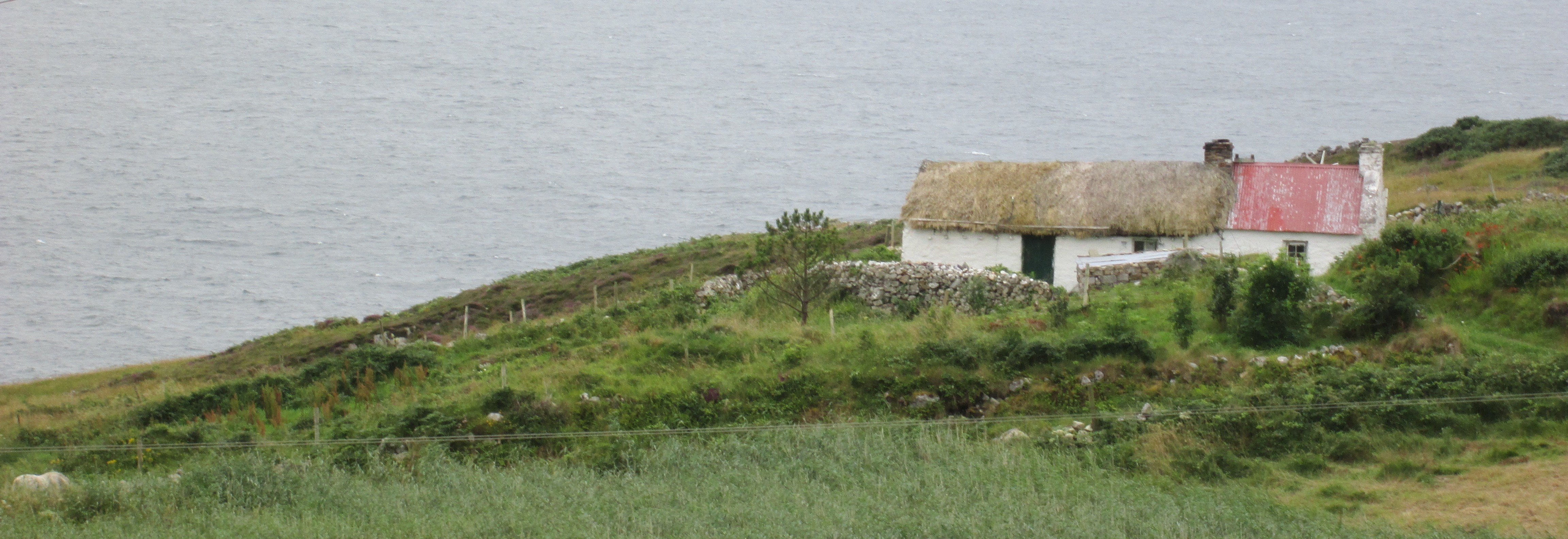
blueskyWe used to talk about R&D, i.e. research and development. In broad terms, most research happened in universities and national labs while most development was undertaken by companies. Nowadays we are being pressed to research and innovative. Nearly, every application for research funding from government agencies must include a section on the likely impact of the proposed research. This emphasis on impact is a global trend that was identified by Dr Helen Neville, Vice-President at Procter & Gamble for Global Open Innovation, in a recent talk I heard her give on trends in international research collaboration. The focus of university research used to be blue-sky, i.e. research with no pre-conceived application. We are exploiting the blue-sky research of twenty or thirty years ago now. And by only funding research with identifiable impacts our successors are likely to be short on breakthroughs to exploit in the middle of the century. It is analogous to a forester harvesting trees planted by his parents and not planting any for his children.

Attempting to evaluate the potential impact of a piece of research whose outcome, by definition, is not yet known is problematic and a matter of judgement rather than measurement.  Even for a piece of university research performed twenty years ago it is not possible to make a precise measurement of its impact. There are no international standards against which to make the measurement, as there is for the metre or the kilogram.  Consequently, the impact of research is probably one of those cultural measures that are subject to Goodhart’s law.  In 1975, Charles Goodhart postulated that once a measure is chosen for making policy decisions it begins to lose its value as a measure.  This is because people adjust their behaviour to optimise the value of the measure, e.g. university researchers tend towards research with short-term impact rather than focussing on discovery followed by dissemination and, or development.

Source: Measuring culture.  Robert P Crease in Physics World, April 2013.

Sounds of the city

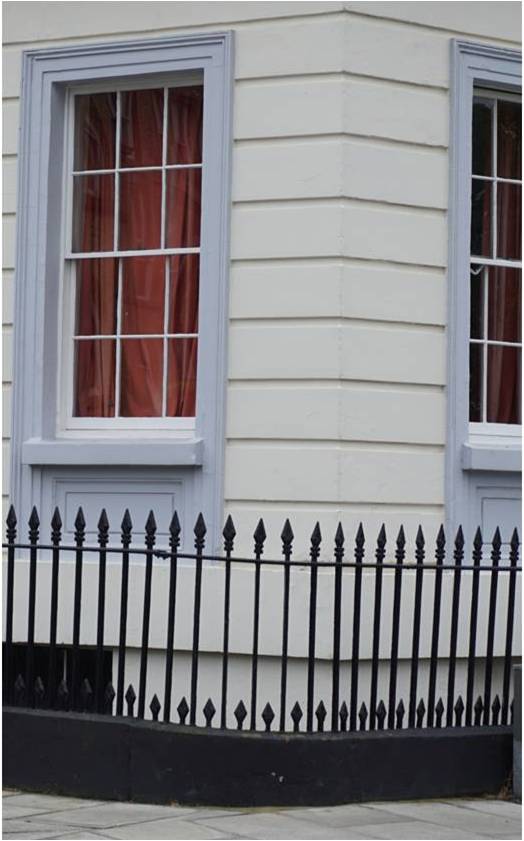
cornerRegular readers of this blog will know that I spent a relaxing day painting railings a few weeks ago [see post entitled ‘Engineering archaeology‘ on July 23rd, 2014].  A day or so later, I went out with my pail of whitewash to paint the walls of the light-well that the railings protect.  ‘The summer world was bright and fresh, and brimming with life’ but unlike Tom Sawyer I was not looking for Jim to do my white-washing for me.  I was looking forward to another therapeutic session painting the walls at the front of our house.  It was an interesting standing in the light-well facing the wall, un-noticed by most passers-by.  We live on a city street close to tourist attractions and there is a constant stream of coaches and taxis stopping to drop-off and pick-up tourists. I have written about the noise insulation in our house before [see Noise Transfer on April 13th, 2013] which means that we don’t notice the constant growl of diesel engines outside but I did while I was painting.  However, there were other sounds in the city.  The voices of pedestrians  deep in conversation as they passed by on the pavement just above my head.  I recognised Chinese, French, Italian and English but there were many different languages that I didn’t recognise.  There were young children asking parents questions as they walked down the street.  For a while I could hear cathedral bells.  When there was a pause in the traffic then it was possible to hear the cooing of pigeons, a neighbour’s radio or television and an ever-present idling diesel engine which I discovered was an ice-cream van dispensing a constant trickle of black soot and an occasional ice-cream.  It is curious that as a society we tolerant high levels of noise pollution at tourist attractions, especially ones that are meant to be places of calm and contemplation. Most tourists are, almost by definition, on holiday seeking relaxation and a lowering of stress levels – how much more pleasant would it be to glide to your destination in a silent electric coach or taxi?

We have the technology to provide such a service [see Are electric cars back? on May 28th, 2014]. Yes, it requires some investment by tour operators and taxi firms in hybrid or electric vehicles and by the city council in re-charging facilities. Induction charging stations at tourist attractions would allow vehicles to recharge while dropping off and picking up passengers. The technology is available and has been used by buses in Genoa and Turin for more than a decade.  So a little bit a regulatory pressure and investment from city councils acting together could create a calmer, quieter and cleaner environment for everyone.

Can we look forward to solar-powered ice-cream vans?

Sources: Thank you to Richard for reminding me about Tom Sawyer.

Thunderous applause

2d543f31-6f09-43ba-875c-c2d5d3bd0cebI have had cause to applause enthusiastically on two recent occasions. We went to see ‘Dead Dog in a Suitcase’ at the Everyman Theatre in Liverpool. It was fantastic and we joined in a standing ovation at the end. It’s a beggar’s opera that throughly deserved the rave reviews that it has received. It is full of energy, music, wit and spectacular performances.

The second occasion was my son’s graduation in Durham Cathedral. The programme asked us not to applaud as each graduand’s name was read out and they walked onto to the podium to shake the hand of the Chancellor, Sir Thomas Allen, but to hold our applause until the end. So, the last graduand walked off the podium to thunderous applause. Sir Thomas is an opera singer with a sonorous speaking voice and he gave a theatrical entertaining speech that we applauded enthusiastically and appreciatively. It is the tradition at Durham to applaud the new graduates as they walk down the aisle to leave the Cathedral. It’s a long aisle, there were a lot of graduates and we clapped energetically so that by the time the end of the line reached the door our hands were smarting.

You are right. There has been no mention of engineering, yet. However, here it comes. The heat and stinging sensation in the palms of my hands as the last graduate left the cathedral reminded me briefly of an example from my first year thermodynamics lectures in which I estimated the temperature rise in the skin of the hand from vigorous clapping ten times. This was more an exercise in estimating and problem definition than thermodynamics as you will see from the attached worksheet (clapping_example.pdf), but those skills are as important to an engineer as a knowledge of the laws of thermodynamics. Its also another Everyday Example and the experimental part can be performed at home.

Safety first!

cornerMost of us walk up and down stairs at home without a second thought and often without holding the handrail. It’s a personal choice to hold the handrail or not. However, for some when you are at work it is no longer a personal choice but a health and safety rule. You must hold the handrail and in many organisations you are expected to politely ask visitors to do so. This is justified on the basis that trips/slips and falls are the most common sources of workplace injuries accounting for 40% of serious injuries. For managers it is about managing risk and reducing costs.

Risk is the probability of something happening multiplied by the consequences when it does happen. Many of us subconsciously calculate risk when we make decisions in everyday life. The consequences of the aircraft crashing on the way to your holiday destination is very serious, if not fatal, but the probability is extremely small so that overall the risk is acceptably low. We make lots of risk assessments in our personal life but as soon as an organisation gets involved and feels that it might be liable for the consequences then our freedom of choice is eroded quickly. Hence, the instruction to hold the handrail on the stairs. However, the equation is changed when the cost of reducing the risk involved in an essential or profitable activity is too high or perceived to be so. A simple example would be being free to stand on a platform within half a metre of a passing express train. It would be too expensive and probably impractical to install railings or remove everyone from the platform. However, at least we have platforms and are not allowed to wander around on the track; that would be really dangerous with both a high probability of being hit and fatal consequences as the Liverpool MP William Huskisson found out at the inauguration of the first scheduled passenger train service on September 15, 1830. When the train stopped on the way from Liverpool to Manchester, he got out and walked down the track to the Prime Minister who was in the next carriage to enthuse about the service and he was killed by the train going the other way. There are easier ways to get a street named after you, not to mention a town in Australia!

Source: http://www.workplacesafetyadvice.co.uk/common-injuriescauses-accidents-work.html.  BTW – according to this website, the finance is the safest sector in which to work and agriculture the most dangerous sector.

Photo credits: Sarah & CharlesPicture8