Tag Archives: up-skilling

Death knell for the lecture?

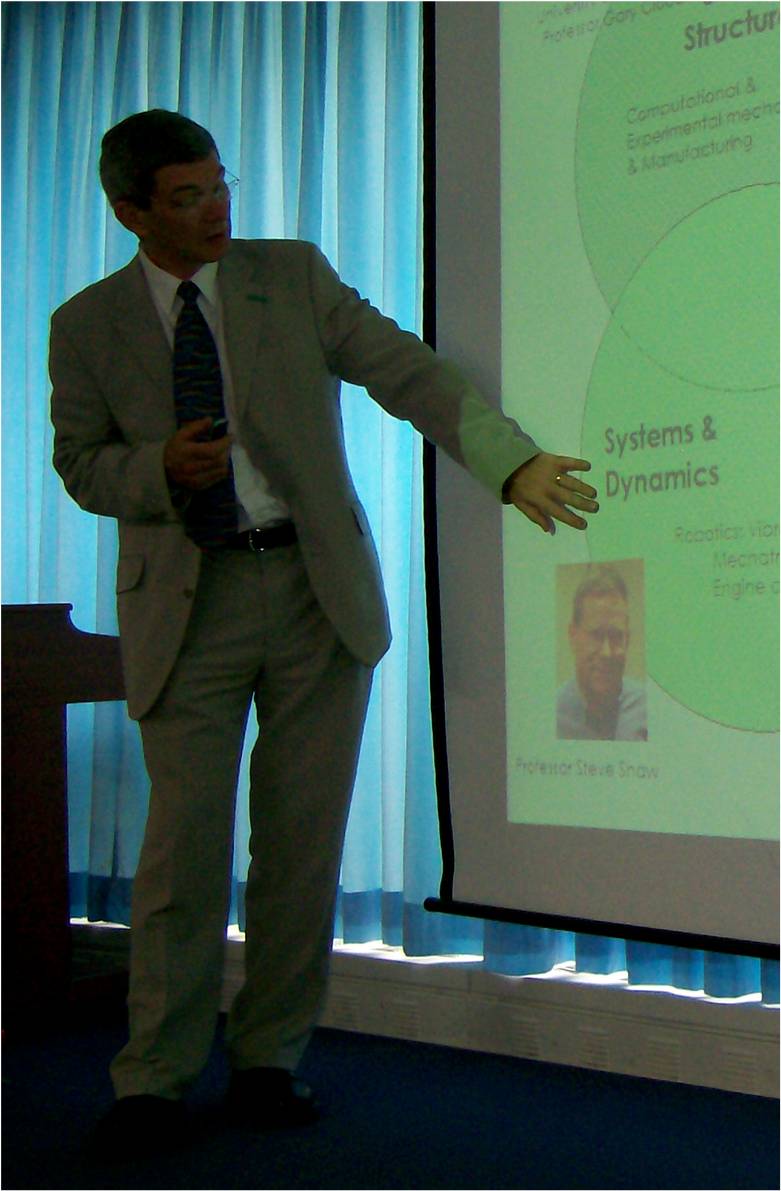
Author lecturing in Yonsei University, Korea

Author lecturing in Yonsei University, Korea

This week I have started filming short video clips for a MOOC that will be broadcast in February in parallel with my undergraduate course on Thermodynamics. The Massive Online Open Course (MOOC) is provisional titled: ‘Energy – Using it and Losing it: Real-World Thermodynamics for Beginners’ and will be offered through FutureLearn to a worldwide audience. The video clips, which essentially replace the traditional 50-minute lecture, will be about 3 minutes long recognising that this is the longest time period that many young people will focus uninterrupted on a single activity.

Last week was the start of a new academic year in which we have been instructed to use newly-installed software and hardware to record or, in the new terminology, video-stream all of our lectures. The ‘streamed’ lectures will be made available online for students to watch at anytime during the academic year. All of this is happening when attendance at lectures is falling, which leads me to wonder whether these events represent the death knell of the traditional university lecture?

We have known for sometime that people’s maximum attention span was typically fifteen to twenty minutes and yet lectures have remained stubbornly at 50 minutes duration with many double lectures timetabled. Considerable ingenuity, imagination and energy is needed to deliver lectures that engage students for these time periods (see Engage Engineering for tips on how to do this). So it should come as no surprise that many lectures are half empty when students have alternatives such as short video clips available online, streamed lectures that can be fast-forwarded over the boring bits or rewound to repeat important sections, as well as the old-fashioned approach of reading a good textbook and teaching yourself.

Lectures are in many ways a theatrical performance, though factual rather fictional. Theatre has had to evolve and adapt in order to survive the advent of cinema, television and most recently the internet. In the process, some theatres and drama companies have disappeared. I think the same is likely to happen with the university lecture – some will evolve and adapt, for instance by embracing new technology, but others will disappear as students choose more effective means of acquiring knowledge and understanding.
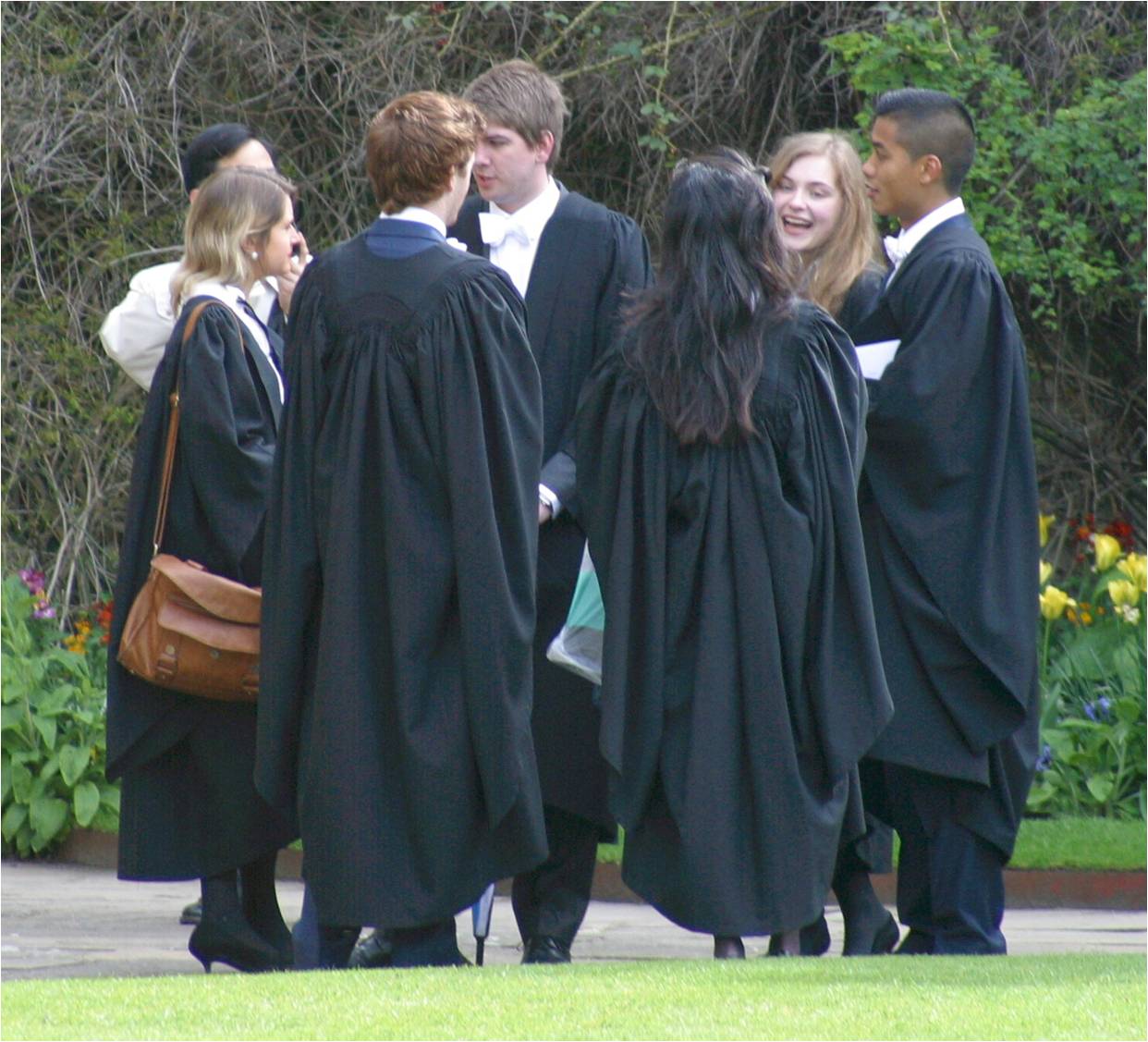
Ideal employee

graduationSome years ago during a visit to South Korea, I listened to a speech by an Executive Vice-President of KEPCO, the Korea Electric Power Corporation.  He talked about the need to blend the desire of consumers who want to buy cheaper goods in a clean environment with the will of a company to make more money and to do this in the context of the world running in a ‘green race’ for survival.  He identified their employees as his company’s most valuable asset and went on to describe the ideal employee as having three key attributes:

A team player – cooperative and capable of growing together with their colleagues

A creativity-driven professional – flexible and globally competitive

A passionate executor – innovative and able to make things happen

He did not list these attributes in any order of importance but gave them equal weighting as nodes on a circle around which the ideal employee could move effortlessly.  Of course I am biased but this description sounds like an engineer!

If you are just starting a new course of education then perhaps these are the qualities that you should aim to acquire or cultivate.

If you are an employer and are lucky enough to hire one or even a group of these ‘ideal employees’ then your problems as a manager may only just be beginning.  They are likely to be what is known as ‘knowledge workers’ who will share certain characteristics, including being highly educated or experienced, hate being told what to do and reluctant to share knowledge with their managers.  So many employers resort to HSPALTA: Hire Smart People And Leave Them Alone.

Reader, reader, reader!

annegreeneAt this time of year many university students are labouring over their dissertations. I have commented before about the difficulties that engineers seem to have in expressing themselves eloquently. So, I thought that I should offer some simple guidance.

The title of this post is the first piece of guidance. Real estate agents like to use the adage ‘location, location, location’ when talking about the relative importance of the features of properties. For technical writing it can be adapted to ‘reader, reader, reader’ – in other words, you have to think about your reader whenever you are writing.

There are lots of books about writing, and although some are admirably short, most engineers and engineering students do not read them. Maybe there is a clue there as to why engineers tend not to write material that is read by others. One of the shortest and most concise of these books is by Anne Greene called ‘Writing Science in Plain English’. I have summarised it below as a simple mnemonic:

R – Reader, reader, reader. Ok, we have done this one already. Anne prefers ‘audience, audience, audience’ (page 36) but that’s American and doesn’t work as well as a mnemonic.

E – [readers] Enjoy a story with a subject that takes rather than receives actions. See Anne on story-telling in science writing (page 12) and on using active rather than passive verbs (page 22).

A – [readers] Appreciate short, non-technical words. See Anne on using short, old words which are used frequently in spoken English (page 30). Introduce technical words slowly and only if absolutely necessary (page 36).

D – [readers] Digest new information when it follows old in sentences that vary in length. See Anne on providing familiar information at the start of a sentence and building on it through the sentence (page 52). But, don’t write strings of long sentences (more than 30 words); see Anne on varying sentence length (page 63).

E – [readers] Expect paragraphs to have a consistent structure with issue, development and conclusion. See Anne on paragraph structure and making the point at the end of the introductory paragraph(s) (page 71).

R – [readers] Remember the last thing that they read, so build arguments progressively from the least to the most important evidence. See Anne on developing persuasive arguments (page 78).

Finally, many of the technical reports that I am expected to read do not appear to have been read by the author because they are littered with typographical, grammatical and stylistic errors. So Read, Edit, Add and Delete (READ).

By the way, Anne also advises that we use ‘parallel lists’ (see page 60). By which she means lists in which the items have a consistent structure, such as in my mnemonic ‘READER’ above.

Sources:

Greene, A.E., Writing science in plain English, The University of Chicago Press, Chicago, 2013.

Williams, J., Style: toward clarity and grace, The University of Chicago Press, Chicago, 1995.

‘Crash’ in Taipei: an engineer’s travelogue

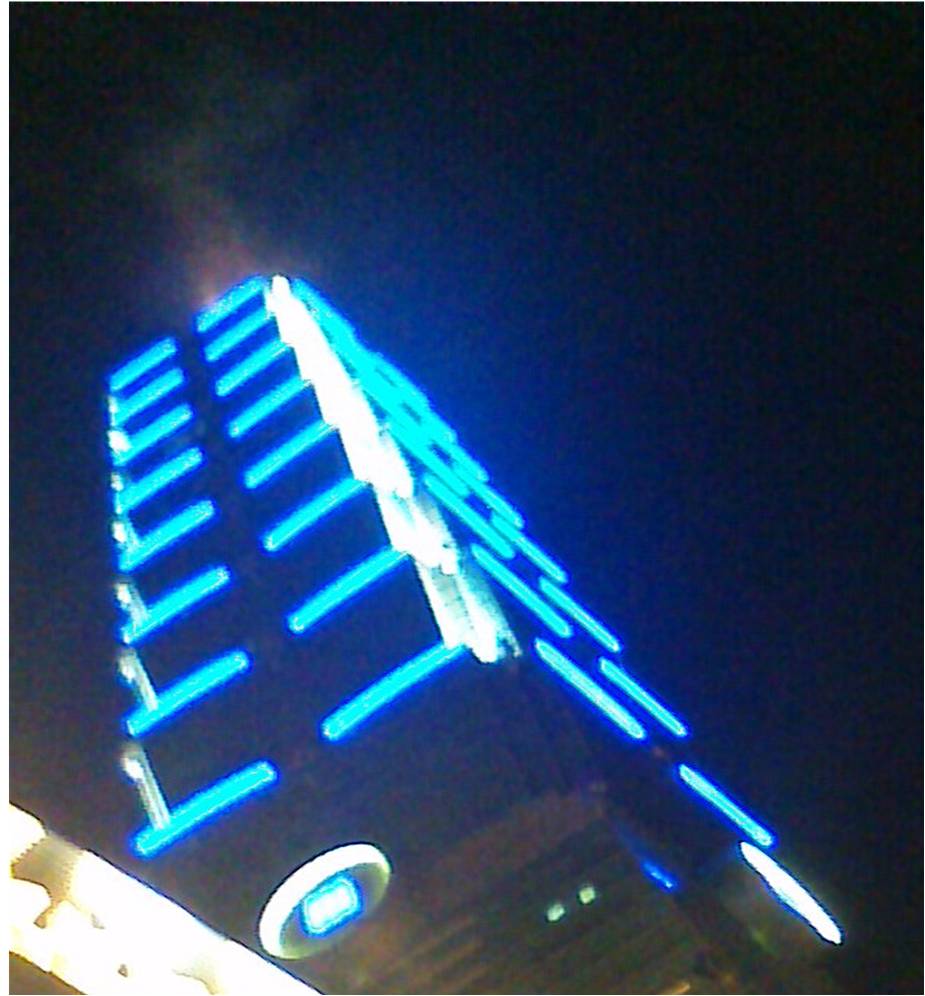
taipei101

Taipeo 101

When you land at Taipei Taoyuan International airport, you could be forgiven for thinking that you have arrived at some as yet unvisited Floridian city. The palm-trees, architecture, layout and feel of the terminal is very reminiscent of a major airport in the USA, though perhaps slightly Ballardian. The yellow cabs collecting passengers from the curb outside the spacious terminal reinforce the impression, except that most of them look like a Toyota Prius. But, once you arrive downtown, overtones of a Mods’ weekend at Brighton takeover as scores of scooters roar away from every traffic light when they turn green leaving. In every other way Taipei is a modern, sophisticated Asian city with its towering skyscrapers, including Taipei 101, designer stores, back streets full of tiny shops and busy traffic.

Beijing residents have wholeheartedly taken to the electric motorbike and you have to be careful crossing the road not to be knocked down by these silent two-wheelers. Whereas Taipei residents seem to love their noisy scooters, but Taipei is largely smog-free so maybe there is less incentive to switch to electric bikes.

I said Ballardian above because the road to Taipei from the airport reminded me of the ‘Crash’ by J.G. Ballard. The freeway has been expanded along almost its entire length by constructing additional elevated carriage-ways on both sides, so that on the original freeway you feel fenced in by concrete pillars and bridge-sections.

Some of you might be wondering why I have been wandering around Asia. Well, I visited Beijing and Tianjin [see last week’s post] to give a series of seminars as the Hsue-Shen Tsien Professor of Engineering Sciences at the Chinese Academy of Sciences’ Institute of Mechanics. Then, I went to Taiwan to participate in a bilateral workshop with National Tsing Hua University and to meet with research students on our dual PhD programme.  ‘The World is Flat’ as Thomas Friedman wrote and engineers are a driving force in the global economy, so its not unusual to find engineers abroad either on short trips or living overseas.  Yet, I am constantly surprised by the lack of enthusiasm amongst most UK students to participate in international exchanges, even though such experience increases their employability.