Tag Archives: reading

Slow down, breathe your own air

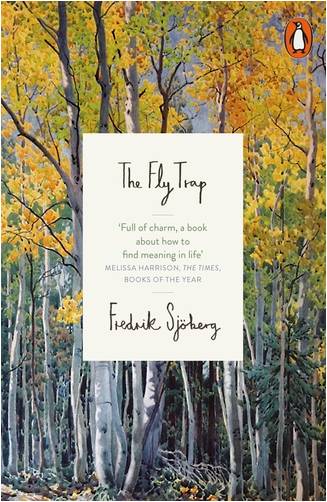
flytrapFor many of us the pace of life will have accelerated to a fever pitch as the holiday season approached and we tried to complete time-sensitive tasks while being deluged with emails, messages, images, reports and demands for a slice of our time. Fredrik Sjoberg in his delightful book, ‘The Fly Trap‘ suggests that ‘if you think the torrent goes too fast, then in nine out of ten cases you can turn it off or just close your eyes and breathe your own air for a while.’ Nile crocodiles have a life expectancy of 100 years which some have attributed to their ability to slow their metabolism. ‘Unfussed, they can reduce their heart rate to about three beats a minute’ according to Peter Hughes. So in this holiday season: switch off, close your eyes, go mind-wandering (see my post entitled ‘Mind wandering‘ on September 3rd, 2014) and you are likely to live longer and have time for everything.

Happy holidays!

Sources:

Fredrik Sjoberg, The Fly Trap, Penguin Books, 2015

Peter Hughes, ‘Gently does it’, Financial Times Weekend, 17/18 October 2015
Engineering novelist

Photo credit: Tom

Photo credit: Tom

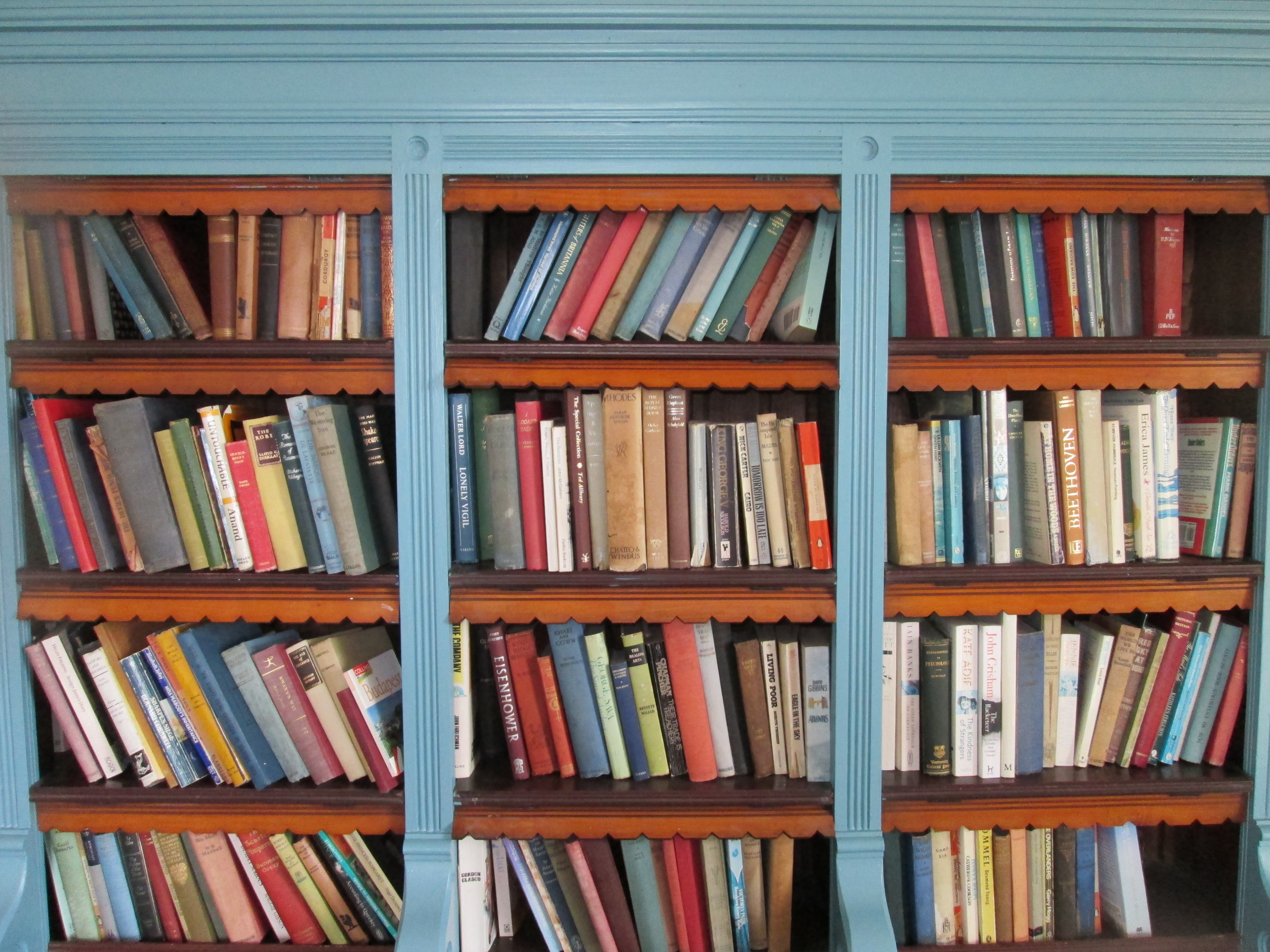
Reading books is an important aspect of coming to know who we are [see my post entitled ‘Reading offline’ on March 19th, 2014] and it forms a keycomponent of my deep vacation [see last week’s post]. For the last two years, we have read the books shortlisted for Baileys’ Women’s Fiction Prize [see my comment on Field of Flowers posted on July 8th, 2015] during our family vacation. Our holiday rental cottage was stocked with a large collection of second-hand books and so after the shortlist I moved onto some older novels, one of which was the ‘Lonely Road’ by Nevil Shute. Nevil Shute (1899 – 1960) was an aeronautical engineer who also wrote very successful novels, of which the most famous are perhaps are ‘On the Beach‘ and ‘A Town Like Alice’. His engineering background is often evident in his novels, particularly the pair of novels published posthumously under the title ‘Stephen Morris’. I found his novel, ‘Ruined City’ about industrial and urban regeneration, particular poignant in the current economic climate. These novels were as popular with the younger members of my family as with my generation, which leads me to suggest that they are good vehicles for raising awareness at a subliminal level about engineering. What we need are some modern authors to follow the example provided by Nevil Shute. Maybe it could be your books filling the bookshelves or tablets of budding engineers in a few years time? [see my post entitled ‘Good reads for budding engineers‘ on February 25th, 2015].

Ada Lovelace astride two cultures

Ada LovelaceRegular readers will have noticed my recent predilection for poetry.  I am going to deviate from the theme, but only slightly, by highlighting the work of Ada Lovelace who has been described as writing about differential calculus with the same passion that her father, Lord Byron wrote about forbidden love.  As I observed last week, we need more people who can write with passion about engineering and science; so it is appropriate following International Women’s Day on Sunday to highlight the work of Ada Lovelace who worked on programs for Babbage’s analytical engine. She could be described as the world’s first computer programmer.  However, she was much more than that because in her writings she foresaw a world in which computers would be aesthetic tools capable of creating language and art.  She was at least hundred years ahead of her time.  Perhaps growing up surrounded by poetry gave her the skills to express her passion for technology and the vision to see its potential.  If that is the case then we should encourage prospective engineers to read English literature and not books on engineering as implied in my post entitled ‘Good reads for budding engineers‘ on February 25th, 2015.  We need engineers to stand astride the boundary between the ‘Two Cultures‘ [see post of the same title on March 5th, 2013].

For more on modern female scientists and the gender imbalance in science watch the short film from the Royal Society entitled ‘A Chemical Imbalance‘  [see my post on of the same title on October 2nd, 2013]

Sources: Steven Johnson, A glitch in time, Financial Times, 18/19 October 2014.

Reading offline

138-3816_IMGDavid Mikics, writing in the New York Times, reports recent research suggests that reading books is an important aspect of coming to know who we are.  It is a private experience that is best done without distractions, i.e. all of your attention capacity is employed on the book [see my post entitled ‘Silence is golden‘ on January 14th, 2014 for more on attention capacity].  Our brains can achieve a much deeper level of thought and engagement when they are focussed on a single task without distractions.  This just does not happen when reading on-line because there are too many distractions.  Some research has shown that office-workers are distracted every three minutes and that it takes about 20 minutes to achieve a high level of engagement in a task.  So it is easy to see the attraction for bosses of replacing white-collar workers by smart machines [see my post entitled ‘Smart Machines‘ on February 26th, 2014].

But David Mikics suggests that reading a novel is important for deeper reasons associated with learning lessons about humanity that are not available elsewhere.  Novels take us on a journey with another self and allow us to look into people’s inner lives.  None of this can be achieved reading short blogs or watching short videos on-line and is perhaps why reading a good novel on holiday is such a cathartic and popular activity.

But don’t stop reading my blog instead click the ‘follow’ button if you have not already and then you can be distracted every Wednesday!

http://www.nytimes.com/2013/05/05/opinion/sunday/a-focus-on-distraction.html