Tag Archives: fossil fuel

Are we all free riders?

girl in smogThe ‘tragedy of the commons’ is an economic theory founded on the idea that when there is unregulated use of a shared resource then the rational consumer, acting independently and in their own interests, will maximise their consumption leading to the depletion or destruction of the resource.  For example, if there is no cost or limit to grazing sheep on common land then a rational shepherd would maximise their flock size in order to maximise profit.  Eventually, the commons’ ability to sustain the sheep is overwhelmed and it becomes a wasteland.  Are we all taking a free ride on the world’s ecosystem?  Our cars and houses freely pump out huge quantities of carbon dioxide that are overwhelming our ecosystem.  Most of us do nothing – either because we refuse to believe the evidence, or we believe it is not in our interests to act, or we don’t think it is our problem, or we don’t know what to do, or a combination of these excuses.

This might seem a low priority to you.  But, for the 40% of the world’s population that live in the five countries with the worst air quality, it is a high priority.  If you visit these countries, you experience days when it is difficult to breathe because the pollution is so bad and it is hard to read your smartphone because the air is so thick with particles.  We are all part of a single ecosystem on the planet, Gaia if you like, and we are joined to one another through a myriad of connections.  So we ignore this issue at our peril, or the peril of our grandchildren.

It seems unlikely that our leaders will take effective coordinated action and so grass roots action is needed as suggested by Kofi AnnanAssess your carbon footprint now and think about ways to become carbon neutral.  If you want to find out the carbon footprint of your organization then the Carbon Trust has useful information and services.

Sources:

The Economist Pocket World in Figures 2015 edition, Profile Books Ltd, London 2014

Thumbnail: http://blogs-images.forbes.com/benjaminshobert/files/2015/01/China_Smog2-1940×1293.jpg

And then we discovered thermodynamics

sunEnergy, matter, space and time came into existence in the Big Bang 13.5 billion years ago. 10 billion years later biological organisms started to appear. 70,000 years ago one of those organisms, man started to organise in structures, called cultures and history began. For most of history if you wanted something moved then you had to do it yourself or persuade someone else to do it. The agricultural revolution began 12,000 years ago and shortly afterwards we realised that if you fed fuel to an animal then it would ‘burn’ it and do work for you. And that’s how it remained for thousands of years – we didn’t know how to convert heat into work or work into heat. The average energy consumption per capita was about 20GJ per year. Then, 200 years ago we discovered how to imitate nature by burning fuel and producing power in the steam engine. We had discovered thermodynamics and our average energy consumption started rising towards 80GJ per year today.

As a consequence, ‘we have now all but destroyed this once salubrious planet as a life-support system in fewer than two hundred years, mainly by making thermodynamic whoopee with fossil fuels’ as Kurt Vonnegut wrote. And that’s because nature starts from solar energy and recycles everything and we haven’t learnt how to do either very effectively. But energy or power engineering has been around for less than a blink of eye relatively speaking and we are just learning how to perform a trick nature has been using for billions of years: convert solar radiation into other energy forms. The sun delivers about 340 Watts per square metre to the Earth so we have plenty energy available.

If you would like to know more about energy engineering or thermodynamics and its potential then join the 5000 people who have signed up for the MOOC that I am teaching for five weeks from next Monday.  Listen to me interview Ken Durose, Director of the Stephenson Institute for Renewable Energy on the prospects for renewable energy.

Sources:

http://ourfiniteworld.com/2012/03/12/world-energy-consumption-since-1820-in-charts/

Yuval Noah Harari, Sapiens: A brief history of mankind. London: Vintage (Penguin, Random House), 2014.

Kurt Vonnegut, A Man without a Country, New York: Seven Stories Press, 2005.

Free: Energy! Thermodynamics in Everyday Life

sunTalking to camera is difficult…

For the last few weeks I have been spending a considerable proportion of my working hours in front of a camera shooting video clips for a MOOC, a Massive Online Open Course. The first results of this effort and those of my colleagues Matt O’Rourke and Rob Lindsay in the University’s Centre for Lifelong Learning are now available as a trailer. The initial reviews were ‘cool’ and ‘awesome’, so go ahead and watch it!

Innovation to support learning

Some people have commented on the lack of pedagogical foundation in many MOOCs. However, I think we are being quite innovative in the following ways:

  • we are using an established pedagogy, 5Es (see the next paragraph for more explanation),
  • we have designed three do-it-at-home laboratory exercises,
  • the five-week MOOC will run in parallel with the delivery of the traditional course to first year undergraduates in Liverpool and,
  • the traditional lectures will be repeated at the university’s campus in London two evenings each week.

The lectures in London will allow students living around London to meet each other and me, as well as, of course, experience the energy of the live delivery of the course.

For students worldwide (and in London)

If you are a student who has or is struggling with elementary Thermodynamics then register for the free MOOC which will start in February 2016. I will cover the curriculum content of most ‘A’ level modules and introductory undergraduate courses in Thermodynamics. If you are in London and would like to attend the lectures then contact me and I will send you more details.

For teachers/instructors anywhere

If you are a teacher, tutor or lecturer then consider bringing it to the attention of your students. I will be taking a different approach to the traditional way of teaching classical thermodynamics based on my experience teaching at the University of Liverpool using the Everyday Engineering examples featured on this blog together with the 5Es approach to lecture or lesson plans. If you would like to use it in parallel with your own lectures then get in touch with me so that we can talk about synchronization.

5Es

The 5Es are Engage (the students), Explore (the topic), Explain (the principles underpinning the topic), Elaborate (using the principles to analyse the topic) and Evaluate (ask the students to evaluate their learning by performing some analysis). The course has been well-received by students and nearly a thousand have taken it over last four years. This year we are making into a five-week MOOC so that thousands more can learn using it.

Sources:

Real life thermodynamics

Bybee RW, Taylor JA, Gardner A, van Scotter P, Powell JC, Westbrook A & Landes N, The BSCS 5E Instructional model: origins, effectiveness and applications, BSCS Colorado Srings, 2006.

Sian Bayne & Jen Ross, The pedagogy of the MOOC: the UK view,  Higher Education Academy, 2014

Paul Stacy, The pedagogy of MOOCs, http://edtechfrontier.com/2013/05/11/the-pedagogy-of-moocs/

Trees are made of air

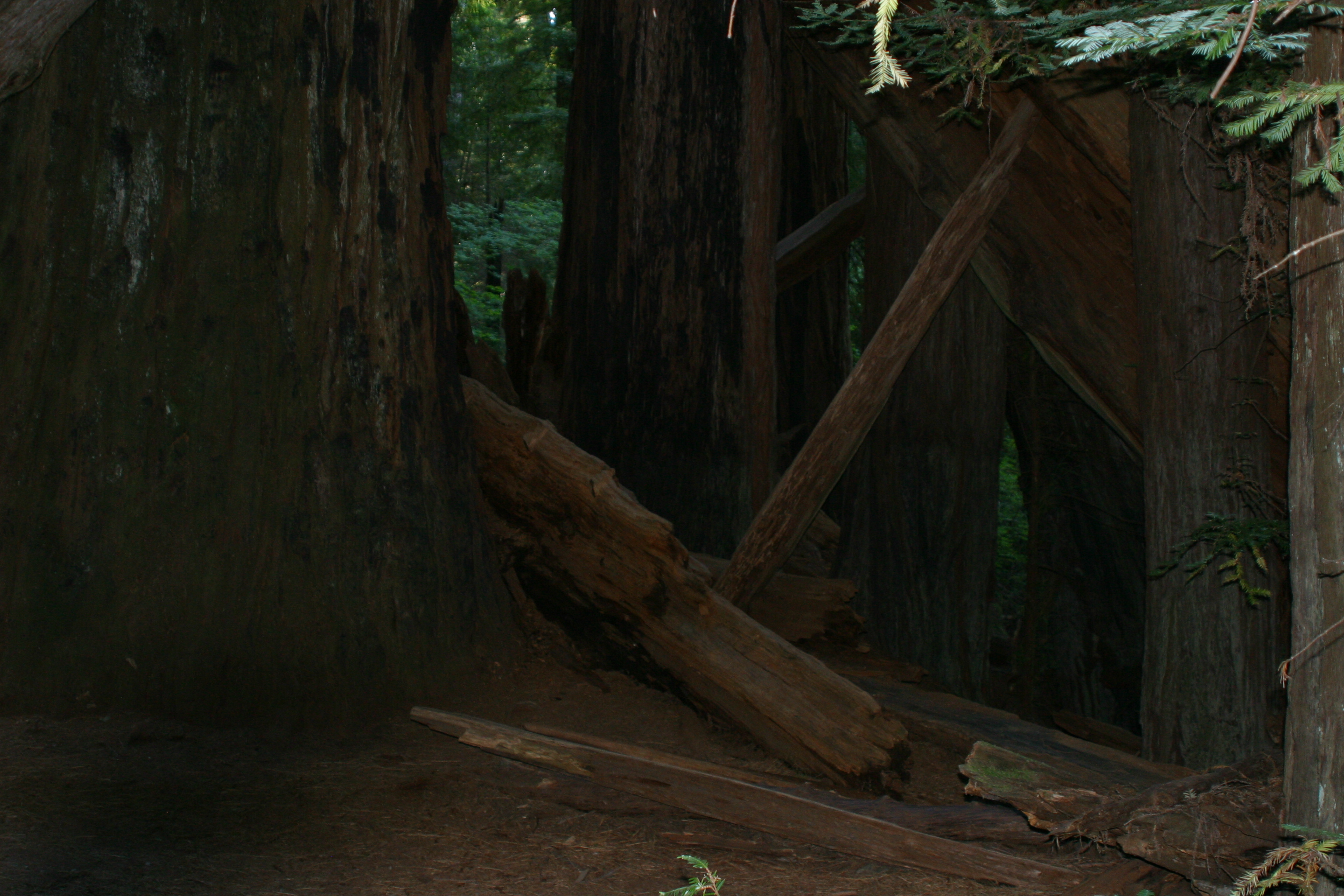
162-6273_IMGYes, it is April Fools Day but I am serious.  Trees are made of air.  Think about it.  What happens when they are burned?  You are left with a small pile of ash.  So where did the rest of the tree go?  When the tree ‘is burned, in the flaming heat is released the flaming heat of the sun which was bound in to convert air into the tree’.  These words are from Richard Feynman, who explains it much better than me.  Watch him on Youtube.

Sources:

Max Tegmark, Our Mathematical Universe, Penguin Books Ltd, 2014.

National Public Radio blog