Tag Archives: art

All things being equal

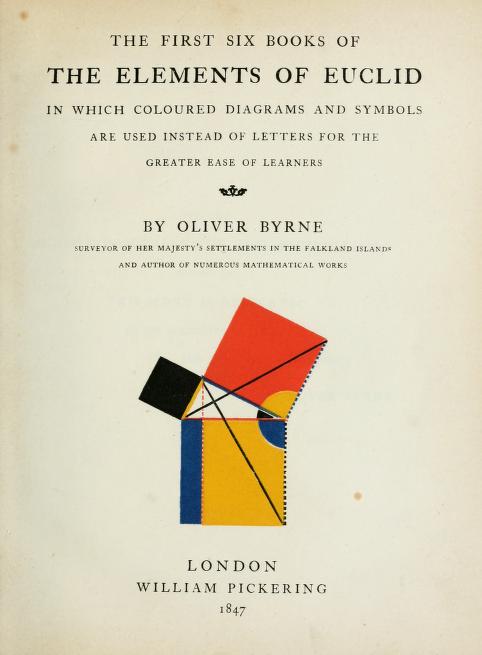
firstsixbooksofe00eucl_0007Some of the greatest insights and inventions are obvious once they have been pointed out to you and you wonder how you could not have spotted them yourself. Is it luck or genius that allows someone to be the first to have a great idea? The quest for more efficient engines to power the industrial revolution led the likes of Sadi Carnot, Rudolf Clausius, William Rankine, William Thomson and James Watt to experiment and think deeply about thermodynamics or what might be called energy science or energy engineering. They established the First Law of thermodynamics (energy is always conserved) and Second Law of thermodynamics (entropy increases in all processes) of thermodynamics but initially missed the more fundamental, and arguably simpler, Zeroth Law (two systems in thermal equilibrium with a third must also be in thermal equilibrium each other). Rankine, working around 1850, is often attributed with identifying the Zeroth Law but probably the credit should go to Euclid (380-260 BC) who appears to have got there first in the fifth of his series of six books, ‘Elements’ [see my post entitled ‘Lincoln on equality‘ on February 6th, 2013).

The first English translation of ‘Elements’ is believed to have been by Sir Henry Billingsley in 1570.  A later version by Oliver Byrne was published in 1847 and you can read it on-line.  Go to page 173 to find a version of the Zeroth Law which can be paraphrased as ‘Things that are equal to the same things are equal to each other’.

Oliver Byrne, was Surveyor of Her Majesty’s Settlements in the Falkland Islands which presumably left him plenty of time to be the ‘author of numerous mathematical works’ as the title page to his book states.  The title page also tells us that ‘coloured diagrams and symbols are used instead of letters for the greater ease of learners’.  The bold primary colours and straight lines remind me of the paintings in the recent Mondrian exhibition at the Tate Liverpool. Maybe Piet Mondrian (1872 – 1944) was inspired by Oliver Byrne’s beautiful book, which was an early example of innovative graphic design and as well as an attempt to make mathematical concepts more accessible – something many writers of modern textbooks make little serious effort to do!

Thunderous applause

2d543f31-6f09-43ba-875c-c2d5d3bd0cebI have had cause to applause enthusiastically on two recent occasions. We went to see ‘Dead Dog in a Suitcase’ at the Everyman Theatre in Liverpool. It was fantastic and we joined in a standing ovation at the end. It’s a beggar’s opera that throughly deserved the rave reviews that it has received. It is full of energy, music, wit and spectacular performances.

The second occasion was my son’s graduation in Durham Cathedral. The programme asked us not to applaud as each graduand’s name was read out and they walked onto to the podium to shake the hand of the Chancellor, Sir Thomas Allen, but to hold our applause until the end. So, the last graduand walked off the podium to thunderous applause. Sir Thomas is an opera singer with a sonorous speaking voice and he gave a theatrical entertaining speech that we applauded enthusiastically and appreciatively. It is the tradition at Durham to applaud the new graduates as they walk down the aisle to leave the Cathedral. It’s a long aisle, there were a lot of graduates and we clapped energetically so that by the time the end of the line reached the door our hands were smarting.

You are right. There has been no mention of engineering, yet. However, here it comes. The heat and stinging sensation in the palms of my hands as the last graduate left the cathedral reminded me briefly of an example from my first year thermodynamics lectures in which I estimated the temperature rise in the skin of the hand from vigorous clapping ten times. This was more an exercise in estimating and problem definition than thermodynamics as you will see from the attached worksheet (clapping_example.pdf), but those skills are as important to an engineer as a knowledge of the laws of thermodynamics. Its also another Everyday Example and the experimental part can be performed at home.

Gadget stress

2d543f31-6f09-43ba-875c-c2d5d3bd0cebWe went to the last night of ‘Twelfth Night’ on Saturday at the new, or rather completely rebuilt, Everyman Theatre in Liverpool. It was tremendous entertainment with songs and dance, Shakespearean comedy with a Scouse accent and an exciting start with Viola and the captain of the wrecked ship surging, dripping wet, onto the stage from what looked like a broken mirror lying on the floor but turned out to be a pool of water. Especially exciting for those sitting in the front row, since the Everyman is a theatre in the round and the front row probably got wet! They certainly had stage hands mopping up around their feet at the end of the scene.

I was amazed at the interval to see people on their smart phones and tablets. Maybe they were communicating their excitement about the production on social media but perhaps more likely they were desperate to find out what had been going on in the world and who had sent them messages. For me, time ‘off the grid’, disconnected from the electronic world is precious and to be protected but many people find it hard to disconnect and appear addicted. Our gadgets pander to our tendencies to be workaholics and to socialize.

Dr R. Thara, Director of the Schizophrenia Research Foundation in an interview reported in a piece by T.M. Luhrmann entitled ‘A great depression?’ in the NYT on March 25th, 2014 said “Gadgets. All these gadgets. Nobody thinks for themselves anymore.” We are certainly at risk of having no time to think for ourselves but the risk from our gadgets is more insidious because access to everyone else’s life via social media and professional networks can end up making our own life look dull and potentially depressing. Of course, most of us conspire in creating this false image by only telling the world about the good things that are happening in our lives.

It is better to pick up a good novel if we want to relax and find out more about ourselves. see my post entitled ‘Reading Offline’ on March 19th, 2014.

I and the village

'I and the village' by Chagall

‘I and the village’ by Chagall

Last week’s post ended up a bit heavier, both in size and content, than I intend most posts to be so I thought this week’s should be short.

Recently, I visited the exhibition of Marc Chagall’s paintings at the Tate Liverpool and was particular inspired by ‘I and the Village’, which was painted in Paris in 1911 although Chagall was born in a small village in Belarus.  Apparently, the painting signifies the interconnectivity of human life and the surrounding natural world – notice the fine line connecting the eyes of the peasant and the animal also the peasant holding a sprig of a tree.  The orbits of the earth and moon are suggested by the circular shapes in the painting, which perhaps also represent the cyclical nature of life.

As you might guess from my posts over the last year, these ideas resonant with my own approach to our interaction with the earth and the natural resources available to us.  I like the layers of connections and interacting activities illustrated in the painting, including many that are not immediately obvious, just as in life.

The painting is part of the collection of the MoMA in New York [http://www.moma.org/collection/object.php?object_id=78984] but is part of the Chagall: Modern Master Exhibition at the Tate Liverpool until October 6th, 2013 [http://www.tate.org.uk/whats-on/tate-liverpool/exhibition/chagall-modern-master] for which it is their poster picture.  Either website will give you a better picture than the thumbnail above, or you could go and see it in person…