Tag Archives: 5Es

Meta-representation competence

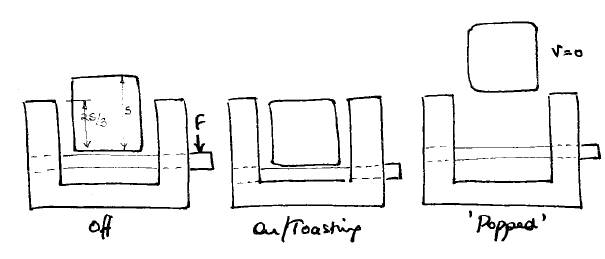
toasterdrawingOk, it’s a challenging title and a strange thumb-nail diagram but stick with it!  Last week I was giving revision lectures for my first year class in thermodynamics which is why my post was about problem-solving.  I mentioned the difficulty in persuading students to represent problems pictorially.  It is called meta-representational competence.  It is a knowledge of when visual representations are likely to be appropriate, how to create them and how to interprete them, according to Disessa and Sherin (2000).

It is hard because you need to become comfortable with the slow and uncertain process of creating representations and exploring the space of possibilities, to quote Martin and Schwartz (2014).  This is achieved through practice. Oh, and now we are back to students testing their skills against problems set by their tutors.  It is what engineers learn to do as part of their formation.  They might not realise it but their meta-representation competence is one of the attributes that make them so attractive to employers.

Now, what about that thumb-nail.  Well, it is my picture drawn as part of the staff answer to the Everyday Engineering Example below, which was given to our new engineering students in their first week at university and subsequently discussed with their personal tutor. Can you solve it with my sketch?  Answers via the comments…

Dynamics Example:

A two-slice toaster is switched on by depressing a slider which causes the slices of bread to fall downwards into the toaster between heating elements and also extends a pair of springs at each end of the toaster. When the toast is ready a pair of triggers releases both springs simultaneously, which in turn cause the toast to ‘pop’ up. If the toast is to just not jump completely out of the toaster when it is ready and in the ‘off’ position rests with two-thirds in the toaster, calculate the force that must be applied to the slider when switching on the toaster. Neglect the weight of the mechanism and assume that there are no losses.

Sources:

Disessa AA & Sherin BL, Meta-representation: an introduction, J. Mathematical Behaviour, 19(4):385-398, 2000

Martin L & Schwartz DL, A pragmatic perspective on visual representation and creative thinking, Visual Studies, 29(1):80-93, 2014.

Martin L & Schwartz DL, Prospective adaptation in the use of external representations, Cognition and Instruction, 27(4):370-400, 2009.

100 Everyday Engineering Examples

bookletsSTOP PRESS – more than 100 Everyday Engineering Examples published in more than 40 lesson plans on a new webpage.

I have been including 5E lesson plans as part my recent posts.  These lesson plans are primarily for people teaching first-year engineering undergraduates, which is pulling me away from the intended focus of this blog. So, I have decided to publish all of the lesson plans that I have written & edited on a separate page.  There are more than 100 Everyday Engineering Examples in the more than forty lesson plans.  If that is not enough Everyday Engineering Examples then you can find more at ENGAGE

Now back to Realizing Engineering – we live in an almost entirely engineered world. Engineers, as a profession, are so good at their job that most people are unaware of their influence on society.  Look around you. Engineers will have designed the machines and transport infrastructure to supply most of what you can see as well as what you are probably sitting in and on.

The Royal Academy of Engineering has produced an ebook to expand on this theme of ‘Engineering in Society’ for first year engineering undergraduates but I think its suitable for anyone considering a career in Engineering.

Singing in the rain

Followers of this blog might have deduced that I live within sight of the sea, which means that it is nearly always windy.  After a rain storm the streets of the city are usually littered with broken umbrellas.  I suspect that most of these belong to the many tourists that visit Liverpool, because local residents know that the wind will wreck any umbrella that you are brave enough or foolish enough to put up.

It is relatively straightforward to estimate the forces involved in holding an umbrella up in a gale by using control volume analysis.  The lesson plan below includes this Everyday Engineering Example together with two more control volume analyses.

Momentum 5EplanNoF5_momentum

The title of the posting is pretty tenuous this week: Gene Kelly sings ‘Singin’ in the rain’ without an umbrella in the film of the same name, see www.youtube.com/watch?v=D1ZYhVpdXbQ – well its difficult to be creative all of the time, or even some of the time!

See also the Everyday Engineering Examples page on this blog for more lesson plans and more background on Everyday Engineering Examples.

Slam dunk

CIMG0176Here is another lesson plan for use in teaching engineering science.  This one is based on the stress generated by a slam dunk in basketball.  Sports provide many potential Everyday Examples but caution needs taken in selecting them because not all students are interested in or participate in sports.  Research has shown that the context of examples should be familiar to all students in a class.  Otherwise students will be worrying about the context and will not be listening to the explanation of the engineering science.  Examples will be perceived as tedious intellectual exercises unless that allow questions to be posed that have interesting or useful answers.  Student motivation is closely linked to their perception of the usefulness of the exercise.

When Everyday Examples are set in a familiar context and yield fruitful outcomes, then the level of student engagement and learning is not influenced by the level of difficulty.  So there is no need to idealise a scenario to an elementary problem prior to applying engineering principles.  And here is the proverbial slam dunk, instructors who successful incorporate appropriate Everyday Examples into their lectures are likely to be rated more highly by their students, regardless of the associated level of difficulty.

Lesson plan: 5EplanNoS9_eccentric_loading

See the Everyday Examples page on this blog for more lesson plans and more background on Everyday Examples.