Category Archives: Uncategorized

Death knell for the lecture?

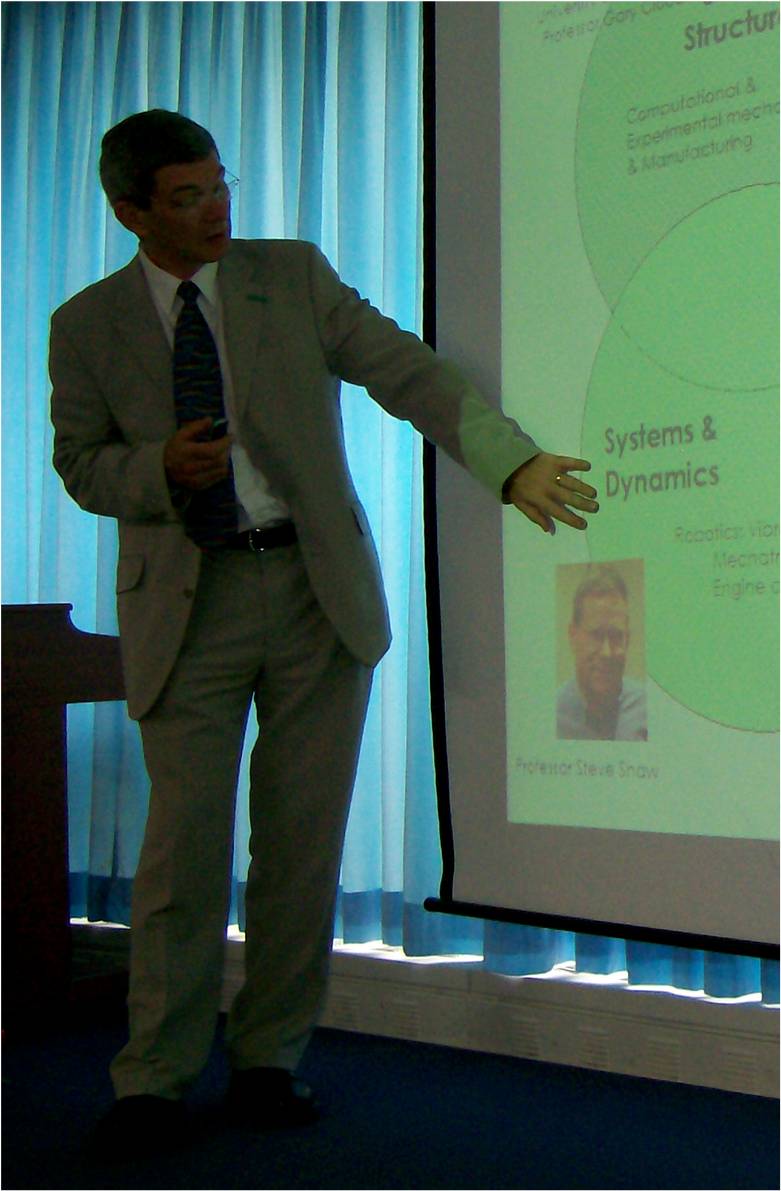
Author lecturing in Yonsei University, Korea

Author lecturing in Yonsei University, Korea

This week I have started filming short video clips for a MOOC that will be broadcast in February in parallel with my undergraduate course on Thermodynamics. The Massive Online Open Course (MOOC) is provisional titled: ‘Energy – Using it and Losing it: Real-World Thermodynamics for Beginners’ and will be offered through FutureLearn to a worldwide audience. The video clips, which essentially replace the traditional 50-minute lecture, will be about 3 minutes long recognising that this is the longest time period that many young people will focus uninterrupted on a single activity.

Last week was the start of a new academic year in which we have been instructed to use newly-installed software and hardware to record or, in the new terminology, video-stream all of our lectures. The ‘streamed’ lectures will be made available online for students to watch at anytime during the academic year. All of this is happening when attendance at lectures is falling, which leads me to wonder whether these events represent the death knell of the traditional university lecture?

We have known for sometime that people’s maximum attention span was typically fifteen to twenty minutes and yet lectures have remained stubbornly at 50 minutes duration with many double lectures timetabled. Considerable ingenuity, imagination and energy is needed to deliver lectures that engage students for these time periods (see Engage Engineering for tips on how to do this). So it should come as no surprise that many lectures are half empty when students have alternatives such as short video clips available online, streamed lectures that can be fast-forwarded over the boring bits or rewound to repeat important sections, as well as the old-fashioned approach of reading a good textbook and teaching yourself.

Lectures are in many ways a theatrical performance, though factual rather fictional. Theatre has had to evolve and adapt in order to survive the advent of cinema, television and most recently the internet. In the process, some theatres and drama companies have disappeared. I think the same is likely to happen with the university lecture – some will evolve and adapt, for instance by embracing new technology, but others will disappear as students choose more effective means of acquiring knowledge and understanding.
Take a walk on the wild side

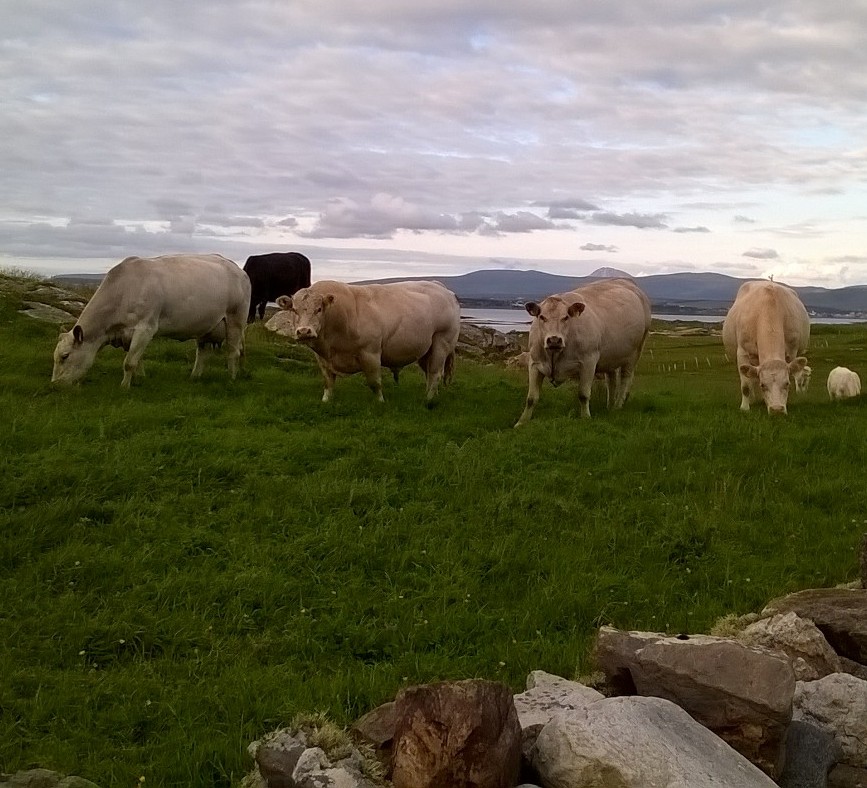
WP_20150714_001 (2)Last month I extolled the virtues of ‘mind-wandering’ (see also the original posting entitled ‘Mind-wandering’ September 3rd, 2014) and I have written in the past about the benefits of taking short walks to improve creative thinking (see my post entitled ‘The Charismatic Engineer‘ on June 4th, 2014).  Recent research by Greg Bateman and his colleagues at Stanford has shown it is better for your mental health to take those walks in the countryside.  Walking in a natural environment reduces rumination more effectively than in an urban environment.  Rumination is repetitive, negative and self-critical thinking that is often damaging to mental health. Of course, this will not be news to many outdoor enthusiasts and ‘pastoral crazes’ are not new.  Helen MacDonald has described how in 1930s people used to enjoy long walks in the countryside, including moonlit rambles.  For instance, in 1932 the Southern Railway Company offered an excursion to a moonlit walk along the South Downs in England.  They expected to sell three or four dozen tickets but one and half thousand people showed up.  This 1930s pastoral craze was described by Jed Esty as ‘one element in a wider movement of national cultural salvage’ following the economic disaster of the Great Depression and the instabilities in Europe.  Maybe it’s time for train companies to offer moonlit excursions again?

Sources:

Helen MacDonald, H is for Hawk, Vintage Books, London 2014

Jed Esty, A shrinking island: Modernism and National Culture in England, Princeton University Press,2003.

http://www.theatlantic.com/health/archive/2015/06/how-walking-in-nature-prevents-depression/397172/?utm_source=SFFB

http://www.huffingtonpost.com/2015/07/03/walking-nature-depression_n_7704604.html

http://www.pnas.org/content/112/28/8567.abstract

No closed systems in nature

WP_20150722_008 (2)While I was away on vacation last month, WordPress sent an email congratulating me on the third anniversary of the start of this blog.  This stimulated me to look at the statistics on the most frequently read, or at least viewed, of the approximately 160 postings that I have written.  Top of the list is an early posting which asks the question ‘Are there any closed systems in nature?’ (see post entitled ‘Closed systems in Nature?’ on December 21st, 2012).  Since this question has generated more interest than any of my subsequent postings, it seems appropriate, after 30 months, to attempt an answer.

Alexander Bogdanov (1873-1928), and independently Karl Ludwig von Bertalanffy (1901-1972), recognized that all living systems are open systems in the thermodynamic sense, which operate far-from equilibrium and require a continual flux of matter and energy to sustain life.  By contrast, closed thermodynamic systems tend to settle into a state of equilibrium, i.e. with no differences in energy, no chemical reactions in progress and no unbalanced forces.

The cybernetist, William Ross Ashby (1903-1972) suggested that living systems are energetically open but operationally closed, i.e. closed to information and control.  In other words, a cell, or any other living organism, needs no information from the environment to be itself. All the information for a bee to be a bee is contained inside a bee (for more on the bee theme see ‘Entropy management for bees and flights‘ on November 5th, 2014 and ‘Fields of flowers’ on July 8th, 2015).  These concepts, of being energetically open and operationally closed, form the essence of the characteristics of biological life as described by Capra and Luisi, whom I have loosely quoted in the previous sentence.

So, to answer my original question, there are no closed living systems in nature.  We can take this a step further: in 1927  Charles Elton defined an ecosystem in terms of the flow of energy and matter from one organism to another. Consequently, the only waste generated by an ecosystem as a whole is the entropy associated with respiration, which allows the system to satisfy the second law of thermodynamics, and the waste is replaced with energy from the sun through photosynthesis.  The sum of all ecosystems is the biosphere.  So, it can be construed that everything on Earth is part of one giant open system – this is essentially the Gaia hypothesis.

Sources:

Gorelik, G., Principal ideas of Bogdanov’s tektology: the universal science of organisation, General Systems, 20:3-13, 1975.

Bertalanffy, L. von, General Systems Theory, New York: Braziller, 1968.

Ashby, W.R., Design for a Brain, New York: Wiley, 1952.

Capra, F., Luisi, P.L., The Systems View of Life – A unifying vision, Cambridge: Cambridge University Press, 2014.

Elton, C.S, Animal Ecology, London: Sidgwick & Jackson, 1927 (reprinted 2001, University of Chicago Press).

Lovelock, J., Gaia, Oxford: Oxford University Press, 1979.


Everyone is born an engineer

Susan Scurlock

Susan Scurlock

This week I want to enthuse about one of the most energetic and exciting speakers that I have heard for a long time: Susan Scurlock, who spoke last month at the Annual Congress of the UK Engineering Professors’ Council (EPC). Susan’s premise is that all young children are engineers. Just look at what toddlers will do if you give them a bag of bricks or when kindergarten kids are given a box of Lego. Somehow we manage to ‘educate’ the engineer out of them before they finish secondary school. So, the solution to increasing the supply of engineers is to nurture these nascent engineering tendencies provided to everyone by nature. Susan founded Primary Engineer in 2005 and in 2014 established the Institution of Primary Engineers and the Institution of Secondary Engineers to support this process. Children can become Primary Engineers through developing their innate engineering skills as part of a programme of activities.

Susan describes it as ‘STEM by stealth’. Her organisation provides training courses for teachers on practically applying Mathematics and Science to design and make activities. The results leave both children and teachers inspired. The Institution’s work is supported by industry, higher education and the Institution of Mechanical Engineers. When children graduate to secondary school they can join the Institution of Secondary Engineers and then move onwards to the professional institutions as student members when they go to university. So, there is pipeline from children’s bricks and Lego to being a professional engineer.

All of this needs support and enthusiasm from the engineering profession. So, if you have already made it through the pipeline then consider helping Susan make it pipeline that doesn’t leak.

Sources:

The EPC made a podcast of Susan’s presentation that you can listen to at:

http://backdoorbroadcasting.net/2015/04/susan-scurlock-the-value-of-engineering-in-primary-schools/

http://epc.ac.uk/congress-2015/

www.primaryengineering.com