Category Archives: Soapbox

Closed system: water

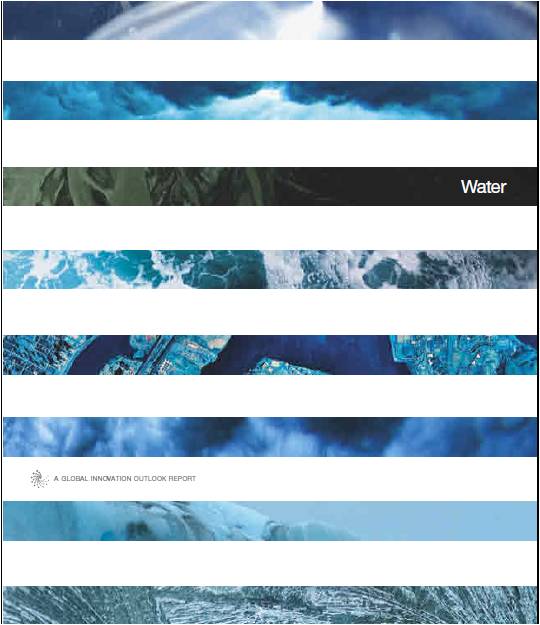
gio_waterSometime ago I wrote about the need to consider the planet as a closed system, i.e. a system to which no new mass is being added, other than the occasional meteor from space [see my posts ‘Closed systems in nature?’ and ‘Open-world mind-set’ on December 21st, 2012 and January 4th, 2013, respectively].  This closed system approach applies to water.  The total amount of water on the planet does not change and it has been moving around the hydrologic cycle for thousands of years.  Mankind interacts with this cycle changing the chemistry, usefulness and availability of water.  All of us contribute to these changes in a small way but 6.5 billion of us make a big impact.

Most of us are aware of pollution to rivers and groundwater caused by use of fertilizers and pesticides.  We are perhaps less aware that removing groundwater for irrigation, industrial processes and domestic consumption can reduce water pressure underground in coastal regions causing saltwater to percolate and mix with freshwater reserves.  Or that discharges from desalination plants increases the local salinity of seawater while carbon emissions in the atmosphere is sequestered by the oceans raising water acidity levels.  All of these effects can damage ecosystems.

80% of available freshwater resources in the world are used to grow food.  Yet, we also need it in huge quantities for industrial processes, for instance it requires 10 litres of water to make a sheet of paper and 200 litres to make one kilogram of plastic.  Just as in energy consumption, there are huge global variations in daily domestic consumption per capita from 778 litres in Canada, 139 litres in the UK and India to 95 litres in China.

So, in addition to thinking about energy consumption when designing products and services, engineers need to think about water requirements since although there is a renewable supply it is not  infinite or even constant.

The data above was taken from ‘Water: A Global Innovation Outlook Report’ available at http://www.ibm.com/ibm/gio/media/pdf/ibm_gio_water_report.pdf

Engineering global change

‘Engineering is the most important profession: the future of our planet, and the quality of human life upon it, depends on engineering more than it does on any discipline.’

This bold statement was made as an opening gambit by one of my colleagues, Matt during a University Open Day for potential undergraduate students.  These events are particularly important for engineering because students usually don’t study engineering at school and so have little idea about what it involves.  Matt continued to say that ‘a decision to study engineering provides you with an opportunity to make a real and lasting impact on the world’.

Medical doctors and nurses have a considerable impact on our individual health and welfare, lawyers help us to resolve disputes and administer justice, philosophers advise us on how we should think while journalists and bloggers attempt to tell us what we should think but engineers manage the conception, design, development, manufacture or construction, maintenance, recycling or disposal of everything in our man-made world, i.e. products, processes & systems.  As Theodore von Karman, the great aeronautical engineer said ‘scientists discover the world that exists; engineers create the world that never was’.  Engineers tend to supply what society wants and so have to share with society responsibility for the massive consumption of the world’s resources but engineers are also working to create solutions.  We need a massive level of innovation to create sustainable technologies that will allow everyone to enjoy the lifestyle of the average American or European.

‘If you really want to change the world then choose a career in engineering, and I mean real engineering, not financial engineering’ Lord Mandelson, March 2009

Disease of the modern age

hot flatThomas Friedman described ‘continuous partial attention’ as a disease of the modern age in his book ‘Hot, Flat and Crowded – Why we need a green revolution and how it can renew America’ [Farrar, Straus & Giroux, New York, 2008].  Most university students suffer from this disease, which makes it difficult for lecturers to attract and hold their attention.  An NSF-funded consortium of university engineering departments in the USA has developed a strategy based on using Everyday Examples of Engineering to engage students (for exemplars see http://www.engageengineering.org/?page=161 ).

A Biological Science Curriculum Study in the 1980s developed the concept of 5Es as a framework for lecture or lesson plans based on the earlier work of Atkin and Karplus [Atkin JM, & Karplus R, Discovery or invention? Science Teacher, 29(5):45, 1962].  The 5Es are: ENGAGE, EXPLORE, EXPLAIN, ELABORATE and EVALUATE.

I have edited a series of lesson plans which combine the 5Es framework and Everyday Examples of Engineering principles [see http://www.engineeringexamples.org ], which are intended to support lecturers who want to use these examples in their teaching.  The lesson plans describe how the engineering principles can be applied and explained as well as providing worked analyses of the examples.  The worked analyses will also be useful to students although full explanations of the underlying principles are not included because it is assumed that these are well-known to the lecturer.

In my post about ‘Bridging cultures’ on June 12th, 2013, I made a commitment to write a series of posts about Everyday Examples of Engineering concepts.  When they are relevant, I intend to attached 5E lesson plans to these posts.

To quote Samuel Johnson: “the two most engaging powers of an author are to make new things familiar, familiar things new”; I aspire to this and through the lesson plans help others to achieve it in the classroom.

Bridging cultures

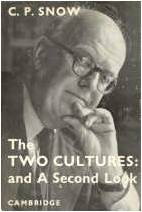
cpsnowAs long ago as 1959, Sir Charles Snow identified two cultures in modern society, which could be summarised as those that understand the consequences of the second law of thermodynamics and those that don’t [see my post entitled Two Cultures on March 5, 2013].

The main aim in writing this blog is to help in bridging the gap between these cultures by commenting on and explaining engineering concepts, ideas and principles in a way that non-engineers can appreciate and might read.  One of the reasons for the gap between the cultures within our society is that ‘technology is really a way of thinking’ [see reference below].  Engineering educators spend a lot of time teaching prospective engineers how to think and, in particular, how to solve engineering problems.  However, these same educators often forget when introducing engineering students  to the principles of engineering for the first time that the students are not familiar with the language or culture.  The students are just starting to cross the gap and their educators, who are on the other side of the gap, fail to appreciate the width of the gap.  The result is that educators fail to engage the students which results in poor recruitment and retention of engineering students.  This failing is recognised by some people, see for instance http://www.engageengineering.org/

One solution to help students cross the gap is to use familiar everyday examples to explain engineering concepts.  I have made a short video about the underlying pedagogy together with some examples that you can find at http://www.youtube.com/watch?v=qAh4QHC8ya0&feature=youtu.be .  There is also a series of booklets [ http://www.engineeringexamples.org/ ] designed to support university teachers who want to teach in this way.  I plan to rewrite the examples in these booklets as periodic posts on this blog for a wider, non-technical audience.  So watch this space!

‘Technology is really a way of thinking’: http://www.atse.org.au/Documents/Publications/Reports/Education/ATSE%20Technology%20Education%20A%20Way%20of%20Thinking%202004.pdf