Category Archives: Learning & Teaching

Teaching stress

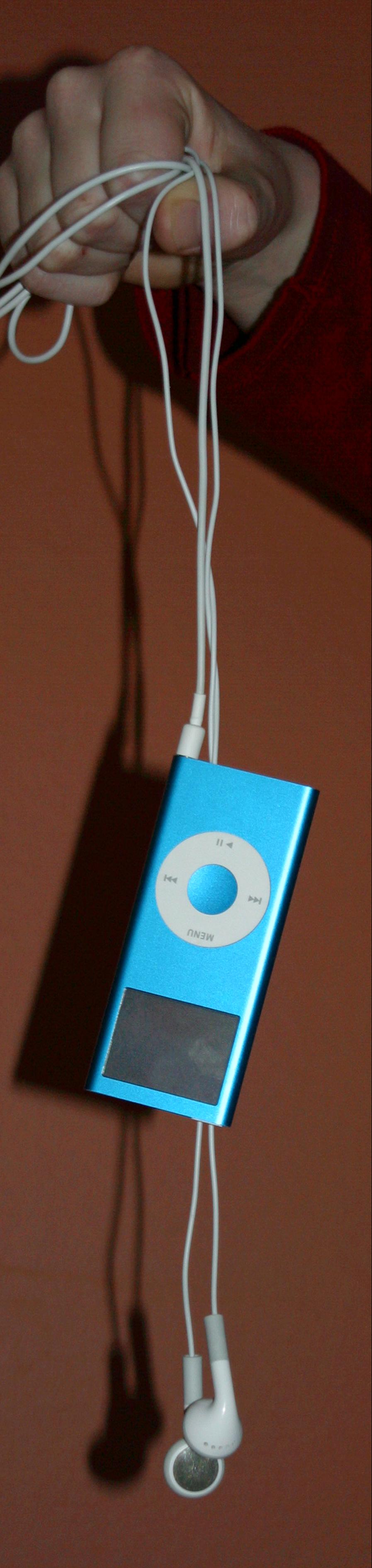
ipodDuring my trip to the US (see post entitled ‘Detroit’, on 21st August, 2013), my earphones for my IPod broke.  This seems to be a common occurrence, perhaps a case of the planned obsolescence I wrote about on May 1st, 2013 under the heading ‘Old is Beautiful’.  Nothing very beautiful or repairable about broken earphones, they are just part of our disposable culture.  However, I collect them and use them when teaching engineering students about stress and strain.  Students have all experienced such a failure and so it is an everyday example of engineering that can be used to teach the principles of stress and strain in a familiar context.  A suggested 5E lesson plan for doing this is provided at the bottom of this post.

The lesson plan deals with the stresses in the earphone cable when the ipod is dangled from them and the discussion in class can be extended to include the stresses induced by spinning the earbuds on the end of the cable or the effect of repeated bending of the cable leading to possible fatigue failure (like when you bend your old credit card back and forth to snap it in half).

For more on Everyday Examples in Engineering ‘Bridging Cultures’ on June 12th, 2013; and ‘Disease of a Modern Age’ on June 26th, 2013.


5EplanNoS1_uniaxialstrain&ipod

On the beach

beachMaybe you are lying on the beach reading this, or if not dreaming about lying on the beach.  We enjoy lying on the beach, or next to a swimming pool, in part because it involves doing nothing and in part because of the heat transfer.  Heat transfer is transfer of energy from a high to a lower temperature zone.  It can occur in four ways: conduction, free convection, forced convection and radiation; and all of them occur on the beach on a hot day.

Conduction occurs as a flow of kinetic energy from one molecule to the next by direct contact.  When you are lying on the beach it occurs between you and the surface that you are lying on.  When you first lie down on hot sand, then the energy flows from the hot sand to your cooler body by conduction.

Free or natural convection is heat transfer carried by a rising current of fluid due to buoyancy effects created by the hotter fluid being less dense.  This tends to happen above your warm body after you have been lying in the sun for a while.  It also happens above the hot sand and you can sometimes see a heat haze caused by the rising hot air that has a lower density and thus different refractive index compared to the surrounding air.

Forced convection also involves heat transfer by a moving current of fluid but in this case the flow is caused by an external source.  So if there is breeze across the beach then you will be cooled by forced convection as you lie on the beach.

Radiation consists of electromagnetic waves in the infrared spectrum travelling away from a source in all directions.  This is the heat from the sun that makes it so pleasant to lie on the beach on a sunny day.

Ok, shut your eyes and go back to sleep.  The heat transfer lesson is over – though some of you might want to think about whether that breeze is really forced convection since it is probably caused by natural convection on a climatic scale.

Sizzling sausages

130-3071_IMGIn my post on 19th June 2013 [Closed system on the BBQ], I discussed the thermodynamics of sausages cooking on a barbeque in the context of the first law of thermodynamics.  This is an everyday example of engineering principles [see my post entitled ‘Bridging cultures’ on June 12th, 2013].  I mentioned that the energy gained by a sausage causes it to be cooked and for the water-content to boil as the temperature is raised.  The rise in temperature causes the pressure inside the sausage to increase, which is Gay-Lussac’s law in action.  When the water-content of the sausage starts to boil, the steam produced raises the pressure even further providing the sausage skin remains impervious to the transfer of matter, i.e. the steam.  The sausage as a closed system that becomes a miniature pressure vessel.

Pressure vessels fail as a result of the stresses in their wall.  In engineering, stress is defined as force divided by the area of  material carrying the force.  My sausages always fail longitudinally, i.e. they burst open with splits running along their length.  This is because the stress across the split, known as the circumferential or hoop stress, is the largest stress in the skin.

It is relatively simple to use Newton’s Third Law, about there being an equal and opposite reaction for every action force, to show that the circumferential stress is larger than the longitudinal stress; but it is a level of detail beyond what I feel is appropriate here.  Bursting sausages are a good illustration of Everyday  Examples of Engineering, which became the ‘poster-child’ of the NSF-funded project that developed them in the USA .  The pedagogy underpinning the use of Everyday Examples is explained in detail in a paper in the European Journal of Engineering Education (vol 36, pages 211-224, 2011) and a 5Es lesson plan is available here [for more on 5Es lesson plans see my post entitled ‘Disease of the modern age’ on June 26th, 2013].

You can see a video of me talking about these sausages at http://www.youtube.com/watch?v=nsSxKuRo4H0

EJEE paper: http://www.tandfonline.com/doi/abs/10.1080/03043797.2011.575218#.UbG9TZyPMx4

Disease of the modern age

hot flatThomas Friedman described ‘continuous partial attention’ as a disease of the modern age in his book ‘Hot, Flat and Crowded – Why we need a green revolution and how it can renew America’ [Farrar, Straus & Giroux, New York, 2008].  Most university students suffer from this disease, which makes it difficult for lecturers to attract and hold their attention.  An NSF-funded consortium of university engineering departments in the USA has developed a strategy based on using Everyday Examples of Engineering to engage students (for exemplars see http://www.engageengineering.org/?page=161 ).

A Biological Science Curriculum Study in the 1980s developed the concept of 5Es as a framework for lecture or lesson plans based on the earlier work of Atkin and Karplus [Atkin JM, & Karplus R, Discovery or invention? Science Teacher, 29(5):45, 1962].  The 5Es are: ENGAGE, EXPLORE, EXPLAIN, ELABORATE and EVALUATE.

I have edited a series of lesson plans which combine the 5Es framework and Everyday Examples of Engineering principles [see http://www.engineeringexamples.org ], which are intended to support lecturers who want to use these examples in their teaching.  The lesson plans describe how the engineering principles can be applied and explained as well as providing worked analyses of the examples.  The worked analyses will also be useful to students although full explanations of the underlying principles are not included because it is assumed that these are well-known to the lecturer.

In my post about ‘Bridging cultures’ on June 12th, 2013, I made a commitment to write a series of posts about Everyday Examples of Engineering concepts.  When they are relevant, I intend to attached 5E lesson plans to these posts.

To quote Samuel Johnson: “the two most engaging powers of an author are to make new things familiar, familiar things new”; I aspire to this and through the lesson plans help others to achieve it in the classroom.