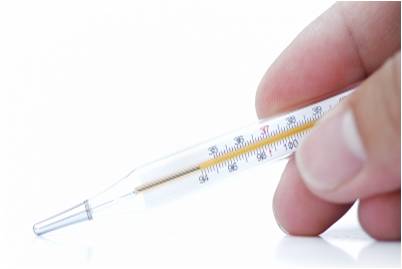
 As mentioned in my previous post (Lincoln On Equality, 6th February, 2013), the Zeroth Law of Thermodynamics enables the concept of temperature and temperature scales to be established. The Swedish astronomer, Anders Celsius (1701-44) devised a temperature scale on which water froze at 100 degrees and boiled at zero, i.e. the opposite way around to the scale that bears his name today. Daniel Fahrenheit (1686-1736), a German instrument maker, was probably the first to use a mercury thermometer and he assigned zero to the lowest temperature he could achieve, which was for a mixture of salt and water. He chose his body temperature as 100 degrees because it was an easily portable standard, but not ideal because it is not totally reproducible. Fahrenheit’s scale had a temporary advantage because negative numbers were rarely needed given the technology of the day and that water freezes at 32 degrees Fahrenheit.
Somewhat later it was decided that it might be more appropriate to set zero as the lowest attainable temperature, known as absolute zero, which is defined by the Third Law of Thermodynamics as the temperature at which the entropy of all perfectly crystalline pure substances is zero. This lead to definition of two temperature scales: the Kelvin scale with degrees the same size as on the Celsius scale so that water freezes and boils at 273K and 373K respectively; and the Rankine scale with degrees the same size as the Fahrenheit scale.
Actually, absolute zero is not attainable. The world record stands at 810 trillionths of a degree Rankine (see http://www.smithsonianmag.com/science-nature/phenom-200801.html).
Image credit: arztsamui / FreeDigitalPhotos.net
 Realize Engineering