Tag Archives: science

Everyone is born an engineer

Susan Scurlock

Susan Scurlock

This week I want to enthuse about one of the most energetic and exciting speakers that I have heard for a long time: Susan Scurlock, who spoke last month at the Annual Congress of the UK Engineering Professors’ Council (EPC). Susan’s premise is that all young children are engineers. Just look at what toddlers will do if you give them a bag of bricks or when kindergarten kids are given a box of Lego. Somehow we manage to ‘educate’ the engineer out of them before they finish secondary school. So, the solution to increasing the supply of engineers is to nurture these nascent engineering tendencies provided to everyone by nature. Susan founded Primary Engineer in 2005 and in 2014 established the Institution of Primary Engineers and the Institution of Secondary Engineers to support this process. Children can become Primary Engineers through developing their innate engineering skills as part of a programme of activities.

Susan describes it as ‘STEM by stealth’. Her organisation provides training courses for teachers on practically applying Mathematics and Science to design and make activities. The results leave both children and teachers inspired. The Institution’s work is supported by industry, higher education and the Institution of Mechanical Engineers. When children graduate to secondary school they can join the Institution of Secondary Engineers and then move onwards to the professional institutions as student members when they go to university. So, there is pipeline from children’s bricks and Lego to being a professional engineer.

All of this needs support and enthusiasm from the engineering profession. So, if you have already made it through the pipeline then consider helping Susan make it pipeline that doesn’t leak.

Sources:

The EPC made a podcast of Susan’s presentation that you can listen to at:

http://backdoorbroadcasting.net/2015/04/susan-scurlock-the-value-of-engineering-in-primary-schools/

http://epc.ac.uk/congress-2015/

www.primaryengineering.com

Chemical Imbalance

chemicalimbalance

Cover of the book to go with the film


A couple of weeks ago I blogged about population and its rapid rise (see ‘Population Control’ on September 25th, 2013).  Despite our burgeoning population many university engineering schools in the English-speaking world tend to recruit from only half the population, i.e. the male population.  Representation of females in engineering is woefully low, generally worse than in science.  To learn more how women feel about the situation in chemistry watch a short film called ‘A Chemical Imbalance’  – I highly recommend that you spare the 15 minutes to watch it at  http://chemicalimbalance.co.uk/

Go on do it now! The rest of this posting is boring stuff so watch the film which was made with support from the Royal Society.

In the film ‘the leaky pipeline’ is talked about in the context of women entering science and engineering not making it to the top.  Of course this is not unique to science and engineering; only about 20 of the Fortune 500 companies have a female CEO.  This is an important issue but the supply to the pipeline is a bigger problem.  Only 20% of the students awarded an A-level in Physics in the UK this year (equivalent to AP exams in the US) were female and since most university engineering programmes require Physics the supply of qualified women is almost decimated before it gets to the pipeline.  This year my school has taken the step of dropping the physics requirement and accepting that we will need to teach the necessary physics as part of our engineering courses; incidently we also raised the grades we require so this does not represent a lowering of standards!

Another sobering thought is that nearly half of co-education state schools in the UK had no females studying for A-level physics.  I don’t have statistics for the US but I suspect they would be the same.

Anne-Marie Slaughter, a political scientist at Princeton argues that ‘the way we view women [has] changed radically, [but] the way we view men not at all’ so that achieving further gender equality requires a cultural change about and by men, which is going to be tough in a male-dominated conservative profession like engineering but we have to do it.  So if you didn’t watch the film, do it now and think about how you can be an agent for change.

Sources:

http://www.bbc.co.uk/news/education-19603399

Eduardo Porter’s column ‘Economic Scene’ entitled ‘Is leaning in enough to fix the gender gap? in the New York Times on September 24th, 2013 see http://www.nytimes.com/2013/09/25/business/economy/for-american-women-is-it-enough-to-lean-in.html?ref=eduardoporter&_r=0

Two Cultures

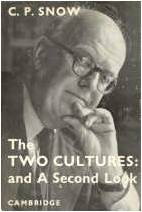
cpsnowThe term ‘Two Cultures’ was coined by Sir Charles Snow more than fifty years ago in his 1959 Rede Lecture to describe the gulf that existed then and persists today between scientists and non-scientists.  He equated not knowing the second law of thermodynamics to never having read anything by Shakespeare.  A number of my posts have referred to the Second Law of Thermodynamics because it explains why engines run and chemical reactions occur but to quote Peter Atkins, it is also ‘the foundation for understanding those most exquisite consequences of chemical reactions – acts of literary, artistic and musical creativity that enhance our culture‘.

Snow, C.P., The Two Cultures: and A Second Look, Cambridge University Press, Cambridge, 1964.

Atkins, P., The Laws of Thermodynamics –  A Very Short Introduction, Oxford University Press, Oxford, 2010.

Something for nothing?

Let’s try a thought experiment, following on from my previous post (Beyond Zero on 20th February, 2013).  Imagine two equal amounts of matter, A and B at -350 Kelvin and 350 Kelvin respectively.  We would expect heat to flow from the hot one, that’s B to A, the cold one.  This would cause the internal energy of B to decrease with a corresponding rise in the internal energy of A so that B gets colder while A gets hotter, i.e. they both move closer to absolute zero with corresponding decreases in entropy.  The Second Law of Thermodynamics does not allow this to happen and in fact the reverse would occur, i.e. heat would flow from the cold one A to B, lowering the temperature of A and raising the temperature of B so that they both move away from absolute zero with corresponding increases in entropy.coldgraph2

IF we could actually make this happen then we would able to design engines with efficiencies higher that 100%.  One corollary of the Second Law of Thermodynamics is that heat cannot be converted into work without some of the heat being wasted or lost as entropy.  In a power station, heat is taken from a hot source (e.g. a nuclear reactor, solar concentrator or gas furnace) and some of it converted into shaft work, which turns a generator to produce electricity, while the remainder is dumped into a cold sink usually the environment via cooling towers.  However, if our cold sink was at a negative temperature on the Kelvin scale then we could take heat from the cold sink and the hot source at the same time!  Why aren’t we doing this?  Well, we don’t have any naturally occurring cold sinks at below zero Kelvin and to create one uses more energy than we would gain in our super-efficient power station – that’s the Second Law kicking in again.  So you can’t have something for nothing.