Tag Archives: reading

Not much change

A Happy and Prosperous New Year to all of my readers!
At this time of year, it is traditional in the media to review the previous year and comment on what lies ahead in the new year.  However, not much has changed in my blog during 2017: I wrote and published 52 posts that attracted about 20,000 views through the WordPress site, which is pretty much the same as 2016.  Although, there was a growth in readers via LinkedIn, Tumblr and Twitter.  This is not enough traffic to achieve a place in the UK’s Top 50 Blogs according to Vuelio, but then neither the title nor the content of this blog is designed to attract the mass-markets to which most of these high-volume sites appeal.  Instead, I suspect that I am writing for a small bubble of like-minded people [see my post ‘You’re all weird‘ on February 8th, 2017]; nevertheless, it would be nice to feel that the bubble will continue to expand.  Maybe the small face-lift will help though the Latin verse below will likely not help!

It is tempting at this point to ramble on further about the lack of interest in scholarship in modern society; however, to do so would be to follow a tradition that is at least 800 years old.  In the thirteenth century manuscript, Carmina Burana there is a poem called ‘Florebat olim studium’.  Its first lines are

Florebat olim studium

nunc vertitude in tedium,

iam scire diu viguit,

sed ludere prevaluit.


These translate as ‘Scholarship once flourished, now it is turned into boredom; for a long time knowledge was esteemed, but now playing is preferred.’  This seems to have been echoed by generations of professors and, as my editor says, is part of the human condition.

I read about the Carmina Burana in a beautiful book: ‘Meetings with Remarkable Manuscripts‘ by Christopher de Hamel who takes the reader on a series of visits to twelve of the most important medieval manuscripts starting with the sixth century Gospels of Saint Augustine in the library of Corpus Christi College, Cambridge and finishing with the sixteenth century Spinola Hours in the J. Paul Getty Museum, Los Angeles.  It is part history book tracing the advent of literacy in Western Europe from the sixth century, when only the clergy could read and write, through to start of printing when 30,000 titles were issued in the last fifty years of the fifteen century; and part travelogue as de Hamel describes his visits to the museums and libraries where the twelve manuscripts are preserved.  Book reviews are not a regular feature of this blog but this is a book worth reading that might not otherwise be on your list.

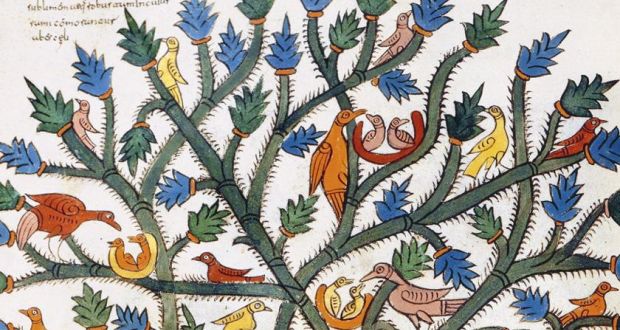
Image: from front cover of Meetings with Remarkable Manuscripts by Christopher de Hamel showing detail from the Morgan Beatus M644, folio 252v © The Morgan Library & Museum/Art Resource, NY/Scala, Florence.


In digital detox

I am on vacation so I am re-posting something I wrote around this time last year which I still think is relevant.

It’s official – half of us are addicted to our internet-connected devices and a third of us have attempted to kick the addiction.  A recent study by the UK’s communication regulator, OFCOM found that 59% of internet users considered themselves ‘hooked’ and spending the equivalent of more than a day a week on-line.   They also reported that one in three internet users have attempted a ‘digital detox’ with a third saying they felt more productive afterwards, while slightly more that a quarter found it liberating and another quarter said they enjoyed life more.  So, switch off all of your devices, take a deep vacation, do some off-line reading (see my post entitled ‘Reading offline‘ on March 19th, 2014), slow down and breathe your own air (see my post entitled ‘Slow down, breathe your own air‘ on December 23rd, 2015).  Now, you won’t find many blogs advising you to stop reading them!

Health warning: OFCOM also found that 16% of ‘digital detoxers’ experienced FOMO (Fear Of Missing Out’ (‘FOMO’), 15% felt lost and 14% ‘cut-off’.

Gone walking

Background and lock-screen pictures have become a feature of modern life.  Your computer and mobile device were probably delivered with some pre-loaded scenes from nature and some of us personalize our devices by up-loading photographs taken on holiday or a recent excursion into the countryside.  Perhaps, we do this intuitively, because recent research has shown that immersion in nature, even at the superficial level of viewing a picture can improve brain function.  Brisk walking stimulates the production of new neurons and, when you do it in an environment enriched with natural stimuli, the connectivity and stability of connectivity between neurons is increased.  For those us whose biological systems are in terminal decline, the opportunity to retard this decline by walking in the wild is too good to miss.  I have gone to the English Lake District to produce and connect some more neurons.  I’ll be back next week – feeling hopefully creative and empowered, as well as, probably rather damp but what else can be expected from northern England in April!

For those of you who want to immerse themselves vicariously in the damp natural environment of England in the rain could read ‘Rain: Four Walks in English Weather‘ by Melissa Harrison.

Sources:

Susan Greenfield, A Day in the Life of the Brain, London: Allen Lane, 2016.

Atchley RA, Strayer DL & Atchley, Creativity in the wild: improving creative reasoning through immersion in natural settings, PloS One, 7:e51474, 2012.

Yao S et al, Physical exercise-induced adult neurogenesis: a good strategy to prevent cognitive decline in neurodegenerative diseases? Biomedical Research Intl., 2014, 403120.

Olson KA et al, Environmental enrichment and voluntary exercise massively increase neurogenesis in the adult hippocampus via dissociable pathways, Hippocampus, 16:250-260, 2006.

‘Rain bringing out the contours in everything’

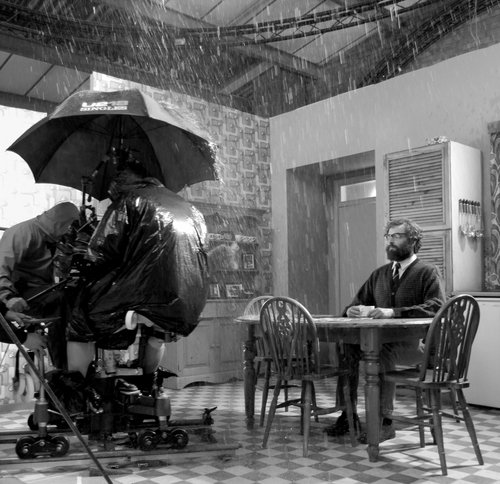
16blindness9-custom1Last October I cited John Hull’s audio diary in which he said ‘Cognition is beautiful.  It is beautiful to know.’ [See my post entitled ‘Cognition is beautiful‘ on October 19th, 2016]  Last week, I watched the film ‘Notes on Blindness‘ based on his book ‘Touching the Rock‘.  We found it a moving and life-enriching experience. At one point, John Hull, after he has lost all of his sight, opens his front door during a rain storm and describes the beauty of the rain.  “Rain has a way of bringing out the contours of everything; it throws a coloured blanket over previously invisible things; instead of an intermittent and thus fragmented world, the steadily falling rain creates continuity of acoustic experience.”  You can read more of this extract at www.johnmhull.biz/Touching the Rock.html in which John wishes that rain could fall inside a room to give him a sense of the things in the room.  This seemed particularly poignant to me, a sighted person, who benefits from photons raining down on everything around us during daylight or when the light is switched on.  The photons cause light waves to radiate from every surface in a similar way that the rain drops cause sound waves to radiate from everything as John experienced. Our eyes are amazing with 137 million separate ‘seeing’ elements on the retina, or in digital camera terms, that’s 137 megapixels.  But to quote the Roman poet, Lucretius who in his poem ‘De Rerum Natura’ wrote “Nothing in the body is made that we may use it.  What happens to exist is the cause of its use.”  In other words, we do not have eyes so that we can see but we see because we have eyes.  John Hull discovered new ways to experience the world using what was available to him although he struggled with what he had lost.  It is difficult to imagine losing one’s sight but his diary and the film bring us considerably closer to an appreciation of the loss.

Yes, I know I switched from a particle to wave description of light but I wanted to emphasize that the photons don’t just bounce off surfaces, otherwise all surfaces would look the colour of the illuminating light.


Sources:

John M. Hull, Touching the Rock: an experience of blindness, London: SPCK, 2016

Lucretius (author), Alicia Stallings (translator), The Nature of Things, London: Penguin Classics, 2007.

Charles Sherrington, Making of the eye, in The Faber Book of Science, John Carey (ed), London: Faber & Faber, 1995.

Picture: A production still from the film, Notes on Blindness, from NY Times on January 16th, 2016.