Tag Archives: entropy

Sonic screwdrivers

138-3816_IMG

No relevance except for the tranquility or absence of noise.

In a recent post on Noise Transfer [27th March, 2013] I highlighted the parallels between energy transfer by heat and noise.  In many cases, the heat and, or noise transfer is by-product of a process through which energy is dispersed to satisfy the requirements of the second law of thermodynamics, that entropy must increase as a product of all real processes.  Entropy, can be interpreted as a measure of dispersion, or the lack of availability to do anything useful and this applies to most heat and noise that we encounter in everyday life.

We can use concentrated sources of heat to produce useful work such as the furnace in a power station, but the second law of thermodynamics demands that we waste a substantial proportion of it through the creation of entropy.  It is also possible to use concentrated sources of noise, such as ultrasonic transducer to perform useful work for us, such as in surgery and the manufacture of composite materials [see Professional Engineering, http://profeng.com/features/good-vibrations ]; although an all-purpose sonic screw-driver of the kind used by Dr Who is not possible, yet.
Two Cultures

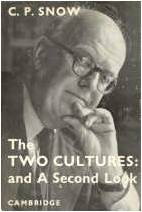
cpsnowThe term ‘Two Cultures’ was coined by Sir Charles Snow more than fifty years ago in his 1959 Rede Lecture to describe the gulf that existed then and persists today between scientists and non-scientists.  He equated not knowing the second law of thermodynamics to never having read anything by Shakespeare.  A number of my posts have referred to the Second Law of Thermodynamics because it explains why engines run and chemical reactions occur but to quote Peter Atkins, it is also ‘the foundation for understanding those most exquisite consequences of chemical reactions – acts of literary, artistic and musical creativity that enhance our culture‘.

Snow, C.P., The Two Cultures: and A Second Look, Cambridge University Press, Cambridge, 1964.

Atkins, P., The Laws of Thermodynamics –  A Very Short Introduction, Oxford University Press, Oxford, 2010.

Something for nothing?

Let’s try a thought experiment, following on from my previous post (Beyond Zero on 20th February, 2013).  Imagine two equal amounts of matter, A and B at -350 Kelvin and 350 Kelvin respectively.  We would expect heat to flow from the hot one, that’s B to A, the cold one.  This would cause the internal energy of B to decrease with a corresponding rise in the internal energy of A so that B gets colder while A gets hotter, i.e. they both move closer to absolute zero with corresponding decreases in entropy.  The Second Law of Thermodynamics does not allow this to happen and in fact the reverse would occur, i.e. heat would flow from the cold one A to B, lowering the temperature of A and raising the temperature of B so that they both move away from absolute zero with corresponding increases in entropy.coldgraph2

IF we could actually make this happen then we would able to design engines with efficiencies higher that 100%.  One corollary of the Second Law of Thermodynamics is that heat cannot be converted into work without some of the heat being wasted or lost as entropy.  In a power station, heat is taken from a hot source (e.g. a nuclear reactor, solar concentrator or gas furnace) and some of it converted into shaft work, which turns a generator to produce electricity, while the remainder is dumped into a cold sink usually the environment via cooling towers.  However, if our cold sink was at a negative temperature on the Kelvin scale then we could take heat from the cold sink and the hot source at the same time!  Why aren’t we doing this?  Well, we don’t have any naturally occurring cold sinks at below zero Kelvin and to create one uses more energy than we would gain in our super-efficient power station – that’s the Second Law kicking in again.  So you can’t have something for nothing.

Beyond zero

Recently a study has been published in Science [http://www.sciencemag.org/content/339/6115/52] about creating temperatures below absolute zero (see previous post on Arbitrary Zero, 13 February 2013), i.e. negative temperatures on the Kelvin and Rankine scales.  Temperature is a measure or indicator of the internal energy of matter which in turn is related to the spin state of electrons.  Electrons have two available spin states that are known as ‘up’ and ‘down’.  At room temperature more electrons have ‘down’ spin than ‘up’, and as absolute zero is approached all electrons align to have ‘down’ spin which is a configuration that corresponds to zero entropy.  When the temperature rises from room temperature, electrons tend to switch from ‘down’ to ‘up’ spin so that at an infinite temperature there are equal numbers of electrons in the two spin states.

The current theory is that at -300 Kelvin more electrons have ‘up’ than ‘down’ spin, i.e. a mirror image of the situation at +300 Kelvin.  If the temperature is lowered still further then the ‘up’ spin electrons tend to switch to ‘down’ spin so that at a negative infinite temperature there are equal numbers of electrons with ‘up’ and ‘down’ spin.  This state is equivalent to an infinite positive temperature, i.e. the absolute temperature scale can be considered to be circular or to have the negative and positive components joined at zero and infinity.

If you have made it this far then well done!  But if you didn’t quite follow everything then try the explanation at Newsy [http://www.newsy.com/videos/scientists-create-negative-kelvin-temperature-gas/ ].