Tag Archives: education

Poetasting engineers

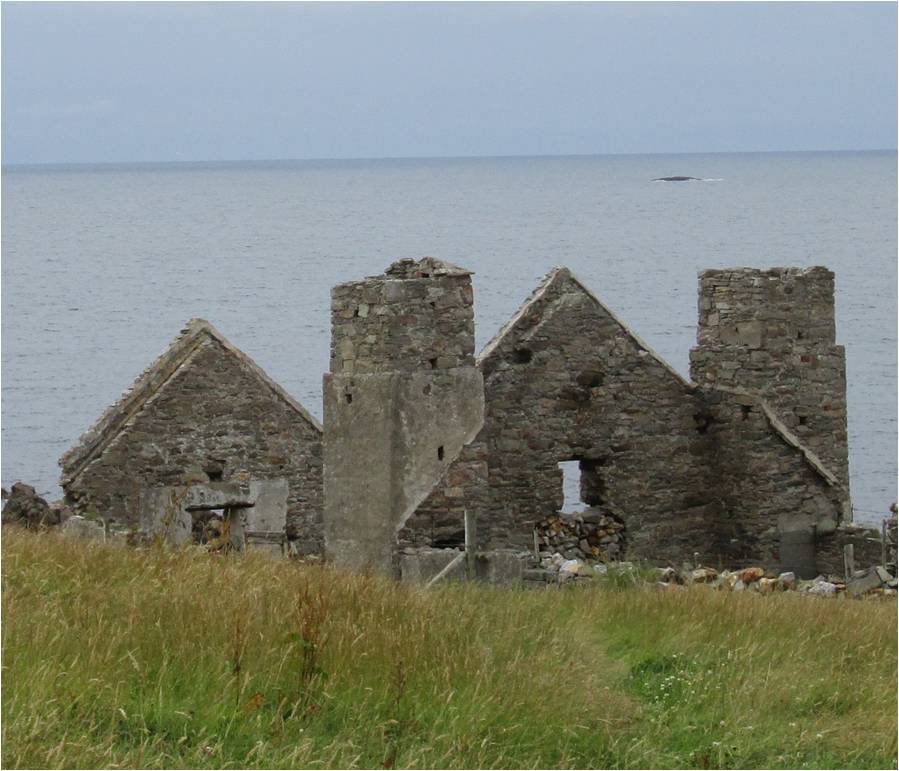
donegal ruinA few weeks ago we spent a long weekend in Dublin. Its a capital city on a small scale but well-endowed with world-class museums, galleries and civic grandeur with good victuals available nearly everywhere.  We are frequent visitors to Dublin and, for me, no visit would be complete without half-an-hour or so spent sitting in the National Library listening to recordings of Yeats’ poems being read out loud.  You can listen on-line by visiting the ‘Verse and Vision‘ exhibit at the National Library of Ireland website.  I find reading poetry really challenging but I enjoy listening to someone else reading it.

My link to John Updike’s poem ‘Ode to Entropy‘ in my post entitled ‘Cosmic Heat Death‘ didn’t work – sorry about that!  It is reproduced in full on Clutterbuck.  I made another mistake last week and unintentionally published two posts, which perhaps reduced the impact of my request for ‘Good reads for budding engineers‘.  I have had no responses yet…

Staying with poetry.  Engineers appear to have a poor reputation for writing poetry.  Hilary Mantel in her short story ‘How shall I know you‘ describes reading clubs founded ‘by master drapers and their shop-girl wives; by poetasting engineers, and uxorious physicians with long winter evenings to pass.‘  Poetasting means writing indifferent verse.  Admittedly writing good poetry is not part of the role of an engineer but writing clear and concise prose is an essential skill.  Unfortunately most young engineers and many older colleagues are the prose equivalent of poetasters –  they write terribly turgid text.  Our inability to communicate in sparkling prose means that our profession appears uninspiring to potential recruits and remains hidden and obscure to most of society.  Climate change, poor air quality, autonomous machines and ubiquitous big data  are amongst the many challenges facing society for which we need engineering and science-literate citizens and lawmakers.  The responsibility for educating society lies with engineers who understand the technology and must strive to communicate more effectively [see my post entitled the ‘Charismatic Engineer‘ on June 4th, 2014].

Source: Hilary Mantel, ‘Assassination of Margaret Thatcher’ Henry Holt & Co, New York, September 2014.

Photo credit: Tom

Good reads for budding engineers

Photo credit: Tom

Photo credit: Tom

I have been asked to help populate a school library with books that will be of interest to prospective engineers.  I suspect there is a sub-text that it would be good to include books that might stimulate more pupils to consider becoming engineers.  I think this is a hard task and so I am hoping my readers will help me by leaving a comment in the form a personal recommendation.

There are a number of suggested reading lists available, e.g. the one provided by Cambridge University Engineering Department.  However, the feedback that I have had from an enthusiastic budding engineer is not encouraging.  She found all the books she read from these lists to be dull and uninspiring.  So, that’s why I am issuing a challenge this week: find books connected to engineering that under-18s think are interesting!

Please don’t send me a recommendation unless you have actually checked with a teenage that they enjoyed it.

Stimulating students with caffeine

milk in coffeeFood and drink seems to have been a recurring theme in my undergraduate lectures recently which as we are approaching a festive season is perhaps not inappropriate. At the moment, I am teaching thermodynamics to three hundred first year undergraduate students.  Zeroth and first laws of thermodynamics before the Christmas break and then the second and third laws in the New Year. Toast, pizza, barbecued steaks, hot coffee, bottled water, and cold milk shakes have all featured as Everyday Engineering Examples of thermodynamic systems in recent lectures. We can define a thermodynamic system as a quantity of matter capable of exchanging energy with its environment. And, most food preparation processes involve heating, chilling and, or doing work on the food by stirring, beating etc. which are all forms of energy exchange, so the opportunities for Everyday Engineering Examples are many and varied.

In one recent lecture, I asked the class to consider the quickest way to cool your coffee with milk. It was a multiple choice question to which students could respond in real-time using their phones and a website called polleverywhere.com. There was more than one correct answer depending on the assumptions you made about the quantity and temperature of the milk as well as the temperature of the coffee and environment. The core issue is that the rate of cooling is proportional to the temperature difference. While discussing the possible answers, I made a throw-away remark about stirring the coffee involving doing work on the coffee and thus increasing its internal energy and temperature, which would be a step in the wrong direction. I was delighted when one of my students picked me up on this and sent me this link about stirring tea.

It is great to know that at least one student is listening and sufficiently engaged to do a little research. Only 299 left to inspire!

Footnote:

The hot coffee will transfer heat to its cooler surroundings by natural convection and radiation at its free surface and by conduction through the ‘walls’ of the cup. Similarly, the cup will transfer heat to its surroundings by natural convection and radiation from its outer surfaces. This process will establish a temperature gradient in the coffee that will induce a very slow convection flow that would be accelerated by stirring, i.e. introducing forced convection. This is likely to increase heat transfer slightly by carrying hotter coffee to the surfaces. The additional heat transfer (loss) might be more or less than the work done to stir the coffee. Who would have thought something as simply as stirring coffee or tea could be so complicated!

Previous posts on Zeroth Law:  ‘All Things Being Equal ‘ on December 4th, 2014, ‘Arbitrary Zero‘ on February 13th, 2013 and ‘Lincoln on Equality‘ on February 6th, 2013.

Previous posts on First Law:Thunderous Applause‘ on July 16th, 2014,  ‘Sizzling Sausages‘ on July 3rd, 2013, ‘Closed system on BBQ‘ on June 19th, 2013 and ‘Renewable energy‘ on January 7th, 2013

Sources:

The Thermodynamics of Pizza‘ by Harold J. Morowitz, Rutger University Press, 1992.

http://what-if.xkcd.com/71/

‘Crash’ in Taipei: an engineer’s travelogue

taipei101

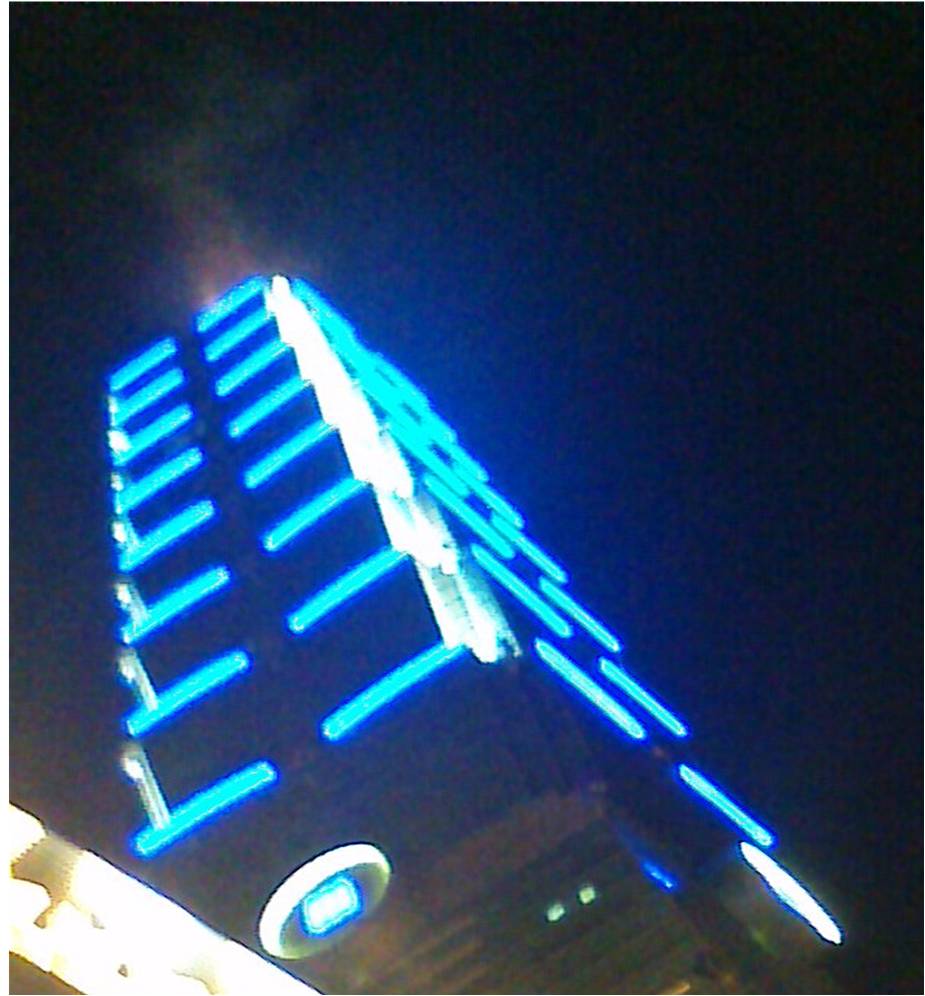
Taipeo 101

When you land at Taipei Taoyuan International airport, you could be forgiven for thinking that you have arrived at some as yet unvisited Floridian city. The palm-trees, architecture, layout and feel of the terminal is very reminiscent of a major airport in the USA, though perhaps slightly Ballardian. The yellow cabs collecting passengers from the curb outside the spacious terminal reinforce the impression, except that most of them look like a Toyota Prius. But, once you arrive downtown, overtones of a Mods’ weekend at Brighton takeover as scores of scooters roar away from every traffic light when they turn green leaving. In every other way Taipei is a modern, sophisticated Asian city with its towering skyscrapers, including Taipei 101, designer stores, back streets full of tiny shops and busy traffic.

Beijing residents have wholeheartedly taken to the electric motorbike and you have to be careful crossing the road not to be knocked down by these silent two-wheelers. Whereas Taipei residents seem to love their noisy scooters, but Taipei is largely smog-free so maybe there is less incentive to switch to electric bikes.

I said Ballardian above because the road to Taipei from the airport reminded me of the ‘Crash’ by J.G. Ballard. The freeway has been expanded along almost its entire length by constructing additional elevated carriage-ways on both sides, so that on the original freeway you feel fenced in by concrete pillars and bridge-sections.

Some of you might be wondering why I have been wandering around Asia. Well, I visited Beijing and Tianjin [see last week’s post] to give a series of seminars as the Hsue-Shen Tsien Professor of Engineering Sciences at the Chinese Academy of Sciences’ Institute of Mechanics. Then, I went to Taiwan to participate in a bilateral workshop with National Tsing Hua University and to meet with research students on our dual PhD programme.  ‘The World is Flat’ as Thomas Friedman wrote and engineers are a driving force in the global economy, so its not unusual to find engineers abroad either on short trips or living overseas.  Yet, I am constantly surprised by the lack of enthusiasm amongst most UK students to participate in international exchanges, even though such experience increases their employability.