Tag Archives: dynamics

100 Everyday Engineering Examples

bookletsSTOP PRESS – more than 100 Everyday Engineering Examples published in more than 40 lesson plans on a new webpage.

I have been including 5E lesson plans as part my recent posts.  These lesson plans are primarily for people teaching first-year engineering undergraduates, which is pulling me away from the intended focus of this blog. So, I have decided to publish all of the lesson plans that I have written & edited on a separate page.  There are more than 100 Everyday Engineering Examples in the more than forty lesson plans.  If that is not enough Everyday Engineering Examples then you can find more at ENGAGE

Now back to Realizing Engineering – we live in an almost entirely engineered world. Engineers, as a profession, are so good at their job that most people are unaware of their influence on society.  Look around you. Engineers will have designed the machines and transport infrastructure to supply most of what you can see as well as what you are probably sitting in and on.

The Royal Academy of Engineering has produced an ebook to expand on this theme of ‘Engineering in Society’ for first year engineering undergraduates but I think its suitable for anyone considering a career in Engineering.

March Madness

basketballSome of you will be familiar with ‘March Madness’ which starts next week.  It is a couple of weeks in March when US universities play a knockout basketball competition.  At Michigan State University, where I used to be a professor, there would be huge disappointed if we did not make it into the final sixteen and great excitement if we were in the final four or even the final.

Basketballs can be a useful, and in the USA in March topical, prop to use in teaching dynamics.  In the lesson plan below angular momentum is used to investigate a basketball rolling over an obstacle, which could be someone’s foot rather than wooden block used in the example.  Of course, with 91 days to go until the start of the FIFA World Cup in Brazil, you could easily switch to a football.

5EplanNoD9_Impulse&momentum_methods

See the Everyday Examples page on this blog for more lesson plans and more background on Everyday Examples.

Smart machines

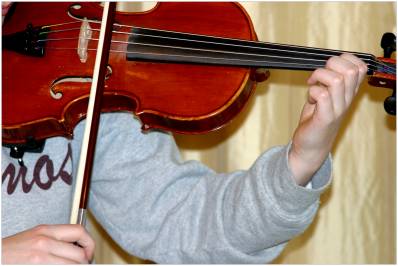
violinMy enthusiasm for the concert we went to some weeks ago is only just beginning to fade [see Rhapsody in Blue posted on 5th February, 2014].  I have one of Michel Camilo’s pieces still going around in head [listen here].  On the subject of playing the piano, people are trying to build robots that can play the piano using rubbery fingers although they have had more success with a robot that can play a violin [see this Youtube clip].

These robots might be clunky or primitive compared to a maestro like Michel Camilo, but nevertheless smart machines are coming.  Professor Noriko Arai is developing a computer, called Todai-Kun, that could ace college entrance exams.  She hopes that by 2021 Todai-Kun will pass the entrance exam for Tokyo University, which is the top university in Japan.  It is tough for graduates to find jobs at the moment, so imagine what it will be like if computers are as smart as graduates!

Mechanisation destroyed jobs on the farm, robots have replaced assembly-line workers and now smart computers are going to replace white collar workers.  In the future, if you want a well-paid job you are likely to need niche skills that involve a combination of creativity, innovation, problem-solving and leadership.  I am probably biased but that sounds like a professional engineer.

In the same context, David Brooks has suggested that, what he calls the ’emotive traits’ will be required for success, i.e. a voracious lust of understanding, an enthusiasm for work, the ability to grasp the gist and an empathetic sensitivity for what will attract attention, which with the exception of the last one also sound like the attributes of a professional engineer.

I have used the violin playing robot as the focus for a 5E lesson plan on the Kinematics of Rigid bodies in 3-dimensions see: 5EplanNoD10_Kinematics_of_rigid_bodies_in_3D .  Not quite an ‘Everyday Example’ but one with which many students can connect.

Sources:

http://www.nytimes.com/2013/12/30/world/asia/computers-jump-to-the-head-of-the-class.html?_r=0

http://www.nytimes.com/2014/02/04/opinion/brooks-what-machines-cant-do.html?_r=0

Sweeping Kinetics

Last week I left the rubbish on the streets and encouraged you to make a mess in the classroom.  Partly because kinematics does not help us to analyse the forces involved in sweeping rubbish or, more glamorously, an ice hockey puck.  This is the realm of kinetics in which we need to consider the forces acting on objects to cause or impede their motion, such as the push from a broom and the friction against the pavement.  See the 5E lesson plan attached for more details on how Newton’s laws of motion can be applied in these situations.

You might be thinking ‘why should engineers be interested in forces involved in sweeping rubbish?’  Well, it might not be as glamorous as designing sports equipment but someone has to design street sweeping machines that keep our towns and cities clean and it is arguably more beneficial to society and the environment.  Of course, it would be better for the environment if we didn’t drop rubbish that needed sweeping but that’s another post…

5EplanNoD2_force&acceleration

For more on 5E lesson plans see: my post entitled ‘Disease of the modern age’ on June 26th, 2013 and ‘Sizzling Sausages’ on July 3rd, 2013.

For a set of videos on kinetics try: http://www.khanacademy.org/science/physics/forces-newtons-laws