Category Archives: Thermodynamics

Entropy management for bees and flights

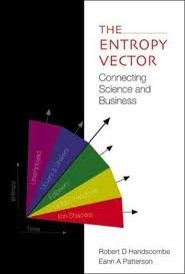
entropy_vectorEngineers like to apply the second law of thermodynamics to chemical processes and power generation cycles. However, it has some useful lessons for everyday life since it can be paraphrased as ‘whenever you organise any process expect some disorder, or entropy to be generated’, so a shrewd person plans for disorder and designs in a bit of slack or redundancy.

Bob and I gave an example of this in our book, ‘The Entropy Vector’.  We pointed out that if you plan your flight schedule to use all of the available gates at an airport then you will have unhappy passengers when flights are delayed, unless you plan for buses to unload planes parked away from the terminal. European airports tend to be good at this whereas US ones tend to leave passengers in planes that are unable to dock at the terminal.

Our example was inspired by frustrating experiences when we were writing the book. A more topical and important example was raised by Mark Winston in the New York Times on July 14th, 2014 in reporting the importance of bees to farming. His research team found that crop yields were maximised when large acreages were left uncultivated to support wild pollinators. He postulated that a variety of wild plants means a healthier, more diverse bee population which will be more active in the planted fields next door. Their numbers were startling with profits more than doubling for farmers that left a third of their acreage fallow. Winston highlights that this contravenes conventional wisdom that bees and fields can be micromanaged.

This seems like reinventing the wheel because I remember being taught about the importance of crop rotation, including a fallow period, in my ‘middle’ school geography classes. Oh dear, now I am showing my age.

The bottom-line is don’t micromanage. Allow for a bit of inefficiency, not too much of course or your competitors will get ahead! It’s a question of balance.

Origami car-planes

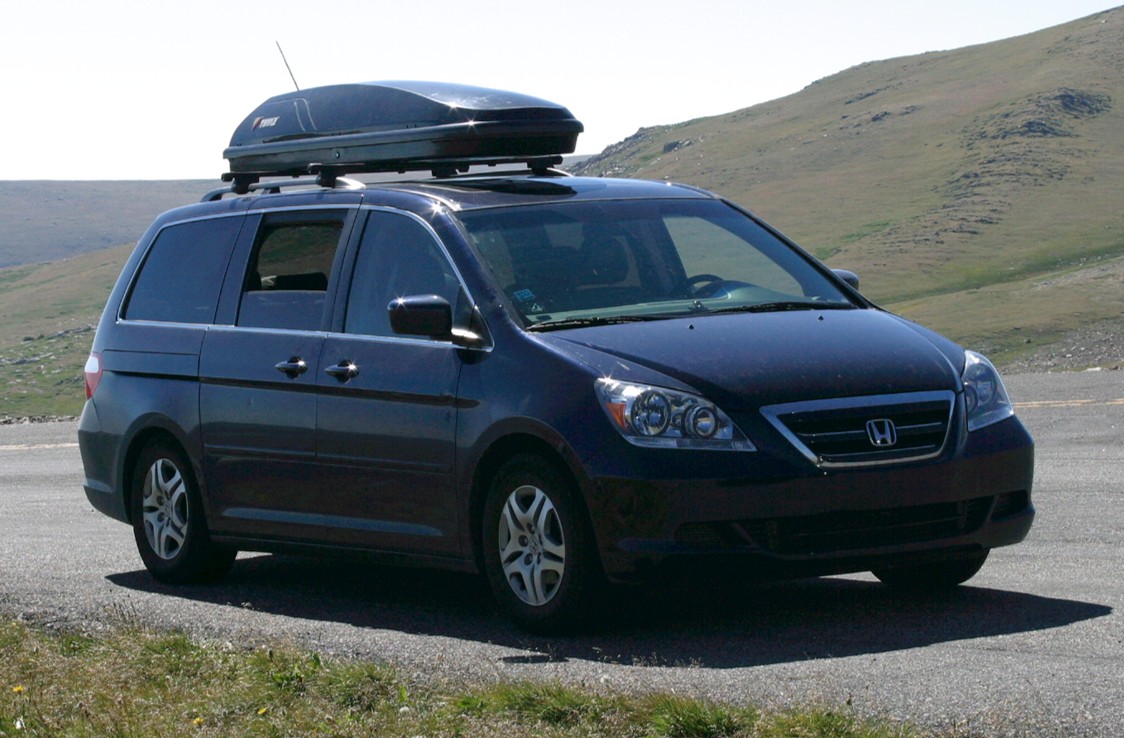
Origami wings in the roof-box?

Origami wings in the roof-box?

A few weeks ago I was fascinated by the competitors’ bikes tessellated on top of the team support cars during the Tour of Britain [see my post entitled ‘Tessallating bikes‘ on September 10th, 2014]. What if instead of tessellating bikes we could use origami to fold away a set of wings? Many people have dreamed of escaping the frustration and congestion of traffic on the road with a convertible. Not the classic convertible but a car that converts to a plane. One small company from Massachusetts, Terrafugiama has already flown a prototype flying car with self-folding wings and is working on an advanced prototype capable of vertical take-off and highway driving. Vertical take-off with wings is difficult so as an alternative a group of universities in Europe is studying the feasibility of a Personal Air Transportation System (PATS) based on a helicopter, known as MyCopter.

These convertibles are difficult to design in practice due to the space constraints for a flying car to take-off and land, the need for two propulsion or at least two transmission systems, the different type of suspension required for comfortable driving compared to landing, the current approach to crashworthiness in cars, and the overwhelming requirement for a light-weight system if there is any hope of getting airborne.   If you add to this list the desire for an environmental-friendly vehicle then perhaps there is no hope, unless we can cross a Tesla with the Airbus prototype electric plane, the E-plane!  [See my post entitled ‘Are electric cars back?‘ on May 28th, 2014]

Sources:

Why we’re not driving the friendly skies‘ by Stuart F. brown in the New York Times on August 22nd, 2014

‘If cars could fly‘ by Nick Bilton in the New York Times on June 30th, 2010

http://www.nytimes.com/2014/08/24/automobiles/pie-in-the-sky-flying-cars-from-the-past.html?action=click&contentCollection=Automobiles&module=RelatedCoverage&region=Marginalia&pgtype=article&_r=0

Tidal energy

Photo credit: Tom

Photo credit: Tom

The world is slowing down! According to Max Tegmark, in his book ‘Our Mathematical Universe’, the rotational velocity of the Earth is being reduced as some of its kinetic energy is dissipated as tidal energy. It is possible to estimate the age of planet from the rate of slow down by assuming that at its birth it was spinning as fast as possible without the centrifugal forces pulling it apart. The answer turns out to be about 4 to 5 billion years which roughly agrees with radioactive dating of the oldest rocks in Western Australia and bits of meteorites that imply the solar system came into being about 4.5 billion years ago.

So does this imply that tidal energy is not really a renewable energy source? I think it is just an issue of timescale. Fossil fuels are seen as non-renewable because the formation of coal and oil substrates happens on geological timescales. Biomass is a bit quicker because we skip the fossilisation process and renewal is measured in months. Fossil fuels and biomass are both ways of storing solar energy in chemical bonds. Nature is much better at converting and storing solar energy than mankind. But, solar energy would appear to be the ultimate renewable energy source. Every morning its there, though often hidden by cloud where I live. The sun will eventually die but again this won’t happen anytime soon but on a long geological timescale.

Cold power

Last week I wrote about heat transfer into fridges in the context of operation in vacation mode.  It is tempting to think that if energy is moving into the fridge as a result of heat transfer from the warm room to the cold food compartment in the fridge, then why can’t we use the energy to power the fridge.  A fridge that operated on this basis would be categorised as a perpetual motion machine of the second type because it would contravene the second law of thermodynamics and so it can’t exist.  One of the great pioneers of thermodynamics, Rudolf Clausius expressed the second law as ‘heat does not pass from a body at a low temperature to one at high temperature without an accompanying change elsewhere’.  In other words, something has to be done, generally in the form of work, to move energy from a cold to hot place, e.g. from the food compartment of the fridge to the warmer room.

refrigeration cycle


In a domestic fridge, the work is supplied in the form of electricity to drive a compressor – that’s the thing making most of the noise coming from your fridge.  It is compressing a refrigerant gas (typically from atmospheric pressure to about 8 times atmospheric pressure) and in the process raising its temperature (perhaps by 80°C) as it pushes the gas into a condenser.  In the condenser, the hot refrigerant transfers heat to the colder room and in the process condenses from a gas to liquid dropping its temperature, perhaps by 30°C.  Then, the liquid refrigerant flows into an expansion valve where its rapid expansion to a gas lowers both its temperature (perhaps to -20°C) and pressure (typically from 8 times atmospheric pressure back to atmospheric) before it is sucked into the heat exchanger inside the food compartment where its very low temperature causes heat transfer from the compartment to the refrigerant, i.e. it removes the unwanted energy.  The compressor sucks the gas out of the heat exchanger and the whole cycle starts again with the unwanted energy being dumped into the room by the condenser, which is the warm panel on the back of your fridge.

If you understood all of that then well done, if not then try again following the steps on the schematic diagram.

The temperatures and pressures are expressed rather vaguely because they depend on the design of the fridge and the settings you select on the control panel.