Category Archives: sustainability

New Year Resolution

I started 2014 with a post on January 1st about the ‘Knowledge Economy‘ in which I extolled the virtues of knowledge-based rather than energy-based agriculture and engineering.  At the end of the year, oil prices have dropped from $110 to about  $60 per barrel, making it likely that in most countries the energy-based economy will continue to dominate.  In the USA, sales are rising of huge gas-guzzling cars, such as the Escalade, which is 5.15m (17ft) long, weighs 2.59 tonnes and only manages an average of 17 miles per gallon!  Fossil fuels account for approximately 80% of world energy consumption and are responsible for most greenhouse gas production.  During 2014 it was reported that greenhouse gases were rising at the fastest rate for 30 years but still the countries of the UN meeting in Lima before Christmas only agreed that those countries who were ‘ready to do so’ should submit national pledges on cutting emissions in the first of quarter of 2015.

The global average temperature is within one degree of the maximum temperature in the last million years, and a 2 degree rise would be equal to the temperature three million years ago when the sea level was 15 to 23m (80 to 130 feet) higher.  A 1 metre rise in sea level would displace 145 million people, and there is evidence that it has been  rising at 3.5mm per year during the last 20 years which is twice as fast as during the previous 80 years.

How bad does the condition of the planet need to get before effective action is taken?  How many more islands, like the Carteret Islands, will have to disappear?  How many more people than the 7 million in 2012 will have to die prematurely as a consequence of air pollution? Cities such as Beijing are beginning to be described as ‘almost uninhabitable’Kofi Annan has suggested that grass roots action is needed because our leaders will not take action in time. So tonight make it your New Year Resolution to reduce your carbon footprint in 2015 by 15%.

Estimate your current carbon footprint using an on-line calculator and starting working out how to reduce it.  If you want to find out the carbon footprint of your organization then the Carbon Trust has useful information and services.

Sources:

Inside Beijing’s airpocalypse – a city made “almost uninhabitable” by pollution‘ by Oliver Wainwright in The Guardian on Tuesday 16th December, 2014.

Blockstein DE, Wiegman L, The Climate Solutions Consensus. Island Press, Washington, 2010.

Links to previous posts:

Year of Air:2013‘ on November 20th, 2013 or ‘Mass-produced nuclear power plants?‘ on November 12th, 2014.
Mass produced nuclear power plants?

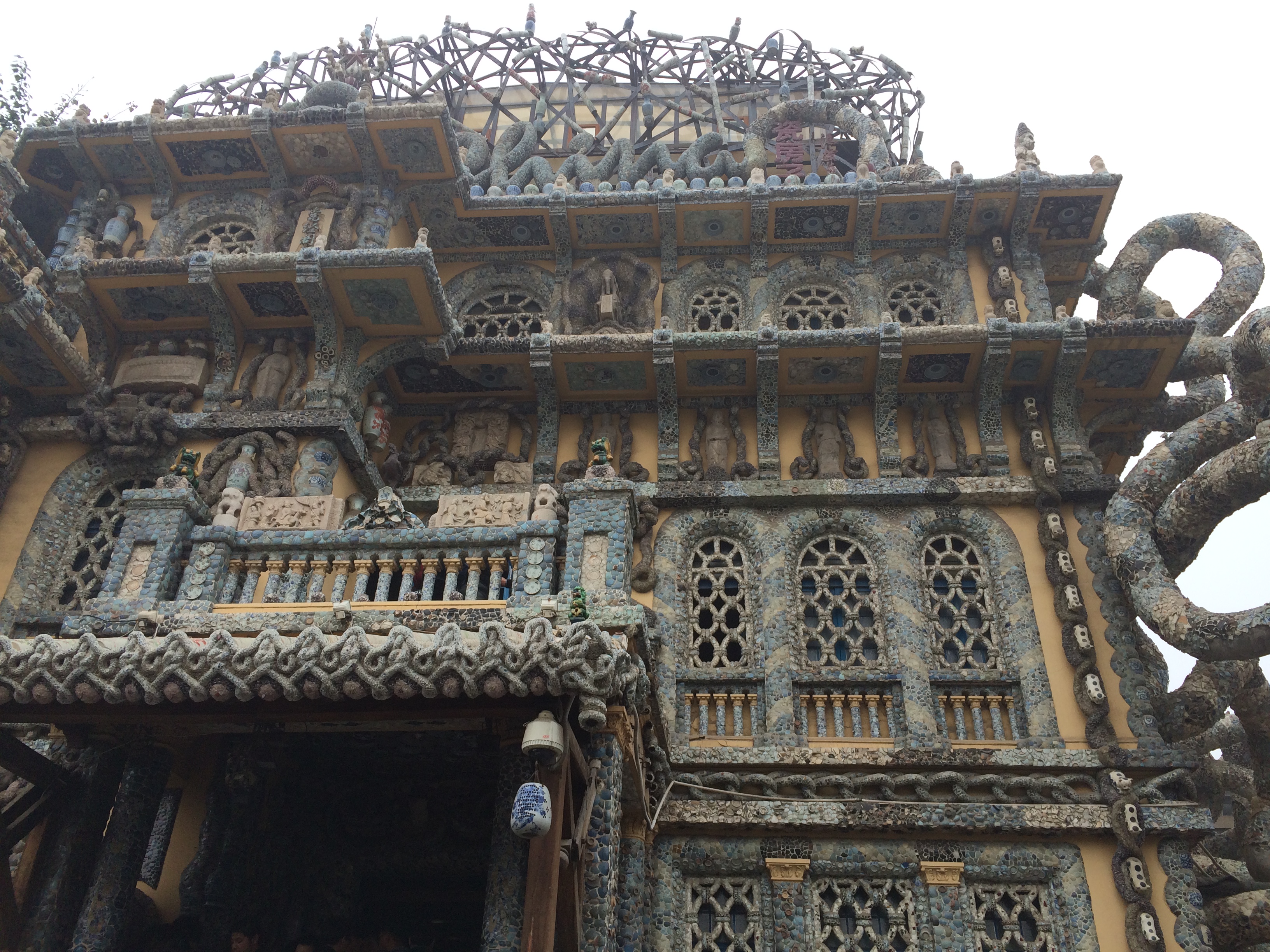
A slightly weird picture of the rather unusual House of Porcelain in Tianjin, which is slowly turning black in the smog.

Porcelain House in Tianjin, which is slowly turning black in the smog.

In the pocket of my coat I have a peculiar souvenir of my recent visit to China. It’s a white face-mask with a little filter built-in to one side. It cost 2 Yuan, or about £0.2, and was given to me by a research student in Tianjin, who worked in my lab in Liverpool for a year. She bought it for me one Saturday when we were going out sightseeing in Tianjin because the air quality was so poor it caught on the back of your throat. The smog was so thick you could not see the tops of even modestly tall buildings.

This is a daily reality for millions of people in many of China’s cities. I reported in my blog entitled ‘Year of the Air: 2013’ [November 20th, 2013] about the number of deaths from pollution.  PM2.5 that’s particles with a diameter less than 2.5 microns are damaging to human health. While I was in Beijing the level of PM2.5 was 144 micrograms per cubic metre, compared to 13 at home in Liverpool.  My student’s mother had visited her while she was in Liverpool and I asked what she liked most during her visit – the fresh air was her reply.

I can’t really remember smog in England though I do remember buildings in the city centres being gradually cleaned because the smog had turned them black. And I remember shortly after I finished my PhD, being shown by a collaborator in the Pathology Department, the lungs from a recent post-mortem – they were grey-black from the smog!

The scale of the problem is difficult to grasp. Tianjin is a provincial city about 30 minutes by bullet train south-east of Beijing with a population of 14 million people, almost twice that of London, and 2.4 million cars.  The smog is generated by pollution from factories, power-stations and cars.  Hybrid cars could make a difference but there are none because they are too expensive, a Beijing colleague told me as he drove me in his brand new Volkswagen Passat. Plug-in cars would not solve the problem because the electricity would come mainly from coal-fired power stations, so the pollution would be simply moved elsewhere.

China needs clean energy, fast and lots of it.  In 2011 China’s installed electricity generating capacity was  about 1TW (Tera Watts or 1 with 12 noughts after it), of which about 2% comes from China’s 21 operating nuclear power plants.  Typical modern nuclear power plants take years to build and generate around 1,000 MW; perhaps we should be considering the small-scale mass production of medium-size modular power plants.  Huge, complex, reliable aeroplanes are made in this way, for instance the current Airbus A380 is production rate is about 25 per year.  So why not medium-size nuclear power plants?  Mass-production would also make decommissioning cheaper since it not be a bespoke process for each plant.

Maybe now that the Lockheed Martin’s Skunk Works have turned their attention to developing a fusion reactor, power-stations will be produced like airliners before I retire.

Sources:

Porcelain House, Tianjin

http://blogs.wsj.com/chinarealtime/2014/10/27/desperate-measures-as-world-leaders-visit-beijing-tries-to-reduce-pollution-by-40/

http://aqicn.org/city/united-kingdom/liverpool-speke/

BTW – My pathology colleague and I were interested in whether people with osteoporosis could break their hips and fall, rather than the usual assumption of falling and break their hips. See:

Wilkinson JM, Cotton DWK, Harris SC & Patterson EA, Assessment of osteoporosis at autopsy: mechanical methods compared to radiological and histological techniques, Medicine, Science & the Law, 31(1):19-24, 1991.

Cotton DWK, Whitehead CL, Vyas S, Cooper C & Patterson EA, Are hip fractures caused by falling and breaking or breaking and falling? Forensic Science Int., 65(2):105-112, 1994.


Tidal energy

Photo credit: Tom

Photo credit: Tom

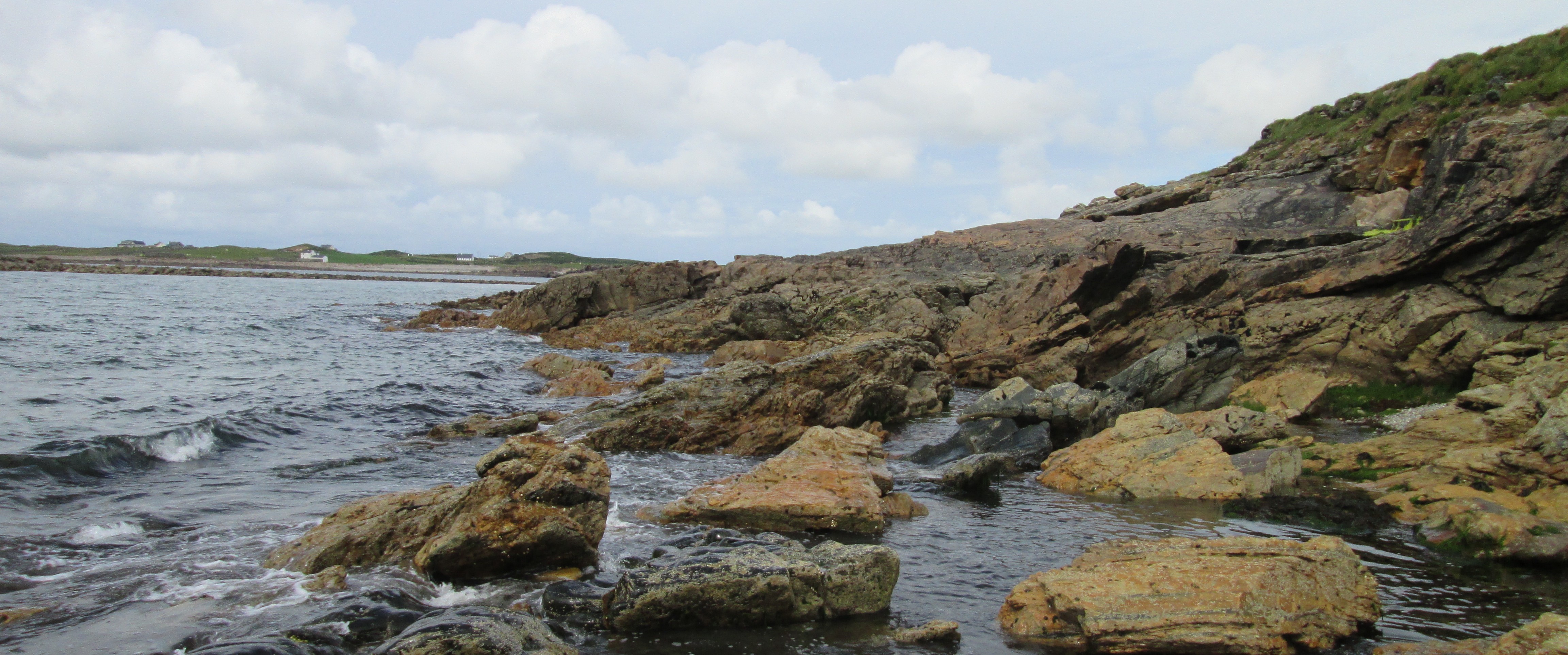
The world is slowing down! According to Max Tegmark, in his book ‘Our Mathematical Universe’, the rotational velocity of the Earth is being reduced as some of its kinetic energy is dissipated as tidal energy. It is possible to estimate the age of planet from the rate of slow down by assuming that at its birth it was spinning as fast as possible without the centrifugal forces pulling it apart. The answer turns out to be about 4 to 5 billion years which roughly agrees with radioactive dating of the oldest rocks in Western Australia and bits of meteorites that imply the solar system came into being about 4.5 billion years ago.

So does this imply that tidal energy is not really a renewable energy source? I think it is just an issue of timescale. Fossil fuels are seen as non-renewable because the formation of coal and oil substrates happens on geological timescales. Biomass is a bit quicker because we skip the fossilisation process and renewal is measured in months. Fossil fuels and biomass are both ways of storing solar energy in chemical bonds. Nature is much better at converting and storing solar energy than mankind. But, solar energy would appear to be the ultimate renewable energy source. Every morning its there, though often hidden by cloud where I live. The sun will eventually die but again this won’t happen anytime soon but on a long geological timescale.

Sounds of the city

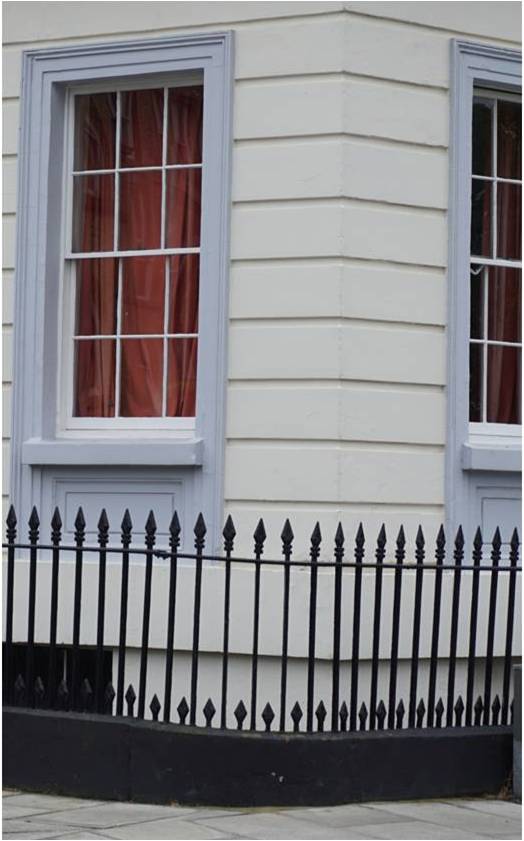
cornerRegular readers of this blog will know that I spent a relaxing day painting railings a few weeks ago [see post entitled ‘Engineering archaeology‘ on July 23rd, 2014].  A day or so later, I went out with my pail of whitewash to paint the walls of the light-well that the railings protect.  ‘The summer world was bright and fresh, and brimming with life’ but unlike Tom Sawyer I was not looking for Jim to do my white-washing for me.  I was looking forward to another therapeutic session painting the walls at the front of our house.  It was an interesting standing in the light-well facing the wall, un-noticed by most passers-by.  We live on a city street close to tourist attractions and there is a constant stream of coaches and taxis stopping to drop-off and pick-up tourists. I have written about the noise insulation in our house before [see Noise Transfer on April 13th, 2013] which means that we don’t notice the constant growl of diesel engines outside but I did while I was painting.  However, there were other sounds in the city.  The voices of pedestrians  deep in conversation as they passed by on the pavement just above my head.  I recognised Chinese, French, Italian and English but there were many different languages that I didn’t recognise.  There were young children asking parents questions as they walked down the street.  For a while I could hear cathedral bells.  When there was a pause in the traffic then it was possible to hear the cooing of pigeons, a neighbour’s radio or television and an ever-present idling diesel engine which I discovered was an ice-cream van dispensing a constant trickle of black soot and an occasional ice-cream.  It is curious that as a society we tolerant high levels of noise pollution at tourist attractions, especially ones that are meant to be places of calm and contemplation. Most tourists are, almost by definition, on holiday seeking relaxation and a lowering of stress levels – how much more pleasant would it be to glide to your destination in a silent electric coach or taxi?

We have the technology to provide such a service [see Are electric cars back? on May 28th, 2014]. Yes, it requires some investment by tour operators and taxi firms in hybrid or electric vehicles and by the city council in re-charging facilities. Induction charging stations at tourist attractions would allow vehicles to recharge while dropping off and picking up passengers. The technology is available and has been used by buses in Genoa and Turin for more than a decade.  So a little bit a regulatory pressure and investment from city councils acting together could create a calmer, quieter and cleaner environment for everyone.

Can we look forward to solar-powered ice-cream vans?

Sources: Thank you to Richard for reminding me about Tom Sawyer.