Category Archives: Soapbox

Hype cycle

gartner_hype_cycle_2005It is easy to become cynical about the latest innovation and the claims for its future success.  The tendency becomes worse with age and the feeling that you’ve seen it all before.  The IT consultancy firm, Gartner Inc. have invented a graph to describe the cycle of enthusiam, despondency and maybe ultimate productivity of new inventions.  They call it the hype curve.  For most new ideas the plateau of productivity is 5 to 10 years after the peak of inflated expectations and separated from it by a deep trough of disillusionment.

Gartner Inc publish an annual analysis of the status of new technology in the form of a single hype curve.  It’s interesting to see what’s in the trough [cloud computing, mobile health monitoring] and what’s on or near the peak of inflated expectations [consumable 3D printing and autonomous vehicles] today.  You might have noticed from your smart phone that speech recognition has just reached the plateau of productivity.  The thumb-nail shows a historic hype curve for ten years ago.

Pope and Austen

marksofgeniusA few weeks ago we visited the Marks of Genius exhibition in the recently refurbished Weston Library which is part of the Bodleian Library in Oxford.  It is a remarkable exhibition with an overwhelming collection of riches in terms of manuscripts and rare books.  You might expect to see a copy of Philosophiae Naturalis Principia Mathematica by Sir Isaac Newton.  But one of the items that bowled me over was the original manuscript of ‘An Essay on Criticism’ written in Alexander Pope’s own hand and used by the printer to prepare the first edition in 1711.  It was open at the first page and you could see Pope’s annotations and corrections.  Pope instructed the printer to put the following lines at the top of the second page:

Tis with our judgments as our watches, none

Go just alike, yet each believes his own

I think he would be astonished at our ability today, not only to believe but, to publish our judgments in blogs.  We might have the technology to synchronise our time-keeping devices, whether they are watches or smart phones, but there is still a huge diversity of opinions.

The other item in the exhibition that fascinated me was an unpublished manuscript by Jane Austen of a novel called ‘The Watsons‘.  It is tempting to think that the prose written by great authors flows effortlessly onto the page. However, this was clearly not the case for Jane Austen as can be seen from the many crossings out and insertions in this handwritten manuscript.  It should perhaps encourage my students who frequently have reports and manuscripts returned to them containing a similar level of my deletions and additions [see my post entitled ‘Reader, Reader, Reader‘ on April 15th, 2015].

The Bodleian Library has digitised the entire exhibition so you can see exactly what I have written about above by following the links to their website:

Alexander Pope’s manuscript

Jane Austen’s The Watsons manuscript

Where science meets society

Harley_Davidson first electric motorcycle [http://www.harley-davidson.com/content/h-d/en_US/home/motorcycles/project-livewire.html#gallery]

Harley-Davidson’s first electric motorcycle

‘Where scientific advances impact on the health, wealth and well-being of individuals’ is a longer version but I like the pithy version in my title: ‘Where science meets society’.  They are both descriptions of engineering.  Not the dictionary-style definition of my earlier post [‘Skilled in ingenuity‘ on August 19th, 2015] but a much better tag line to go with those discussed in ‘Engineers sustain society‘ on May 27th, 2015.

Engineers design, build and maintain systems that deliver capabilities.  Society and individuals are usually not interested in the system just the capability, unless the system is particular aesthetic or advertising creates the need to own something, i.e. the system becomes a fashion accessory.   Consumers are usually more interested in the reliability and life expectancy of the system, or in other words, they would like the absolute certainty that the capability will be available whenever and for as long as it is required.  This expectation is problematic for engineers because nothing is certain and entropic degradation ensures nothing remains the same forever.  Creative thinking is needed to generate elegant solutions that are cheaper than those of your competitors and this should ensure that engineers are never replaced by artificial intelligence [see my post entitled ‘Engineers are slow, error-prone…‘ on April 29th, 2015].  Engineering might not be a job for life, because nothing is certain, but a bright future, at least until consumers become post-modernists with a tolerance of uncertainty and ambiguity.

Sources:

Thumbnail: http://www.harley-davidson.com/content/h-d/en_US/home/motorcycles/project-livewire.html#gallery

Take a walk on the wild side

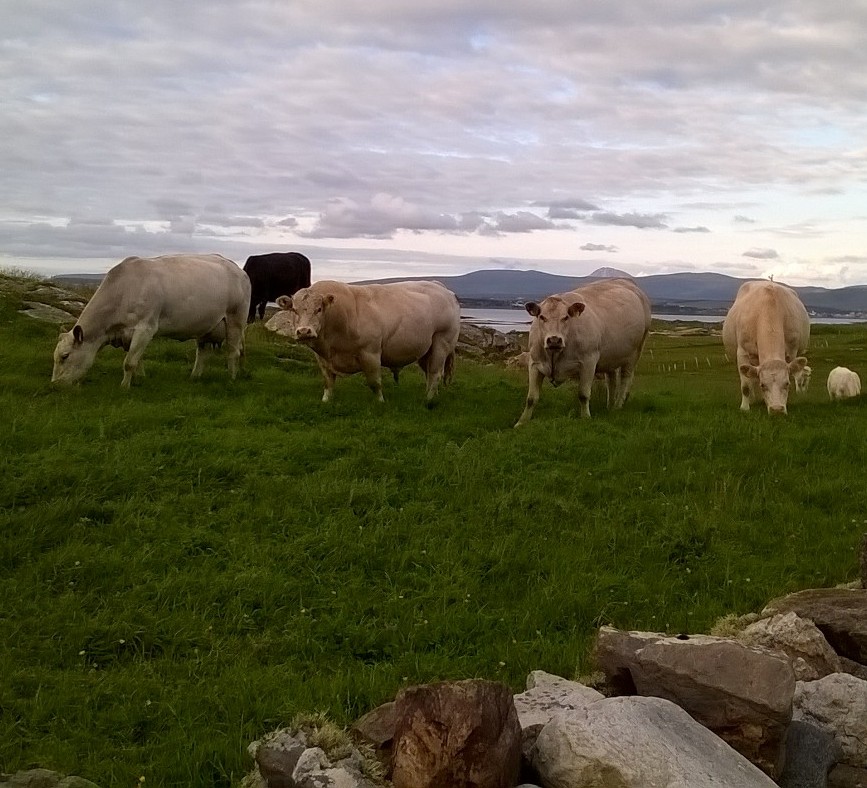
WP_20150714_001 (2)Last month I extolled the virtues of ‘mind-wandering’ (see also the original posting entitled ‘Mind-wandering’ September 3rd, 2014) and I have written in the past about the benefits of taking short walks to improve creative thinking (see my post entitled ‘The Charismatic Engineer‘ on June 4th, 2014).  Recent research by Greg Bateman and his colleagues at Stanford has shown it is better for your mental health to take those walks in the countryside.  Walking in a natural environment reduces rumination more effectively than in an urban environment.  Rumination is repetitive, negative and self-critical thinking that is often damaging to mental health. Of course, this will not be news to many outdoor enthusiasts and ‘pastoral crazes’ are not new.  Helen MacDonald has described how in 1930s people used to enjoy long walks in the countryside, including moonlit rambles.  For instance, in 1932 the Southern Railway Company offered an excursion to a moonlit walk along the South Downs in England.  They expected to sell three or four dozen tickets but one and half thousand people showed up.  This 1930s pastoral craze was described by Jed Esty as ‘one element in a wider movement of national cultural salvage’ following the economic disaster of the Great Depression and the instabilities in Europe.  Maybe it’s time for train companies to offer moonlit excursions again?

Sources:

Helen MacDonald, H is for Hawk, Vintage Books, London 2014

Jed Esty, A shrinking island: Modernism and National Culture in England, Princeton University Press,2003.

http://www.theatlantic.com/health/archive/2015/06/how-walking-in-nature-prevents-depression/397172/?utm_source=SFFB

http://www.huffingtonpost.com/2015/07/03/walking-nature-depression_n_7704604.html

http://www.pnas.org/content/112/28/8567.abstract