I have been involved in the creation of a European pre-standard for the validation of computational models used to predict the structural performance of engineering systems [see ‘Setting Standards‘ on January 24th, 2014]; so, an example of a two thousand year old standard in the National Palace Museum in Taipei particularly attracted my interest during a recent visit to Taiwan. A Jia-liang is a standard measure from the Xin Dynasty dated to between 9 and 24 CE. It is an early form of standard weights and measure issued by the Chinese emperor. The main cylinder contains a volume known as a ‘hu’; however, if you flip it over there is a small cylinder that contains a ‘dou’ which is one tenth of a ‘hu’. The object that looks like a handle on the right in the photograph is third cylinder that holds a ‘sheng’ which is one tenth of a ‘dou’ or one hundredth of a ‘hu’; and the handle on the left contains a ‘ge’ when it is as shown in the photograph and a ‘yue’ when the other way up. A ‘ge’ is tenth of ‘sheng’ and a ‘yeu’ is a twentieth. The Jia-liang was made of bronze with all of the information engraved on it and was used to measure grain across the Xin empire.
Category Archives: Soapbox
Four requirements for consciousness
Max Tegmark, in his book Life 3.0 – being a human in the age of artificial intelligence, has taken a different approach to defining consciousness compared to those that I have discussed previously in this blog which were based on synchronous firing of assemblies of neurons [see, for example, ‘Digital hive mind‘ on November 30, 2016 or ‘Illusion of self‘ on February 1st, 2017] and on consciousness being an accumulation of sensory experiences [Is there a real ‘you’ or’I’? on March 6th, 2019]. In his book, Tegmark discusses systems based on artificial intelligence; however, the four principles or requirements for consciousness that he identifies could be applied to natural systems: (i) Storage – the system needs substantial information-storage capacity; (ii) Processing – the system must have substantial information-processing capacity; (iii) Independence – the system has substantial independence from the rest of the world; and (iv) Integration – the system cannot consist of nearly independent parts. The last two requirements are relatively easy to apply; however, the definition of ‘substantial’ in the first two requirements is open to interpretation which leads to discussion of the size of neuronal assembly required for consciousness and whether the 500 million in an octopus might be sufficient [see ‘Intelligent aliens?‘ on January 16th, 2019].
Source:
Max Tegmark, Life 3.0 – being a human in the age of artificial intelligence, Penguin Books, Random House, UK, 2018.
Image: Ollie the Octopus at the Ocean Lab, (Ceridwen CC BY-SA 2.0)
More laws of biology
Four years ago I wrote a post asking whether there were any fundamental laws of biology that are sufficiently general to apply beyond the context of life on Earth [‘Laws of biology?‘ on January 16th, 2016]. I suggested Dollo’s law that diversity and complexity increases in evolutionary systems; the Hardy-Weinberg law about allele and genotype frequencies remaining constant from generation to generation; and the Michaelis-Menten law governing enzymatic reactions. Recently, I came across a simpler statement of the laws of biology proposed by Edward O.Wilson. He states that the first law of biology is all entities and processes of life are obedient to the laws of physics and chemistry; and the second law is all evolution, beyond minor random perturbations due to high mutation rates and random fluctuations in the number of competing genes, is due to natural selection. It seems likely that these simpler laws will be universally applicable; however, until we find evidence of extra-terrestrial life, they will remain untestable in a universal context unlike the laws of physics.
Source:
Edward O. Wilson, Letters to a Young Scientist, Liveright Pub. Co., NY, 2013.
Feeling extraordinarily at ease
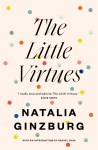
At the beginning of September, I assumed significant new responsibilities and have had to rethink some of my priorities, including the weekly posting of this blog. My decision to continue writing posts was influenced by a book I was reading at the time by Natalia Ginzburg. In ‘Little Virtues’ she talks about her vocation as a writer and how when she sits down to write she feels extraordinarily at ease. She worries about being misunderstood and claims to know nothing about the value of her writing. These comments are made early in the book and much latter she writes ‘that at the moment someone is writing he is miraculously driven to forget the immediate circumstances of his own life.’ I can confirm that this is sometimes true for me and that writing can transport me away from the pressures of everyday life and, more recently, the stresses associated with my new role in the university. So, I intend to continue to carve out time to write weekly posts even though, like Ginzburg, I am dubious about their value to others.
Source:
Natalia Ginzburg, Little Virtues, London: Daunt Books, 2015.