Category Archives: Soapbox

We are ecosystem engineers

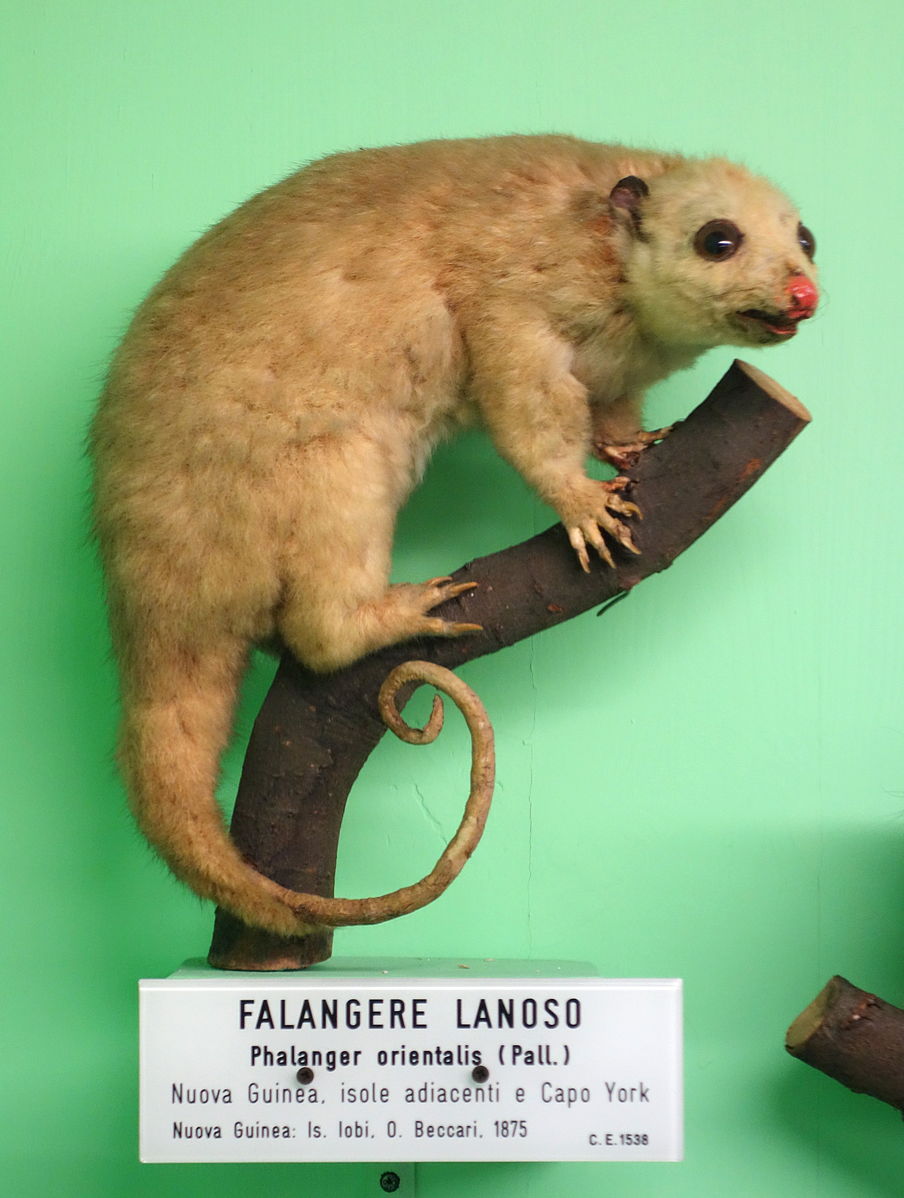
Decorative photograph of common cuscusHumans have been ecosystem engineers since the Pleistocene, more than 12,000 years ago.  There is evidence of a tree-dwelling possum, the common cuscus, being introduced to the Solomon Islands from New Guinea more than 20,000 years ago as a game species [1].  The ecosystem is a complex system and there are unintended consequences of our engineering.  For instance, the burning forests and grasslands about 8,000 years ago changed reflectivity and absorption of heat in parts of Eurasia which altered the pattern of monsoons in India and parts of South East Asia.  The palaeobiologist, Thomas Halliday has suggested that we are such effective ecosystem engineers that is impossible to think about a pristine Earth unaffected by human biology and culture [2].  The challenge now is to re-engineer the ecosystem so that it remains habitable.  This involves handling the complexities of  the ecosystem, human society and their interactions.  The philosopher, Nabil Ahmed has written, in the context of his native Bangladesh, that it is impossible to differentiate between land and rivers, human population, grains and forests, politics and markets because they all coalesce as a single entity resulting from the legacy of interaction between politics and natural actors [3].  Everything is interconnected – more than we realise.

References

[1] Abate RS & Kronk EA, Climate change and indigenous peoples: the search for legal remedies Cheltenham UK: Edward Elgar, 2012.

[2] Halliday T, Otherlands: A world in the making, London: Allen Lane, 2022.

[3] Ahmed N, Entangled Earth, Third Text, 27:44-53, 2013.

Image: Exhibit in the Museo Civico di Storia Naturale di Genova, Via Brigata Liguria, 9, 16121, Genoa, Italy; by Daderot, CCO 1.0 licence

Ice caps losing water and gravitational attraction

Map of the world showing population density is greater in the regions furthest from the polesI have written previously about sea level rises [see ‘Merseyside Totemy‘ on August 17th, 2022 and ‘Climate change and tides in Liverpool‘ on May 11th, 2016] and the fact that a 1 metre rise in sea level would displace 145 million people [see ‘New Year resolution‘ on December 31st, 2014].  Sea levels globally have risen 102.5 mm since 1993 primarily due to the water added as a result of the melting of glaciers and icecaps and due to the expansion of the seawater as its temperature rises – both of these causes are a result of global warming resulting from human activity.  I think that this is probably well-known to most readers of this blog. However, I had not appreciated that the polar ice caps are sufficiently massive that their gravitational attraction pulls the water in the oceans towards them, so that as they melt the oceans move towards a more even distribution of water raising sea levels further away from the icecaps.  This is problematic because the population density is higher in the regions further away from the polar ice caps, as shown in the image.  Worldwide about 1 billion people, or about an eighth of the global population, live less than 10 metres above current high tide lines.  If we fail to limit global warming to 1.5 degrees Centigrade and it peaks at 5 degrees Centigrade then the average sea level rise is predicted to be as high as 7 m according to the IPCC.

Image: Population Density, v4.11, 2020 by SEDACMaps CC-BY-2.0 Creative Commons Attribution 2.0 Generic license.

Source: Thomas Halliday, Otherlands: A World in the Making, London: Allen Lane, 2022

Amplified intelligence

Decorative imageNotebooks have been used for centuries to extend people’s minds while computers and smart phones have taken the extension to a new level.  I find myself using the more than 500 posts in this blog as an extension of my brain.  Not only to recall information but to reconstruct thought processes and ideas.  Perhaps it is idleness or just faster than waiting for my neurons to shuffle through options until they reassemble the pattern that I am looking for.  Of course, this blog is a very public extension of my mind and was accessed from more than 140 countries last year, as it has been every year since 2016, based on data from WordPress.  It is difficult to estimate the total readership of the blog because it is published through several media but last year it appeared to increase substantially.  I started posting in July 2012 [see ‘Why RealizeEngineering?‘] but only started weekly posts ten years ago this week on January 7th 2013 with ‘Renewable Energy?‘.  Today’s post is number 548.

A cyberneticist, W. Ross Ashby coined the term ‘amplified intelligence’ to describe the role of computers in extending our minds [W. Ross Ashby, An Introduction to Cybernetics, William Clowes & Sons, 1956].

Image: Painting in the possession of the author.

Pursuing dreams to stay young in mind

Decorative imageAnother year is drawing to a close and there is no denying that I am growing older.  It is 40 years since I graduated and 25 years since I became a professor; however, counting the years does not give you a sense of age in the same way as the aches and pains that follow any serious exercise or the length of time that minor injuries take to repair [see ‘Moving parts can no longer be taken for granted‘ on July 28th, 2021].  These signs make it abundantly apparent that my body is ageing, albeit slowly, and providing incentives to take care of it through regular exercise – sitting writing blog posts is not sufficient!  But, what about my brain?  Apart from a tendency to forget people’s names, I am unaware of any signs of ageing.  In fact, in many ways my neural networks feel more vibrant and capable of assembling in new complex patterns than ever before [see ‘Thinking in straight lines is unproductive‘ on July 29th, 2020].  Of course, that might be my mind fooling me in which case I will rely on others around me to let me know that it is time to retire.   Gabriel García Márquez wrote in his novella Memories of My Melancholy Whores that “It’s not true that people stop pursuing dreams because they grow old.  They grow old because they stop pursuing dreams.”  I am stilling pursuing ideas and aspirations, some of which I report in this blog, so perhaps it is reasonable to assume that they are keeping old age away.

Sources:

Gabriel García Márquez, Memories of My Melancholy Whores, Penguin, 2014.

Mike Carter, The Joy of Birds, FT Weekend, 15 October/16 October 2022.