Category Archives: life philosophy

A view from the middle

Red tulips in a window boxI was schooled to compete in the classroom, in examinations and on the sports field in preparation for life in, what Mary Midgley described as, the ‘intense competitiveness of the Western world’.  Many of us are obsessed with winning, believing that life is not worth living unless we are at the top of the hierarchy.  As result, we strive for the top where there are only a limited number of places so most people remain in the middle or bottom no matter how hard they strive.  If they are led to believe that they are despised for their position in the hierarchy then they will be miserable and make those around them, both above and below, miserable too.  It took me some time to realise that happiness was not the exclusive property of those at the top of the hierarchy but can be found anywhere through supporting and valuing others.  As a young naval officer, I was trained to look after those under my command and to gain their respect.  I hope that as a leader in academia I have learned to blend the competitive and compassionate elements of the training I received as a young man to create happy and successful communities in which individuals can thrive.  It is ongoing challenge that requires constant vigilance [see ‘Leadership is like shepherding‘ on May 10th, 2017].

Sources:

Mary Midgley, Beast and Man – the roots of human nature. Abingdon, Oxon. Routledge Classics, 2002.

Pursuing dreams to stay young in mind

Decorative imageAnother year is drawing to a close and there is no denying that I am growing older.  It is 40 years since I graduated and 25 years since I became a professor; however, counting the years does not give you a sense of age in the same way as the aches and pains that follow any serious exercise or the length of time that minor injuries take to repair [see ‘Moving parts can no longer be taken for granted‘ on July 28th, 2021].  These signs make it abundantly apparent that my body is ageing, albeit slowly, and providing incentives to take care of it through regular exercise – sitting writing blog posts is not sufficient!  But, what about my brain?  Apart from a tendency to forget people’s names, I am unaware of any signs of ageing.  In fact, in many ways my neural networks feel more vibrant and capable of assembling in new complex patterns than ever before [see ‘Thinking in straight lines is unproductive‘ on July 29th, 2020].  Of course, that might be my mind fooling me in which case I will rely on others around me to let me know that it is time to retire.   Gabriel García Márquez wrote in his novella Memories of My Melancholy Whores that “It’s not true that people stop pursuing dreams because they grow old.  They grow old because they stop pursuing dreams.”  I am stilling pursuing ideas and aspirations, some of which I report in this blog, so perhaps it is reasonable to assume that they are keeping old age away.

Sources:

Gabriel García Márquez, Memories of My Melancholy Whores, Penguin, 2014.

Mike Carter, The Joy of Birds, FT Weekend, 15 October/16 October 2022.

We are no one without other people

Decorative imageIt is the Christmas holiday season when many of us will be exchanging seasonal greetings and expressions of goodwill with family and friends.  In the Ubuntu philosophy, a person is a person through other people.  Genuine value arises from our connections to other people.  Life is not about the individual but about friendship, community, respect and compassion.  These interactions are experienced by our consciousness and determine who we are – our identity [see ‘Reflecting on self’ on November 23rd 2022 or ‘Is there a real you or I?’ on March 6th, 2019].  It seems unlikely that a computer could experience them in the foreseeable future [see ‘Conversations about engineering over dinner and a haircut’ on February 16th 2022 or ‘When will you be replaced by a computer’ on November 20th, 2019] so switch off your laptops and mobile phones and enjoy life.   Happy holidays!

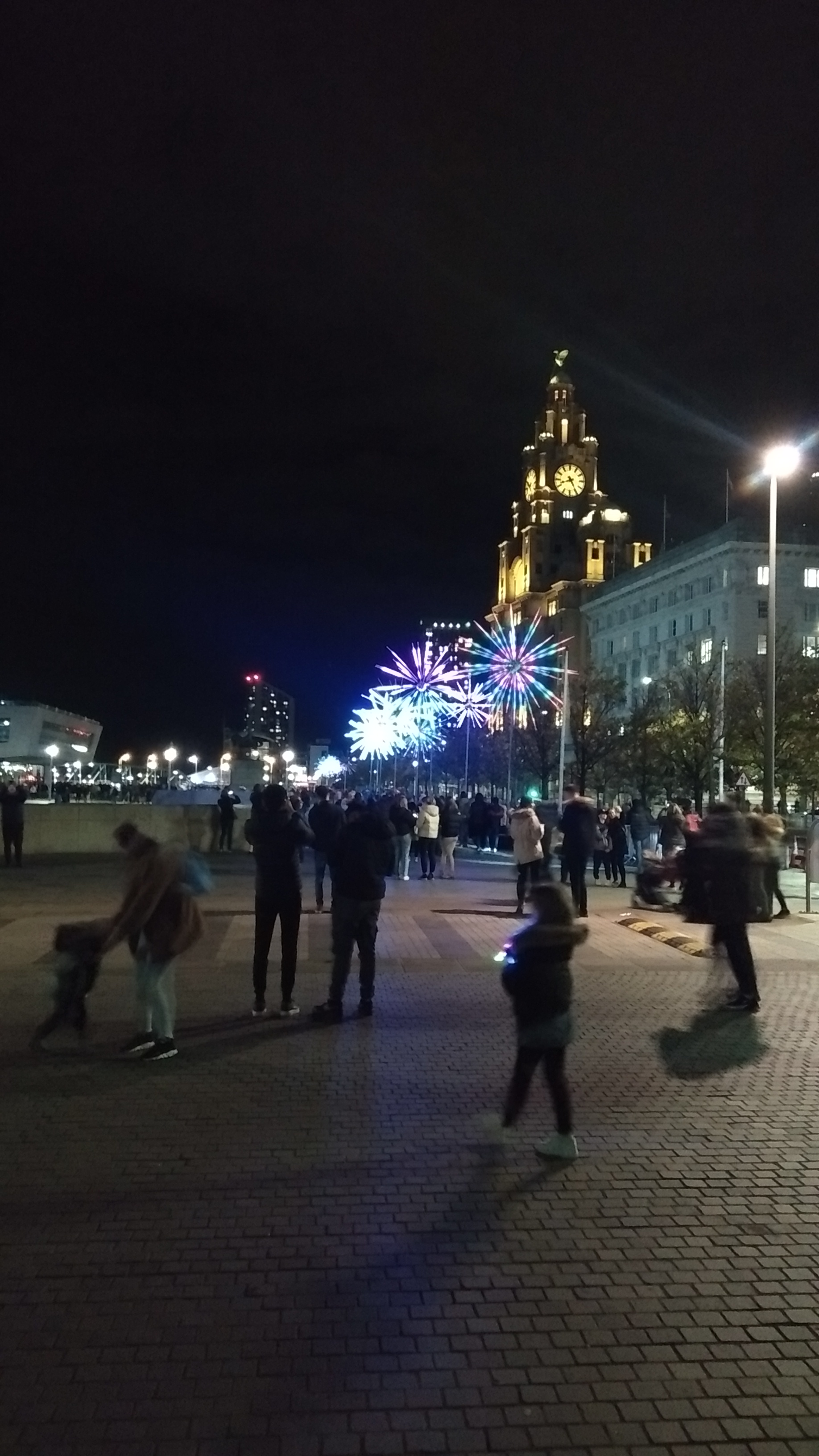
Image: people at Pier Head Liverpool enjoying the River of Light festival.

Virtual digitalism

Decorative image of 10 micron spheres in nanoscopeSome months ago I wrote about the likelihood that we are in a simulation [see ‘Are we in a simulation?‘ on September 28th, 2022] and that we cannot be sure whether are or not.  For some people, this will raise the question that if we are in a simulation, then what is real?  In his book, Reality+, David J Chalmers provides a checklist of properties possessed by real things, namely: existence, causal powers, mind-independence, non-illusoriness and genuineness.  The possession of these properties could be established by answering the five questions in the box below and we would expect real objects to possess one or more of these properties.  Objects that are found in a virtual world generated by a simulation are real objects because they have at least one, and often many of these properties, such as causal powers and independence from our minds.  We can consider them to be digital objects, or structures of binary information or bits.  This leads to a form of the ‘It-from-bit’ hypothesis because it implies that molecules are made of atoms, atoms are made of quarks, and quarks are made of bits – unless of course we are not in a simulation but we will probably never know for certain.

Source: David J Chalmers, Reality+: virtual worlds and the problems of philosophy, Penguin, 2022.

Image shows a self-assembly of 10 micron spheres viewed out-of-focus in bright-light optical microscope.