Category Archives: everyday engineering examples

Fields of flowers

It’s not often that someone presents you with a completely new way of looking at the world around us but that’s what Dr Gregory Sutton did a few weeks ago at a Royal Society Regional Networking Event in Bristol where he is a University Research Fellow funded by the Royal Society. He told us that every flower is a conductor sticking out of the ground which on a sunny day has an electric field around it of the order of 100 volts per metre. Bees can identify the type of flower that they are approaching based on the interaction between this field and the electrostatic field generated around them as they fly. Bees are covered in tiny hairs and he believes that they use these to sense the electric field around them. The next research question that he is tackling is how bees are affected by the anthropogenic electric fields from power lines, mobile phones etc.

The plots of the electric field around a flower really caught my attention. You can see one in the thumbnail photo. I walked across Brandon Hill in Bristol after the talk to meet a former PhD student for dinner. I kept stopping on the way to try to detect this field with the hairs on the back of my hand. It was a beautiful sunny day but I was not sensitive enough to feel anything. Or maybe I was sensing it but my brain is not programmed to recognise the sensation. We discussed it over dinner and marvelled at the bees’ ability to process the information from its multiple sensors in the light of our knowledge of the computing power required to handle what it is fashionable to call ‘Big Data’ from man-made sensors.

Once again Nature humbles us with its ingenuity and makes our efforts look clumsy if not feeble. Dr Sutton’s insights have given me a whole new way to attempt to connect with Nature while I am on deep vacation.

Sorry about the pun in the title. I couldn’t resist it.

Source:

Clarke D, Whitney H, Sutton G & Robert D, Detection and Learning of Floral Electric Fields by Bumblebee, Science, 5 April 2013: 66-69. [DOI:10.1126/science.1230883].

Everyone is born an engineer

Susan Scurlock

Susan Scurlock

This week I want to enthuse about one of the most energetic and exciting speakers that I have heard for a long time: Susan Scurlock, who spoke last month at the Annual Congress of the UK Engineering Professors’ Council (EPC). Susan’s premise is that all young children are engineers. Just look at what toddlers will do if you give them a bag of bricks or when kindergarten kids are given a box of Lego. Somehow we manage to ‘educate’ the engineer out of them before they finish secondary school. So, the solution to increasing the supply of engineers is to nurture these nascent engineering tendencies provided to everyone by nature. Susan founded Primary Engineer in 2005 and in 2014 established the Institution of Primary Engineers and the Institution of Secondary Engineers to support this process. Children can become Primary Engineers through developing their innate engineering skills as part of a programme of activities.

Susan describes it as ‘STEM by stealth’. Her organisation provides training courses for teachers on practically applying Mathematics and Science to design and make activities. The results leave both children and teachers inspired. The Institution’s work is supported by industry, higher education and the Institution of Mechanical Engineers. When children graduate to secondary school they can join the Institution of Secondary Engineers and then move onwards to the professional institutions as student members when they go to university. So, there is pipeline from children’s bricks and Lego to being a professional engineer.

All of this needs support and enthusiasm from the engineering profession. So, if you have already made it through the pipeline then consider helping Susan make it pipeline that doesn’t leak.

Sources:

The EPC made a podcast of Susan’s presentation that you can listen to at:

http://backdoorbroadcasting.net/2015/04/susan-scurlock-the-value-of-engineering-in-primary-schools/

http://epc.ac.uk/congress-2015/

www.primaryengineering.com

Meta-representation competence

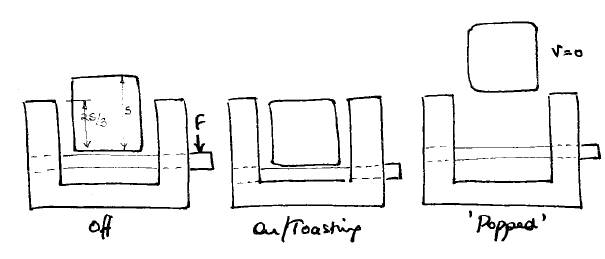
toasterdrawingOk, it’s a challenging title and a strange thumb-nail diagram but stick with it!  Last week I was giving revision lectures for my first year class in thermodynamics which is why my post was about problem-solving.  I mentioned the difficulty in persuading students to represent problems pictorially.  It is called meta-representational competence.  It is a knowledge of when visual representations are likely to be appropriate, how to create them and how to interprete them, according to Disessa and Sherin (2000).

It is hard because you need to become comfortable with the slow and uncertain process of creating representations and exploring the space of possibilities, to quote Martin and Schwartz (2014).  This is achieved through practice. Oh, and now we are back to students testing their skills against problems set by their tutors.  It is what engineers learn to do as part of their formation.  They might not realise it but their meta-representation competence is one of the attributes that make them so attractive to employers.

Now, what about that thumb-nail.  Well, it is my picture drawn as part of the staff answer to the Everyday Engineering Example below, which was given to our new engineering students in their first week at university and subsequently discussed with their personal tutor. Can you solve it with my sketch?  Answers via the comments…

Dynamics Example:

A two-slice toaster is switched on by depressing a slider which causes the slices of bread to fall downwards into the toaster between heating elements and also extends a pair of springs at each end of the toaster. When the toast is ready a pair of triggers releases both springs simultaneously, which in turn cause the toast to ‘pop’ up. If the toast is to just not jump completely out of the toaster when it is ready and in the ‘off’ position rests with two-thirds in the toaster, calculate the force that must be applied to the slider when switching on the toaster. Neglect the weight of the mechanism and assume that there are no losses.

Sources:

Disessa AA & Sherin BL, Meta-representation: an introduction, J. Mathematical Behaviour, 19(4):385-398, 2000

Martin L & Schwartz DL, A pragmatic perspective on visual representation and creative thinking, Visual Studies, 29(1):80-93, 2014.

Martin L & Schwartz DL, Prospective adaptation in the use of external representations, Cognition and Instruction, 27(4):370-400, 2009.

Problem-solving in thermodynamics

Painting from Okemos High School Art Collection at MSUDuring November and December I was handing out a sheet of problems every week in my first-year undergraduate thermodynamics class so that students could evaluate and refine their understanding and problem-solving skills as the course progressed. Of course, most students will not have done this and those problem sheets will have been part of their list of good intentions, which have now become part of their revision schedule. Well, perhaps?  Anyway, to help them is attached ‘Professor Patterson’s Patented Problem-solving Procedure (PPPPP)’ for entry-level thermodynamics problems.

PPPPP is written in the context of thermodynamics but actually it is what engineers tend to do when faced with analysis problems, i.e. draw a sketch including all the known information, identify some simplifying assumptions then apply and solve the relevant physical laws. There is plenty of research that shows most of us are visual problem-solvers [e.g. Martin & Schwartz, 2014] but it is remarkably difficult to persuade people to summarize a problem pictorially.  It takes practice and that’s why we give students lots of problems on which to hone their skills.

See my post entitled ‘Love an engineer‘ on September 24th, 2014 for about creative problem-solving engineers.  Or ‘Mind wandering‘ on September 3rd, 2014.

Sources:

Martin, L., & Schwartz, D.,  2014, ‘A pragmatic perspective on visual representation and creative thinking’, Visual Studies, 29(1):80-93.

Painting from Okemos High School Art Collection at MSU