Category Archives: electrical engineering

Origami car-planes

Origami wings in the roof-box?

Origami wings in the roof-box?

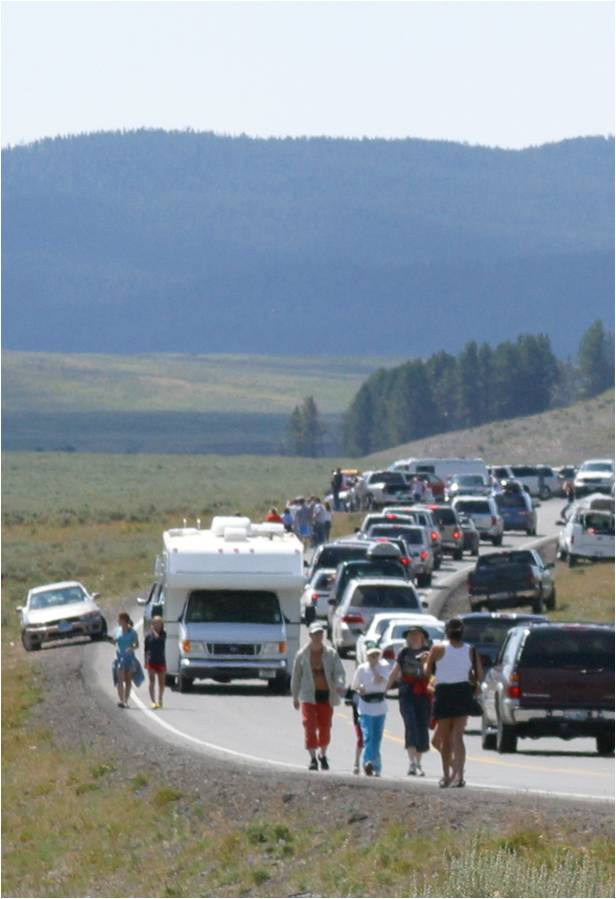
A few weeks ago I was fascinated by the competitors’ bikes tessellated on top of the team support cars during the Tour of Britain [see my post entitled ‘Tessallating bikes‘ on September 10th, 2014]. What if instead of tessellating bikes we could use origami to fold away a set of wings? Many people have dreamed of escaping the frustration and congestion of traffic on the road with a convertible. Not the classic convertible but a car that converts to a plane. One small company from Massachusetts, Terrafugiama has already flown a prototype flying car with self-folding wings and is working on an advanced prototype capable of vertical take-off and highway driving. Vertical take-off with wings is difficult so as an alternative a group of universities in Europe is studying the feasibility of a Personal Air Transportation System (PATS) based on a helicopter, known as MyCopter.

These convertibles are difficult to design in practice due to the space constraints for a flying car to take-off and land, the need for two propulsion or at least two transmission systems, the different type of suspension required for comfortable driving compared to landing, the current approach to crashworthiness in cars, and the overwhelming requirement for a light-weight system if there is any hope of getting airborne.   If you add to this list the desire for an environmental-friendly vehicle then perhaps there is no hope, unless we can cross a Tesla with the Airbus prototype electric plane, the E-plane!  [See my post entitled ‘Are electric cars back?‘ on May 28th, 2014]

Sources:

Why we’re not driving the friendly skies‘ by Stuart F. brown in the New York Times on August 22nd, 2014

‘If cars could fly‘ by Nick Bilton in the New York Times on June 30th, 2010

http://www.nytimes.com/2014/08/24/automobiles/pie-in-the-sky-flying-cars-from-the-past.html?action=click&contentCollection=Automobiles&module=RelatedCoverage&region=Marginalia&pgtype=article&_r=0

Sounds of the city

cornerRegular readers of this blog will know that I spent a relaxing day painting railings a few weeks ago [see post entitled ‘Engineering archaeology‘ on July 23rd, 2014].  A day or so later, I went out with my pail of whitewash to paint the walls of the light-well that the railings protect.  ‘The summer world was bright and fresh, and brimming with life’ but unlike Tom Sawyer I was not looking for Jim to do my white-washing for me.  I was looking forward to another therapeutic session painting the walls at the front of our house.  It was an interesting standing in the light-well facing the wall, un-noticed by most passers-by.  We live on a city street close to tourist attractions and there is a constant stream of coaches and taxis stopping to drop-off and pick-up tourists. I have written about the noise insulation in our house before [see Noise Transfer on April 13th, 2013] which means that we don’t notice the constant growl of diesel engines outside but I did while I was painting.  However, there were other sounds in the city.  The voices of pedestrians  deep in conversation as they passed by on the pavement just above my head.  I recognised Chinese, French, Italian and English but there were many different languages that I didn’t recognise.  There were young children asking parents questions as they walked down the street.  For a while I could hear cathedral bells.  When there was a pause in the traffic then it was possible to hear the cooing of pigeons, a neighbour’s radio or television and an ever-present idling diesel engine which I discovered was an ice-cream van dispensing a constant trickle of black soot and an occasional ice-cream.  It is curious that as a society we tolerant high levels of noise pollution at tourist attractions, especially ones that are meant to be places of calm and contemplation. Most tourists are, almost by definition, on holiday seeking relaxation and a lowering of stress levels – how much more pleasant would it be to glide to your destination in a silent electric coach or taxi?

We have the technology to provide such a service [see Are electric cars back? on May 28th, 2014]. Yes, it requires some investment by tour operators and taxi firms in hybrid or electric vehicles and by the city council in re-charging facilities. Induction charging stations at tourist attractions would allow vehicles to recharge while dropping off and picking up passengers. The technology is available and has been used by buses in Genoa and Turin for more than a decade.  So a little bit a regulatory pressure and investment from city councils acting together could create a calmer, quieter and cleaner environment for everyone.

Can we look forward to solar-powered ice-cream vans?

Sources: Thank you to Richard for reminding me about Tom Sawyer.

Are electric cars back?

roadchaosDid you know that before Henry Ford developed the Model T Ford motorcar, the nearly 40% of automobiles on US roads were electric vehicles? I think we will be heading back in this direction if we are to have any hope of achieving reductions in carbon dioxide emissions. The implications for the national electricity grid of a major shift to plug-in cars would be very serious and has been the subject of several recent studies including a third year undergraduate dissertation that I have been supervising and from which came the opening factoid.

It is relatively easy, through not without obstacles, to envision a shift to all-electric cars; after all there are several models on the market now. However, an all-electric aircraft seems further in the future, if only because of the weight of the batteries required. Engineers would talk about the energy density, i.e. the amount of energy that can be extracted from a kilogram of kerosene compared to a kilogram battery. However, perhaps the future is not far away because the New Scientist reported earlier in the month [3rd May, 2014] that Airbus had completed the test flight of an electric plane, the E-fan. It is a two-seater plane with a pair of 65 kilogram lithium battery packs driving a pair of 30 kilowatt motors attached to the fans. The E-fan will cruise at 185 kilometres per hour and flies for an hour. Relative to a modern computer jet, this performance is similar to the early plug-in cars relative to their internal-combustion-engined rivals. But, it is an indication of bigger things to come. In the meantime, if you want an E-fan then a new division of Airbus called Voltair will be producing them by 2017.

I mentioned undergraduate dissertations because they have filled a sizeable chunk of my waking hours for a few weeks. This is an annual ritual in the UK during May when final-year undergraduate students are busy submitting and defending their dissertations. I had a pile of twelve dissertations to read and assess. Eight of them belonged to students that I have supervising in weekly one-to-one meetings since last October and the remainder were dissertations for which I was the assessor. All of the students that I supervised were studying either Mechanical or Aerospace Engineering and so the topics of their projects were associated mainly with energy and, or transportation. Some of these projects are provided by engineering companies (those with an asterisk in the list below), which guarantees their topicality and relevance, while others spin-out from my interests and research activities. So many of the topics in the list below will come as no surprise to regular readers of this blog.

Dissertation projects supervised during 2013-14:

Investigation into a redesign of graphite re-entrant seals for a nuclear power station*

Conceptual design for a carbon sequestration system for automobiles

Recommendations for achieving a low carbon airline industry

Strain-based defect analysis of industrial pipe-work*

Investigation of random frequency excitation of an aerospace body panel

Assessment of preload control of threaded fasteners in motorcycle production*

Recommendations for technology-based approaches to reduced ecological footprints

Investigation of low carbon power for plug-in electric vehicles

Impossible perfection

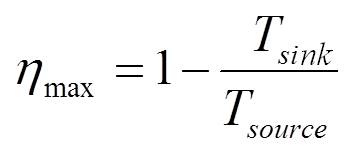
Carnot's equation for ideal efficiency of a cyclic device converting heat to work and operating between two temperatures specified on the Kelvin scale

Carnot’s equation for ideal efficiency of a cyclic device converting heat to work and operating between two temperatures specified on the Kelvin scale

In my last post [National efficiency on 29th May, 2013] I calculated the efficiency of the nationwide process of electricity generation in the UK [35.8%] and made no comment on the relatively low value.  It will be similarly in all industrialised countries as a consequence of the second law of thermodynamics and the requirement for all real processes to increase entropy.  A French engineer / scientist, Sadi Carnot [1796-1832] demonstrated from the second law, that the maximum efficiency achievable in ideal conditions by a process operating in a cycle to convert heat into work is a ratio of the temperatures of the heat source and cold sink to which excess heat is dumped.  In a power station the heat source might be a fossil-fuelled furnace, a nuclear reactor or a solar concentrator.  The cold sink is usually the environment, perhaps in the form of river or sea water.  So both source and sink temperatures are limited.  The sink by the local climate and the source by the temperatures that modern materials can withstand.

The very best efficiency based on Carnot’s expression for a maximum material temperature of 350 degrees Centigrade [=623 Kelvin] and environment temperature of 5 degrees Centigrade [278 Kelvin] is 55%.  Of course a real power station will never operate at this level because ideal conditions are not achievable – perfection is impossible.

The ideal efficiency improves as the operating temperatures of the heat source and sink are moved further apart and this quest to raise this temperature difference drives a substantial proportion of materials research.  However, even operating with a heat source at 800 degrees Centigrade, using expensive, high temperature alloys, such as Hastelloy N  [a nickel-chromium alloy], on a winter day in the Canadian capital, Ottawa where the average January daytime temperature is -7 degrees Centigrade, the Carnot efficiency of a power station would be only 75%  [=1-(266/1073)].