Author Archives: Eann Patterson

No coffee till Christmas

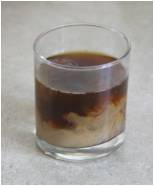
coffeeNot a decision to give up caffeine until the festive season but a remark by my Italian research student as he finished his cup of coffee on the flight back to England.  He doesn’t consider what we serve in the UK to be coffee and he won’t be back in Italy until the Christmas vacation.  We were in Italy visiting the laboratory with which we are collaborating on his research project.  He is right, the coffee gets much better as you move south and east from the US and UK.

Next time you are enjoying a cup of coffee watch the swirls created as you or a friend stirs in some cream.  You can see streak lines that show the path of the cream in the coffee and reveal the fluid flow in your cup.  It is even better if you have a clear glass.  You can use this as an Everyday Engineering Example to capture students’ attention and to illustrate the kinematics of fluids as in the 5E lesson plan below.

5EplanNoF3_kinematics_of_fluid_motion

Sweeping Kinetics

Last week I left the rubbish on the streets and encouraged you to make a mess in the classroom.  Partly because kinematics does not help us to analyse the forces involved in sweeping rubbish or, more glamorously, an ice hockey puck.  This is the realm of kinetics in which we need to consider the forces acting on objects to cause or impede their motion, such as the push from a broom and the friction against the pavement.  See the 5E lesson plan attached for more details on how Newton’s laws of motion can be applied in these situations.

You might be thinking ‘why should engineers be interested in forces involved in sweeping rubbish?’  Well, it might not be as glamorous as designing sports equipment but someone has to design street sweeping machines that keep our towns and cities clean and it is arguably more beneficial to society and the environment.  Of course, it would be better for the environment if we didn’t drop rubbish that needed sweeping but that’s another post…

5EplanNoD2_force&acceleration

For more on 5E lesson plans see: my post entitled ‘Disease of the modern age’ on June 26th, 2013 and ‘Sizzling Sausages’ on July 3rd, 2013.

For a set of videos on kinetics try: http://www.khanacademy.org/science/physics/forces-newtons-laws

Kinematics leaves rubbish

On the street outside my house leaves are being swirled into piles against the railings that guard the light-well for our basement.  In other streets, not graced by trees, discarded packaging from take-away meals eaten in the street is being blown around eluding the best efforts of the city’s refuse collectors.  This phenomenon is an ‘everyday experience’ for the vast majority of people although the content of the wind-blown detritus may vary depending on where you live.  It is not difficult to reproduce similar conditions in the classroom using the contents of the recycling bin and to use the motion of sheets of paper, screwed up balls of paper and paper airplanes to discuss the kinematics of motion and the limitations of its assumptions, i.e. that the geometry of an object has no influence on its motion, which restricts the cases we can consider using kinematics.  Think particles with mass but negligible size and shape plus objects that can be approximated in this way.  The 5E lesson plan attached below expands on this theme for instructors interested in using this Everyday Example.

5EplanNoD1_rectilinear&curvilinear_motion

For more on 5E lesson plans see: my post entitled ‘Disease of the modern age’ on June 26th, 2013 and ‘Sizzling Sausages’ on July 3rd, 2013.

If you want more on kinematics try: http://www.khanacademy.org/science/physics/one-dimensional-motion

Clean fossil fuel?

The amount of energy stored in methane hydrate could be twice that of all other fossil fuel reserves based on data from the US Geological Survey, the New Scientist reported on 31st August, 2013 in an article entitled ‘Buried Treasure’.  At this point, most of you are probably wondering what methane hydrate is and where it is stored.  Microbes on the seabed eating organic matter produce methane molecules that at high pressure and low temperature combine with the water to form a hydrate, which is white crystal.  Large deposits of methane hydrate deposits are believed to lie along continental margins, mostly in ocean sediments.

Natural gas and shale gas (‘Fracking’ on August 28th, 2013) are also methane, which releases less carbon dioxide when it is burned than coal or gas and hence is regarded as cleaner.  However, methane hydrate deposits might have an additional advantage because some research has shown that the methane molecule trapped in the hydrate crystal can be replaced by a carbon dioxide one.  So we might be able to extract methane and simultaneously store carbon dioxide.  Sounds too good to be true and the second law of thermodynamics will ensure that there is a price to be paid somewhere and somehow (see post entitled ‘Sonic Screwdriver’ on April 17th, 2013 for more the 2nd law).

http://www.newscientist.com/article/mg21929320.800-frozen-fuel-the-giant-methane-bonanza.html

https://www.llnl.gov/str/Durham.html

http://www.jogmec.go.jp/english/oil/technology_015.html?recommend=1