Tag Archives: gadget stress

Hell’s harmonies fade in the twilight

WP_20150730_005As I write, it is evening in Liverpool and the daylight is fading. ‘Minds exhausted by the toils of the day settle, and their thoughts bathe in the tender half-tones of the twilight’.  This quote is from a translation of a piece of Charles Baudelaire’s prose poetry, called ‘Evening Twilight’ published original in French in 1855.  Although it’s a short piece the translation is copyright so I can’t reproduce it here.  Baurelaire continues to describe two friends who were made ill by twilight.  One who saw coded insults in everything and was unable to enjoy twilight as the prelude to feasts of pleasure; and the other who was frustrated by ambition and became increasingly ‘sour, moody, short-tempered as [the] day waned’.  He contrasts the reaction to twilight of his friends to the calm induced himself, the stilling of his thoughts, thoughts startled by hell’s harmonies.

Perhaps today’s hell’s harmonies are the constant stream of digital communication and information transmitted to us by our constantly-connected devices and so many of us read, write and think deep into the night after our friends and colleagues have settled from the toils of the day and ceased to communicate (at least those in the same time zone).  Perhaps nothing changes except the form of hell’s harmonies.

Source:

Baudelaire, C., ‘No. 22 Evening twilight’ in Paris Spleen, Martin Sorrell (trans.), Richmond, UK: Alma Classics Ltd, 2010.
Ideas from a balanced mind

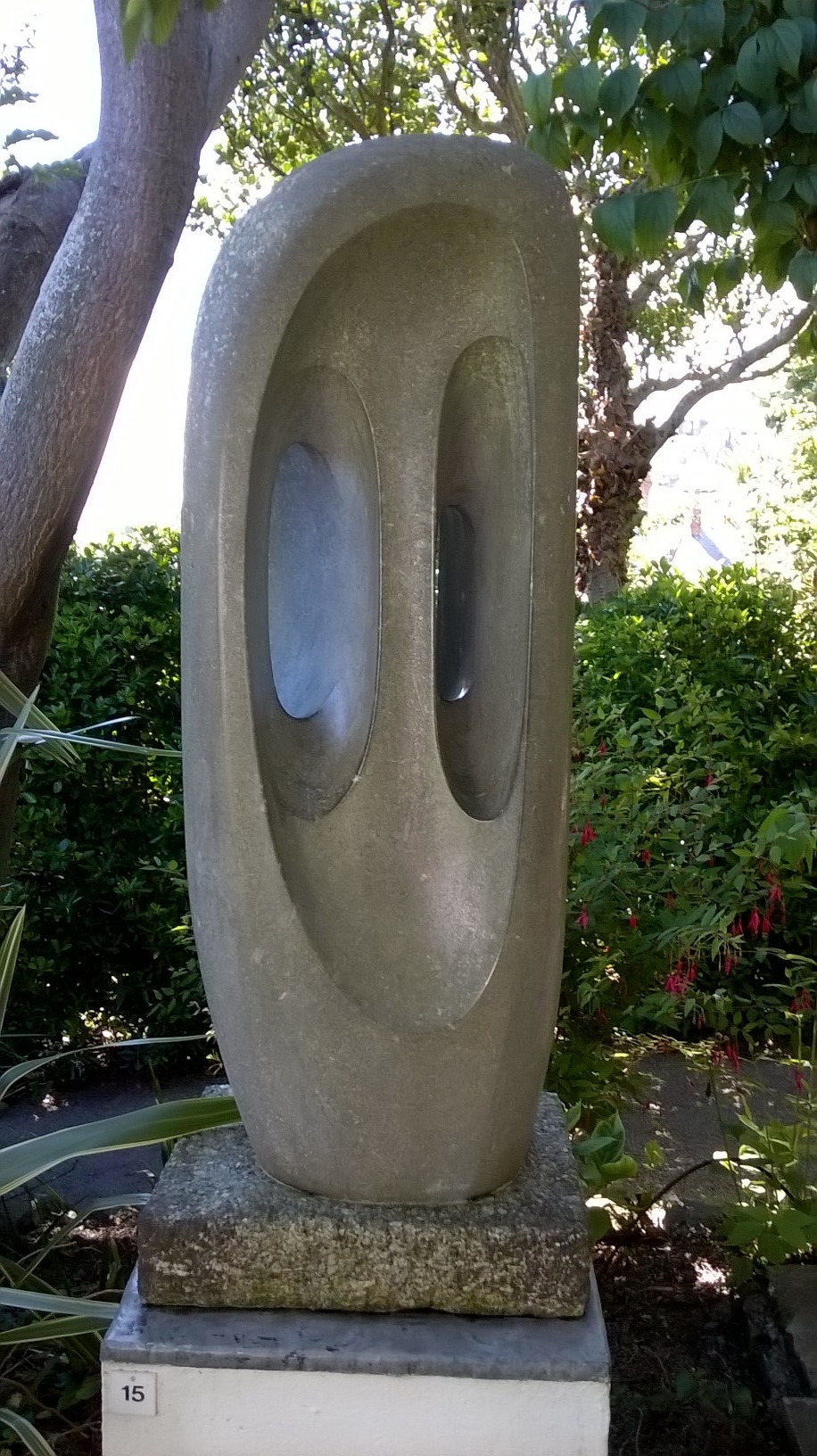
WP_20160714_014I have written about the virtues of mind-wandering on a number of occasions.  A recent article in the Harvard Gazette has stressed the importance of distinguishing between intentional and unintentional mind-wandering.  Unintentional mind-wandering or loss of concentration happens more frequently than we perhaps would like to admit. Some research has shown that office-workers are distracted every three minutes and that it takes about 20 minutes to achieve a high level of engagement in a task.  Obviously, I am not advocating unintentional mind-wandering but the intentional kind that occurs when we achieve the ‘Steadiness and placidity‘ that Michael Faraday found so productive [see my post on July 13th, 2016].  Perhaps this is important to our creativity because, to quote Barbara Hepworth, ‘Ideas are born through a perfect balance of our conscious and unconscious life and they are realized through this same fusion and equilibrium.’  And, creativity contributes to workplace success, healthy psychological functioning and the maintenance of loving relationships according to Oppezzo and Schwartz [see my post: ‘Love an engineer‘ on September 24th, 2014].

Sources:

Reuell, P., Minding the details of mind wandering, Harvard Gazette, July 20th, 2016 online at http://news.harvard.edu/gazette/story/2016/07/intentional-mind-wandering/

Hepworth, B., ‘Sculpture’, in Circle: International Survey of Constructive Art, JL Martin, B Nicholson & N Gabo (editors), London 1937 reproduced in Bowness, S., (editor), ‘Barbara Hepworth – Writing and Conversations’ London: Tate Publishing, 2015.

Oppezo, M., & Schwartz, D.L., 2014, ‘Give your ideas some legs: the positive effect of walking on creative thinking’, J. Experimental Psychology, Learning, Memory & Cognition, 40(3):1142-1152.

Image: photograph taken in the Barbara Hepworth Musuem and Garden in St Ives.

Digital detox with a deep vacation

beachIt’s official – half of us are addicted to our internet-connected devices and a third of us have attempted to kick the addiction.  A recent study by the UK’s communication regulator, OFCOM found that 59% of internet users considered themselves ‘hooked’ and spending the equivalent of more than a day a week on-line.   They also reported that one in three internet users have attempted a ‘digital detox’ with a third saying they felt more productive afterwards, while slightly more that a quarter found it liberating and another quarter said they enjoyed life more.  So, switch off all of your devices, take a deep vacation,  do some off-line reading (see my post entitled ‘Reading offline‘ on March 19th, 2014), slow down and breathe your own air (see my post entitled ‘Slow down, breathe your own air‘ on December 23rd, 2015).  Now, you won’t find many blogs advising you to stop reading them!

Health warning: OFCOM also found that 16% of ‘digital detoxers’ experienced FOMO (Fear Of Missing Out’ (‘FOMO’), 15% felt lost and 14% ‘cut-off’.

Escape from eternal punishment

145-4502_IMGIn her introduction to the ‘World’s Wife’ by Carol Ann Duffy, Jeanette Winterson says the ‘punishment of the Gods turns out to be a 24/7 always-on meaningless managerial job, where no matter how many emails you answer, your inbox will be full again the next day’. As a professor, I am fortunate not to have the meaningless job part of this punishment but I do sometimes feel that my inbox fills up no matter how many emails I answer.  Actually, I suspect that the filling rate is related to my answering rate but it appears to be a complex feedback relationship.

Many of us compound the punishment by shackling ourselves to the inbox via our smartphones. You may not see it as a punishment to be constantly in touch with everyone but it is probably a handicap. We have a limited bandwidth to handle information and people tend to over-communicate and lack understanding. We need to reduce the level of communication and increase the level of understanding.

I am breaking the relentless cycle of communication by taking a holiday for a couple of weeks.  There will be some horizon therapy [see my post entitled ‘Horizon Therapy‘ on May 4th, 2016] and mind-wandering [see post entitled ‘Mind wandering‘ on September 3rd, 2014]  as well as doing pretty much nothing.

Source:

Carol Ann Duffy, The World’s Wife with an introduction by Jeanette Winterson, London: Picador Classic, 2015.

Picture2