Tag Archives: Engineering

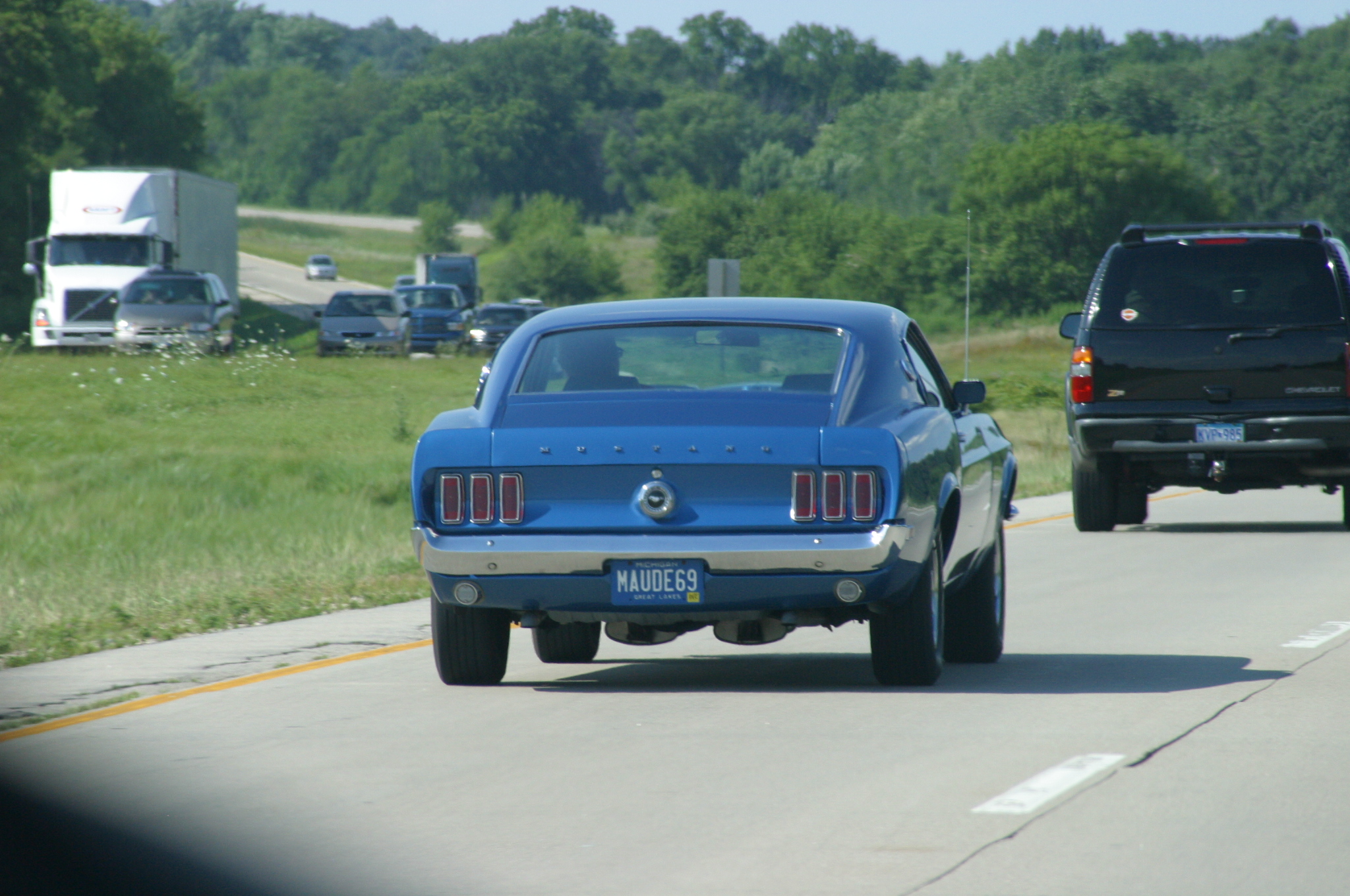
Traffic hold-ups

107-0722_IMGGustav Kirchhoff graduated from the University of Konigsberg in 1847 and married his professor’s daughter.  Many people are familiar with his name from studying electrical circuits at school.  His circuit law is an extension of the law of conservation of energy and governs how to combine the effect of multiple electrical resistors.  When resistors are connected in series, i.e. like barges towed by a tug one behind the other, then the value of the resistances can be added together to give a total resistance for the set of resistors.  So, three resistors of 2, 4 and 8 ohms connected in series provide a total resistance of 14 ohms.

However, when resistors are connected in parallel, i.e. like barges strapped alongside the tug, then the calculation of the combined resistance is a little more involved.  The inverse or reciprocal of each resistance must be added together and then the inverse taken of the sum.  So, three resistors of 2, 4 and 8 ohms connected in parallel provide a total resistance of 8/7 ohms [=1/(0.5+0.25+0.125)].

In a parallel circuit, the electrons have a choice about which resistance to flow through.  The same idea can be extend to the resistance to flow in water pipes and to traffic flow.  For traffic flow, the effect of road-works and other hold-ups on multiple routes can be modelled.

Something for nothing?

Let’s try a thought experiment, following on from my previous post (Beyond Zero on 20th February, 2013).  Imagine two equal amounts of matter, A and B at -350 Kelvin and 350 Kelvin respectively.  We would expect heat to flow from the hot one, that’s B to A, the cold one.  This would cause the internal energy of B to decrease with a corresponding rise in the internal energy of A so that B gets colder while A gets hotter, i.e. they both move closer to absolute zero with corresponding decreases in entropy.  The Second Law of Thermodynamics does not allow this to happen and in fact the reverse would occur, i.e. heat would flow from the cold one A to B, lowering the temperature of A and raising the temperature of B so that they both move away from absolute zero with corresponding increases in entropy.coldgraph2

IF we could actually make this happen then we would able to design engines with efficiencies higher that 100%.  One corollary of the Second Law of Thermodynamics is that heat cannot be converted into work without some of the heat being wasted or lost as entropy.  In a power station, heat is taken from a hot source (e.g. a nuclear reactor, solar concentrator or gas furnace) and some of it converted into shaft work, which turns a generator to produce electricity, while the remainder is dumped into a cold sink usually the environment via cooling towers.  However, if our cold sink was at a negative temperature on the Kelvin scale then we could take heat from the cold sink and the hot source at the same time!  Why aren’t we doing this?  Well, we don’t have any naturally occurring cold sinks at below zero Kelvin and to create one uses more energy than we would gain in our super-efficient power station – that’s the Second Law kicking in again.  So you can’t have something for nothing.

Beyond zero

Recently a study has been published in Science [http://www.sciencemag.org/content/339/6115/52] about creating temperatures below absolute zero (see previous post on Arbitrary Zero, 13 February 2013), i.e. negative temperatures on the Kelvin and Rankine scales.  Temperature is a measure or indicator of the internal energy of matter which in turn is related to the spin state of electrons.  Electrons have two available spin states that are known as ‘up’ and ‘down’.  At room temperature more electrons have ‘down’ spin than ‘up’, and as absolute zero is approached all electrons align to have ‘down’ spin which is a configuration that corresponds to zero entropy.  When the temperature rises from room temperature, electrons tend to switch from ‘down’ to ‘up’ spin so that at an infinite temperature there are equal numbers of electrons in the two spin states.

The current theory is that at -300 Kelvin more electrons have ‘up’ than ‘down’ spin, i.e. a mirror image of the situation at +300 Kelvin.  If the temperature is lowered still further then the ‘up’ spin electrons tend to switch to ‘down’ spin so that at a negative infinite temperature there are equal numbers of electrons with ‘up’ and ‘down’ spin.  This state is equivalent to an infinite positive temperature, i.e. the absolute temperature scale can be considered to be circular or to have the negative and positive components joined at zero and infinity.

If you have made it this far then well done!  But if you didn’t quite follow everything then try the explanation at Newsy [http://www.newsy.com/videos/scientists-create-negative-kelvin-temperature-gas/ ].

Arbitrary zero

thermometerAs mentioned in my previous post (Lincoln On Equality, 6th February, 2013), the Zeroth Law of Thermodynamics enables the concept of temperature and temperature scales to be established.  The Swedish astronomer, Anders Celsius (1701-44) devised a temperature scale on which water froze at 100 degrees and boiled at zero, i.e. the opposite way around to the scale that bears his name today.  Daniel Fahrenheit (1686-1736), a German instrument maker, was probably the first to use a mercury thermometer and he assigned zero to the lowest temperature he could achieve, which was for a mixture of salt and water.  He chose his body temperature as 100 degrees because it was an easily portable standard, but not ideal because it is not totally reproducible.  Fahrenheit’s scale had a temporary advantage because negative numbers were rarely needed given the technology of the day and that water freezes at 32 degrees Fahrenheit.

Somewhat later it was decided that it might be more appropriate to set zero as the lowest attainable temperature, known as absolute zero, which is defined by the Third Law of Thermodynamics as the temperature at which the entropy of all perfectly crystalline pure substances is zero.  This lead to definition of two temperature scales: the Kelvin scale with degrees the same size as on the Celsius scale so that water freezes and boils at 273K and 373K respectively; and the Rankine scale with degrees the same size as the Fahrenheit scale.

Actually, absolute zero is not attainable.  The world record stands at 810 trillionths of a degree Rankine (see http://www.smithsonianmag.com/science-nature/phenom-200801.html).

Image credit: arztsamui / FreeDigitalPhotos.net