Tag Archives: creativity

Where science meets society

Harley_Davidson first electric motorcycle [http://www.harley-davidson.com/content/h-d/en_US/home/motorcycles/project-livewire.html#gallery]

Harley-Davidson’s first electric motorcycle

‘Where scientific advances impact on the health, wealth and well-being of individuals’ is a longer version but I like the pithy version in my title: ‘Where science meets society’.  They are both descriptions of engineering.  Not the dictionary-style definition of my earlier post [‘Skilled in ingenuity‘ on August 19th, 2015] but a much better tag line to go with those discussed in ‘Engineers sustain society‘ on May 27th, 2015.

Engineers design, build and maintain systems that deliver capabilities.  Society and individuals are usually not interested in the system just the capability, unless the system is particular aesthetic or advertising creates the need to own something, i.e. the system becomes a fashion accessory.   Consumers are usually more interested in the reliability and life expectancy of the system, or in other words, they would like the absolute certainty that the capability will be available whenever and for as long as it is required.  This expectation is problematic for engineers because nothing is certain and entropic degradation ensures nothing remains the same forever.  Creative thinking is needed to generate elegant solutions that are cheaper than those of your competitors and this should ensure that engineers are never replaced by artificial intelligence [see my post entitled ‘Engineers are slow, error-prone…‘ on April 29th, 2015].  Engineering might not be a job for life, because nothing is certain, but a bright future, at least until consumers become post-modernists with a tolerance of uncertainty and ambiguity.

Sources:

Thumbnail: http://www.harley-davidson.com/content/h-d/en_US/home/motorcycles/project-livewire.html#gallery
Take a walk on the wild side

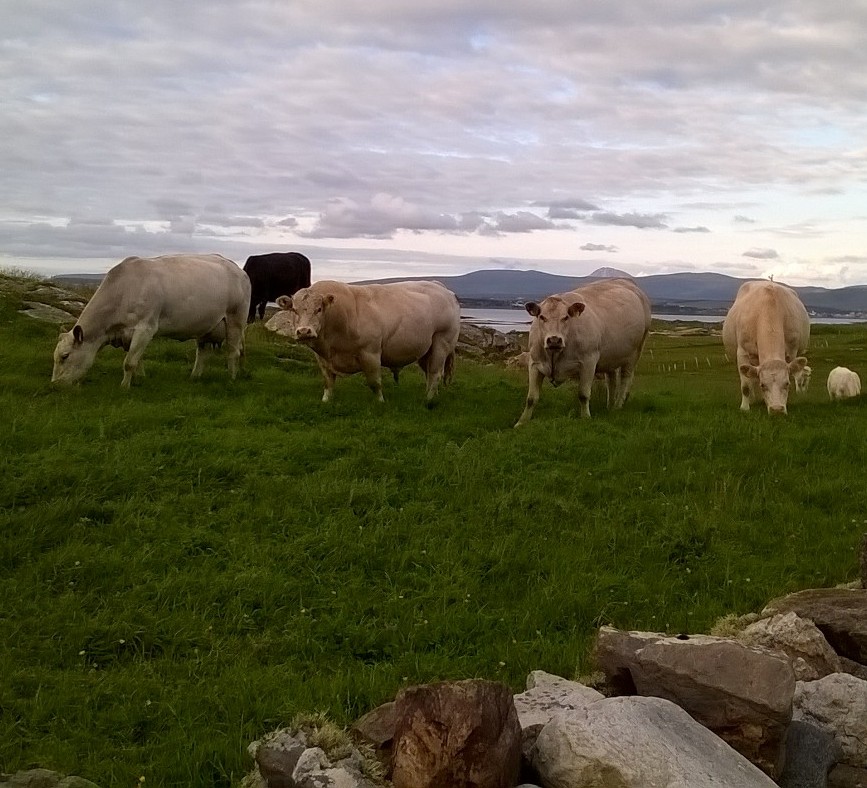
WP_20150714_001 (2)Last month I extolled the virtues of ‘mind-wandering’ (see also the original posting entitled ‘Mind-wandering’ September 3rd, 2014) and I have written in the past about the benefits of taking short walks to improve creative thinking (see my post entitled ‘The Charismatic Engineer‘ on June 4th, 2014).  Recent research by Greg Bateman and his colleagues at Stanford has shown it is better for your mental health to take those walks in the countryside.  Walking in a natural environment reduces rumination more effectively than in an urban environment.  Rumination is repetitive, negative and self-critical thinking that is often damaging to mental health. Of course, this will not be news to many outdoor enthusiasts and ‘pastoral crazes’ are not new.  Helen MacDonald has described how in 1930s people used to enjoy long walks in the countryside, including moonlit rambles.  For instance, in 1932 the Southern Railway Company offered an excursion to a moonlit walk along the South Downs in England.  They expected to sell three or four dozen tickets but one and half thousand people showed up.  This 1930s pastoral craze was described by Jed Esty as ‘one element in a wider movement of national cultural salvage’ following the economic disaster of the Great Depression and the instabilities in Europe.  Maybe it’s time for train companies to offer moonlit excursions again?

Sources:

Helen MacDonald, H is for Hawk, Vintage Books, London 2014

Jed Esty, A shrinking island: Modernism and National Culture in England, Princeton University Press,2003.

http://www.theatlantic.com/health/archive/2015/06/how-walking-in-nature-prevents-depression/397172/?utm_source=SFFB

http://www.huffingtonpost.com/2015/07/03/walking-nature-depression_n_7704604.html

http://www.pnas.org/content/112/28/8567.abstract

Skilled in ingenuity

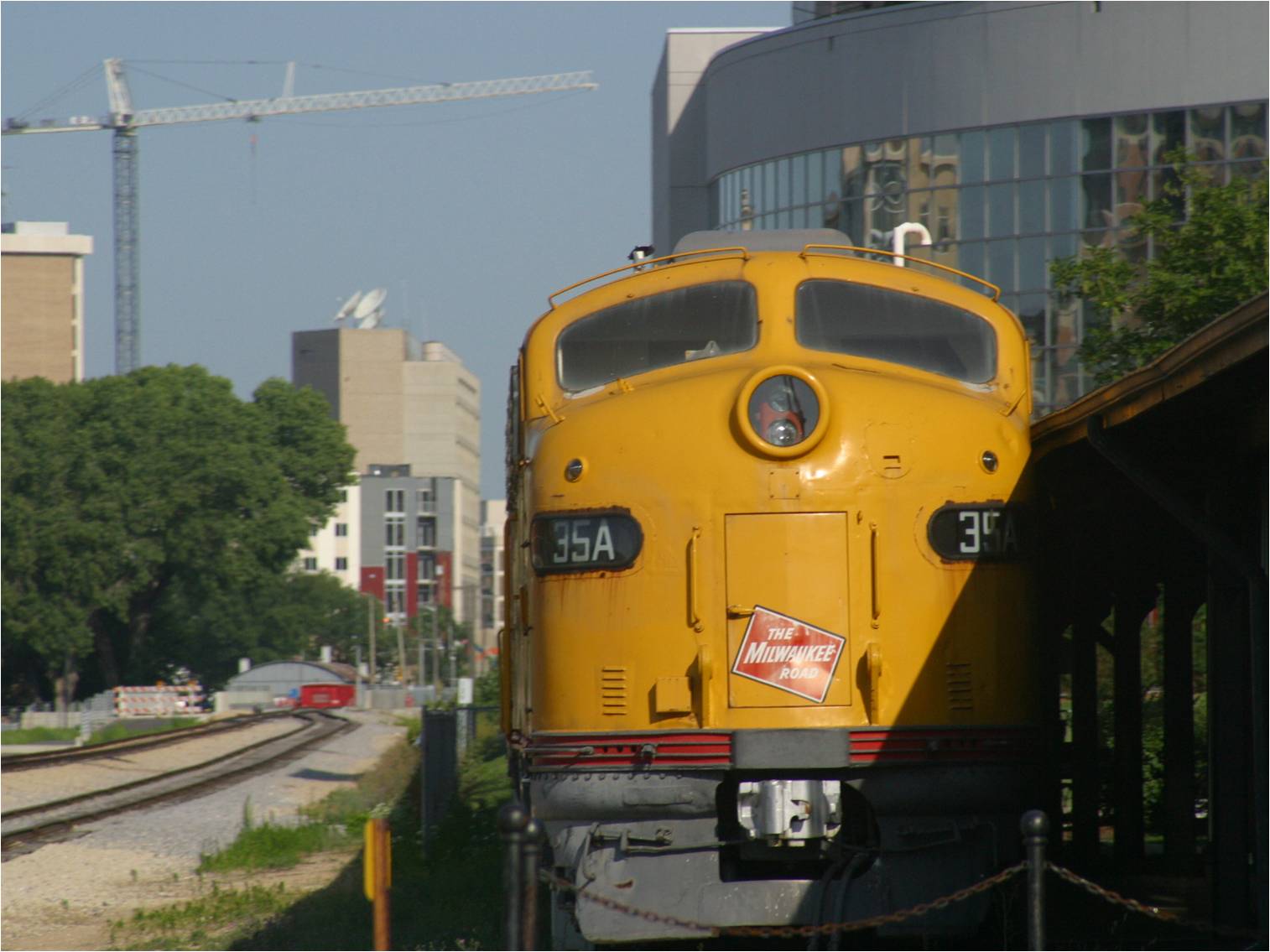
traininstationIf you look up the word engineering in the dictionary then the first few definitions will probably refer to engines, structures and such like, but the third or fourth definition might describe it as ‘the action of working artfully to bring something about‘.  The origins of the word ‘engineering’ lie in the Latin word ‘ingeniare’, which means to contrive or devise.  Unfortunately, engines have been a phenomenal success and are now synonymous with our profession.  I say unfortunately, because it hides from the general public that we do far more that contrive and devise engines as sources of power.  The vast majority of engineers have nothing to do with engines and instead work artfully to bring about all of the other things in our man-made world.

The Roman poet, Lucretius in his poem De Rerum Natura (On the nature of things) wrote ‘Nothing in the body is made in order that we may use it. What happens to exist is the cause of its use’.  In other words things did not evolve in nature to meet a demand but instead uses were found for what evolved.  Engineering is the reverse of this: its use is the cause of the existence of everything.  Well, perhaps not quite because people find uses for devices which were not thought of by even the most artful designer.

Sources:

http://www.oxforddictionaries.com/definition/english/engineering

Happiness is …engineering

164-6499_IMGCreativity, which is an important component of problem-solving, has been associated with workplace success, healthy psychological functioning and the maintenance of loving relationships [see my post entitled ‘Love an Engineer’ on September 24th, 2014].  Engineering is all about creative problem-solving so it should come as no surprise that engineering was rated as the happiest job in a recent survey [see last week’s post].

However, I would like to offer an alternative formula for happiness. According to Timothy Egan in the International NYT on May 16-17th, 2015 when Pope Francis was asked about his secret to happiness he said, ‘Slow down. Take time off. Live and let live. Don’t proselytise. Work for peace. Work at a job that offers basic human dignity. Don’t hold on to negative feelings. Move calmly through life. Enjoy art, books and playfulness.’

This sounds like a pretty good formula to me. As engineers, while we are enjoying art and books we can take inspiration from art and nature.

Sources:

Martin L & Schwartz D, 2014, A pragmatic perspective on visual representation and creative thinking, Visual Studies, 29(1):80-93.

Egan T, The pope and the art of joy. International New York Times, 16-17th May, 2015.