
Old Mission Point, Michigan, USA
Old Mission Point, Michigan, USA
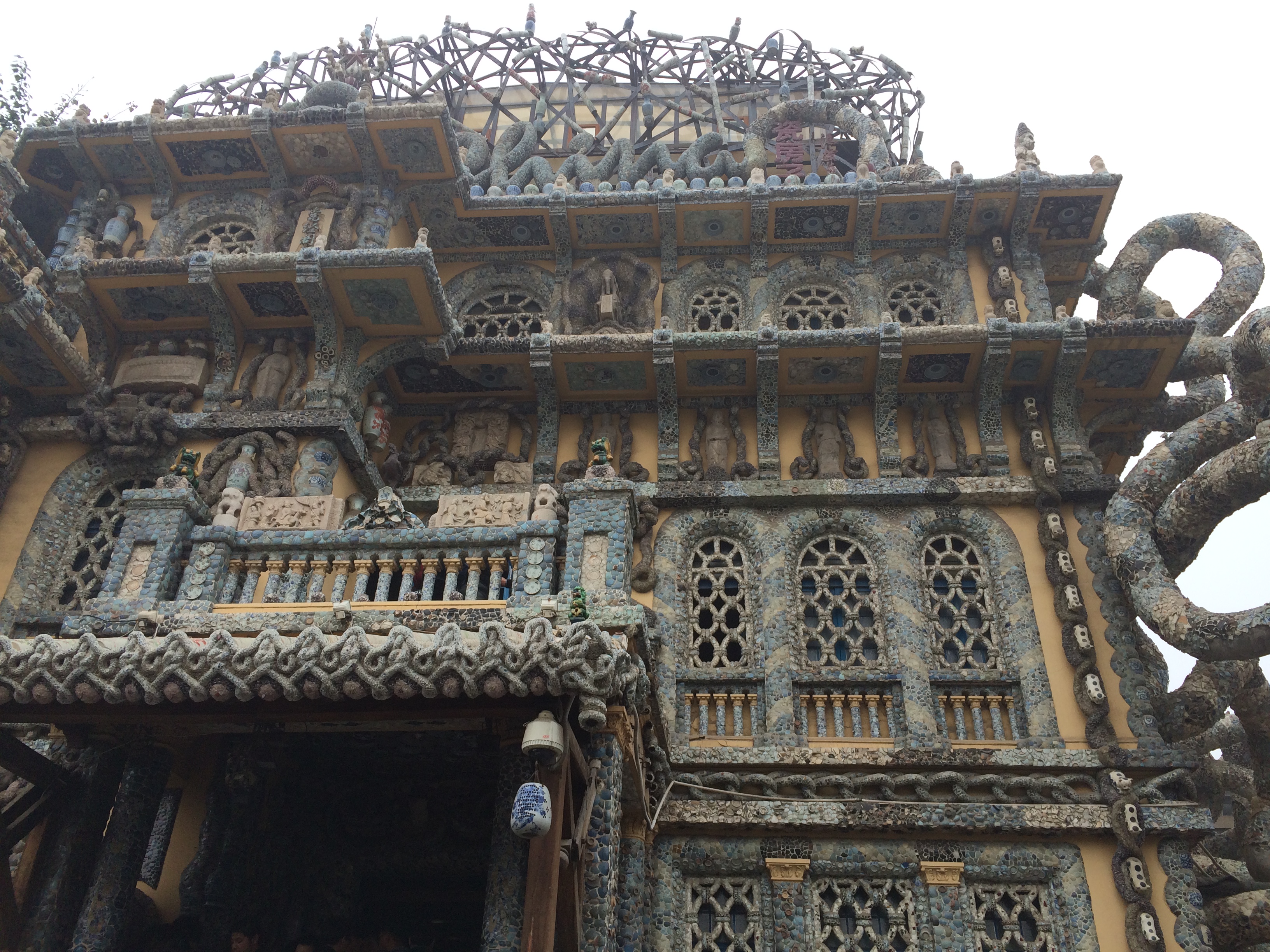
Porcelain House in Tianjin, which is slowly turning black in the smog.
In the pocket of my coat I have a peculiar souvenir of my recent visit to China. It’s a white face-mask with a little filter built-in to one side. It cost 2 Yuan, or about £0.2, and was given to me by a research student in Tianjin, who worked in my lab in Liverpool for a year. She bought it for me one Saturday when we were going out sightseeing in Tianjin because the air quality was so poor it caught on the back of your throat. The smog was so thick you could not see the tops of even modestly tall buildings.
This is a daily reality for millions of people in many of China’s cities. I reported in my blog entitled ‘Year of the Air: 2013’ [November 20th, 2013] about the number of deaths from pollution. PM2.5 that’s particles with a diameter less than 2.5 microns are damaging to human health. While I was in Beijing the level of PM2.5 was 144 micrograms per cubic metre, compared to 13 at home in Liverpool. My student’s mother had visited her while she was in Liverpool and I asked what she liked most during her visit – the fresh air was her reply.
I can’t really remember smog in England though I do remember buildings in the city centres being gradually cleaned because the smog had turned them black. And I remember shortly after I finished my PhD, being shown by a collaborator in the Pathology Department, the lungs from a recent post-mortem – they were grey-black from the smog!
The scale of the problem is difficult to grasp. Tianjin is a provincial city about 30 minutes by bullet train south-east of Beijing with a population of 14 million people, almost twice that of London, and 2.4 million cars. The smog is generated by pollution from factories, power-stations and cars. Hybrid cars could make a difference but there are none because they are too expensive, a Beijing colleague told me as he drove me in his brand new Volkswagen Passat. Plug-in cars would not solve the problem because the electricity would come mainly from coal-fired power stations, so the pollution would be simply moved elsewhere.
China needs clean energy, fast and lots of it. In 2011 China’s installed electricity generating capacity was about 1TW (Tera Watts or 1 with 12 noughts after it), of which about 2% comes from China’s 21 operating nuclear power plants. Typical modern nuclear power plants take years to build and generate around 1,000 MW; perhaps we should be considering the small-scale mass production of medium-size modular power plants. Huge, complex, reliable aeroplanes are made in this way, for instance the current Airbus A380 is production rate is about 25 per year. So why not medium-size nuclear power plants? Mass-production would also make decommissioning cheaper since it not be a bespoke process for each plant.
Maybe now that the Lockheed Martin’s Skunk Works have turned their attention to developing a fusion reactor, power-stations will be produced like airliners before I retire.
Sources:
http://aqicn.org/city/united-kingdom/liverpool-speke/
BTW – My pathology colleague and I were interested in whether people with osteoporosis could break their hips and fall, rather than the usual assumption of falling and break their hips. See:

Photo credit: Isobel
Whoosh! The unexpectedly exhilarating experience of standing on the kerb as more than a hundred cyclists raced past less than an arm’s length away during Stage 1 of the Tour of Britain on a beautifully hot sunny day. We had walked from our house down to the finish line adjacent to Liverpool’s waterfront and watched from behind crowd-control barriers as the riders raced past on a couple of the eight laps of the course around the city. The crowds, big screens and team buses at the finish line created a party atmosphere; however it was much more exciting being close enough to feel the riders’ slipstream when we watched in the quieter street next to Cain’s Brewery where there were no barriers and fewer spectators. It was thrilling on the last lap when the pelaton caught up with break away leaders and they all sped downhill in a single charge.
Of course the bikes are marvels of light-weight engineering and make excellent everyday engineering examples for students but we were more fascinated by how the teams tessellated eight or more spare bikes onto the roof of their support cars that cruised along behind them!
For Everyday Engineering Examples in Dynamics see lesson plans D6, D7 and D11; and in Mechanics of Solids see S2, S3, S7 and S8 for a unicyclist!
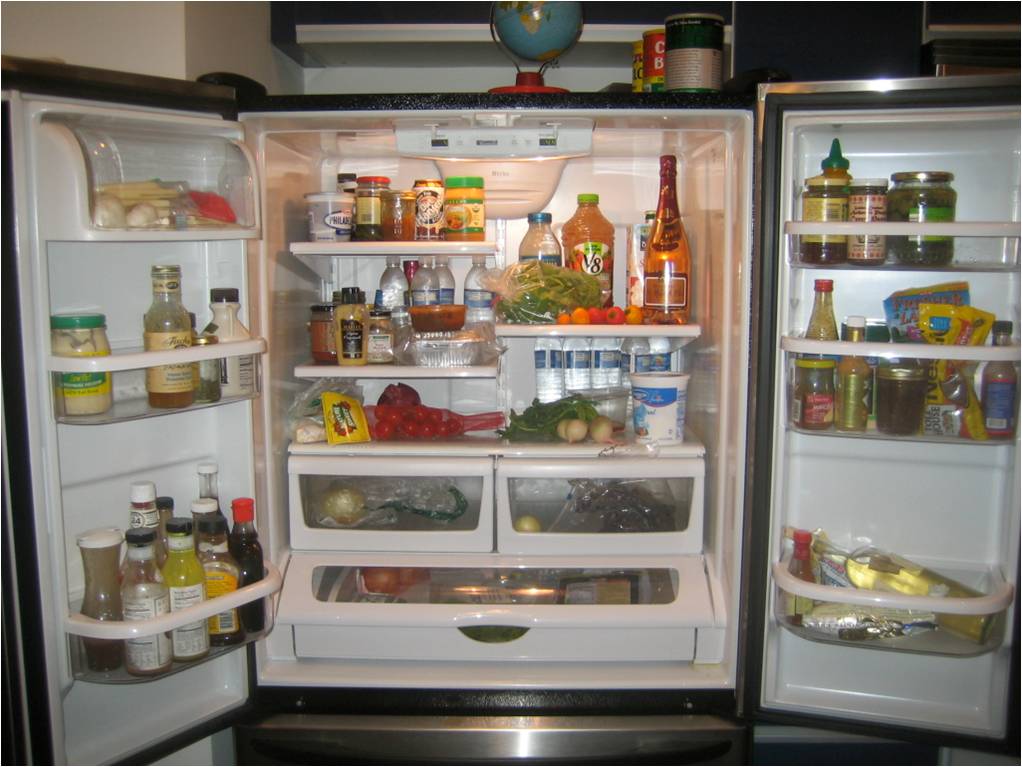 Many people are in vacation mode at the moment. In some organisations it is impossible to hold meetings because of non-overlapping holidays, unless of course you work in countries where everyone goes on holiday at the same time – try getting in or out of Paris on certain weekends in August! We have been away already and when we got back home one question that was asked is ‘What was the fridge/freezer doing while it was set on vacation mode?’ Fridge and freezers are one of the largest consumers of power in most households so saving energy while we are away on vacation makes sense and there are a number of strategies adopted by different manufacturers. The most common one is to raise the temperature of the fridge compartment to around 39°F or 4°C which is just cold enough to prevent bacterial growth. Energy movement due to heat transfer is proportional to the temperature difference. Hence, if the temperature difference between the fridge and its surroundings is reduced then there will be less heat transfer into the fridge and less energy will be expended to remove it and keep the contents cold. Of course the door being shut thoroughout the vacation helps.
In normal use, when we open the door there is heat transfer into the fridge from the warmer room which raises the energy level inside the fridge. This energy is stored as internal energy in the air and fridge contents and temperature is a measure of this internal energy level, i.e. the temperature goes up. The fridge has to perform work to remove the internal energy and reduce the temperature. The situation is exacerbated by the light inside the fridge which comes on when the door is opened because the light bulb generates heat, this is the basis of Everyday Engineering Example about the extra cost of running of a fridge when the light stays on permanently because the switch is broken.
Back to vacation mode for a moment, most fridge/freezers also de-activate the automatic defrost function in vacation mode as well, to save energy.
Sources:
Alison for asking the question – thank you.
Information on safe food storage – Food Safety and Inspection Service
 Realize Engineering