Category Archives: Soapbox

Silence is golden

118-1804_IMGThe digital age has led to us being overwhelmed with sources of information and entertainment.  It is unfashionable to suggest that it might be unproductive to take advantage of multiple data streams to interact with the virtual world, listen to your favourite music and study simultaneously.

However in 1973, Kahneman proposed that the amount of attention that an individual can deploy at any time is limited.  It is known as the ‘capacity model of attention’ and is based on the assumptions that attention can be freely allocated to activities based on their arousal level and that your total attention is finite.  The model has been used to explain research findings on the effect of background television on cognitive performance.  While recent research has demonstrated that students read and study better in silence; though if they must listen to music then certain types are better than others, for instance light classical music has a less deleterious effect than hip hop music – maybe because it has a lower arousal level.

So multi-tasking is not conducive to high quality output or efficient working.  Many people have arrived at this conclusion by the time they graduate from University or have spent a few years in a mentally demanding job.  However, it is an uphill task to convince young people that they would perform better and finish tasks faster without the distractions made readily available by the digital age.

Or that is safer not to cross the road while listening to music and texting your friends!

Sources:

For many references to the research literature see Chou, P. M-T., Attention drainage effect: how background music effects concentration in Taiwanese college students, Journal of Scholarship of Teaching & Learning, 10(1):36-46, 2010. http://josotl.indiana.edu/issue/view/158

Kahneman, D., Attention and effect, Englewood Cliffs, NJ: Prentice Hall, 1973.
Knowledge-economy

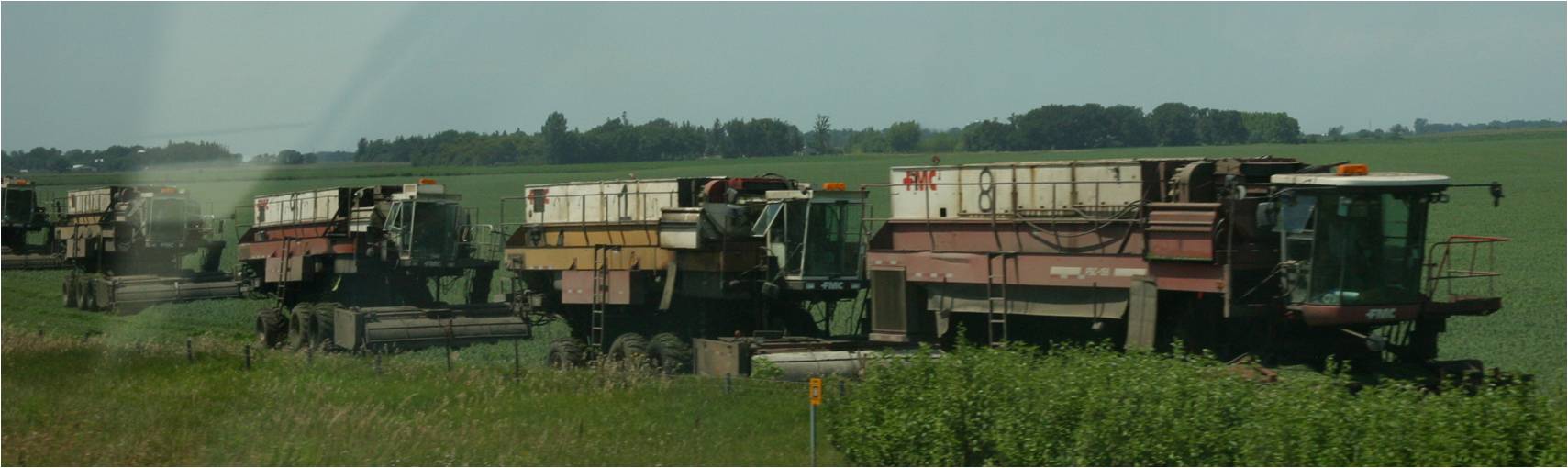
bigagSmall landholding farmers often have a wealth of local knowledge about their landscape and crop varieties that allows them to deliver food to the mouths of local customers more efficiently than industrial agriculture [see my post entitled ‘Productive Cheating on November 25th, 2013].  This has been termed ‘knowledge-based agriculture’ as opposed to the ‘energy-based agriculture’ used by agri-business with its dependence on fossil fuels and chemical fertilizers, which are also fossil fuel based.  Mark Bittman [in the New York Times on October 15th, 2013] argues it is easier to achieve sustainable food production using a knowledge-based rather than an energy-based approach.

The same is true of engineering design for sustainability.  Engineers need to exploit their creativity and knowledge to generate elegant designs with minimal ecological footprints, i.e. designs need to be knowledge-based or intensive rather than energy-intensive.

Politicians are fond of extolling the virtue of having a knowledge-based economy. I am not sure many of them would articulate it in terms of knowledge-based agriculture or engineering, as I have above, but it is probably the best available route to a sustainable society.

Happy New Year to all my readers and followers.

Source: http://www.nytimes.com/2013/10/15/opinion/how-to-feed-the-world.html?ref=markbittman&_r=0

Hiding in the basement

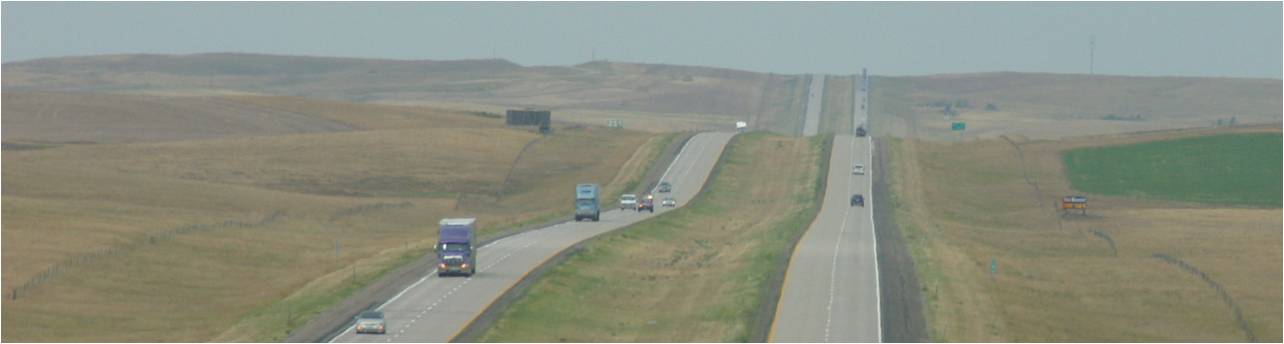
us highwayWhen we lived in the USA, I remember seeing billboards along the Interstate with messages from FEMA telling us ‘Be Ready’, to prepare, to plan, and to stay informed.  I was never quite sure what we were meant to be ready for since we lived in rural Michigan where we were fortunate not to experience violent weather and to be far from industrial plants that might explode and shower us with chemicals or radiation.  The billboard advertised the FEMA website [www.ready.gov] which contains very little factual information about radiation but does imply you should seek shelter in the basement of tall buildings in the event of a nuclear accident. Some commentators have suggested that the psychological effects arising from fear of nuclear radiation can cause more health issues than the dosage received especially for those not in the immediate vicinity of an incident.  So, knowing more about radiation in advance of an incident would be helpful and might also dispel many of the fears that cause opposition to nuclear energy.

So, does sheltering in a basement offer reasonable protection?  Well, radiation is produced when radioactive materials decay and their atoms release protons and neutrons from their nucleus plus some of the electrons that orbit the nucleus.  The protons and neutrons cluster together to form alpha particles (actually Helium nucleii) that are relatively massive and can stopped by a sheet of paper.  The electrons, known as beta radiation, whizz out at high-speed but can be stopped by a thin sheet of Aluminium.  High-energy photons are also released with the electrons and are known as Gamma radiation, which requires a sheet of lead or a considerable thickness of concrete to stop them.

So sheltering in the basement is a good idea especially if the building above contains a substantial amount of concrete.

Sources:

http://www.ready.gov/nuclear-power-plants

David Ropeik, Fear vs. radiation: The mismatch, in the International New York Times, Tuesday October 22, 2013. http://www.nytimes.com/2013/10/22/opinion/fear-vs-radiation-the-mismatch.html?_r=0