Category Archives: Soapbox

Financial crisis

I was in Germany for a progress meeting of a research project last week.  There was talk in the coffee breaks about the financial crisis in Cyprus.  There seemed to be recognition amongst the Germans present that Germany has to assist the Cypriots and other EU member states in financial difficulty.  One reason cited was the Cypriots and other EU nations are consumers of the products of German manufacturing industry including cars, washing machines and pharmaceuticals, and Germany needs customers for its manufactured goods.  Of course, Germany is rich, at least in part, due to its engineering and manufacturing prowess.

In a similar way, during the 19th and early 20th centuries, Britain grew rich from its manufacturing industries.  Some of Britain’s current economic woes derive from its neglect of these wealth-generating industries.  A recent report [http://www.timeshighereducation.co.uk/news/graduates-in-stem-need-to-rise-by-half/2002594.article] suggests that the UK needs to train an extra 40,000 graduates in science and engineering every year just to maintain the status quo in this sector of the economy which is a 50% increase over current levels.  I suspect that the UK is typical of many European countries.

Is it time that so-called ‘bail-out’ and ‘bail-in’ packages for countries included strategies for stimulating and supporting wealth creation industries rather than just rescuing those that have gambled with other people’s wealth?

Two Cultures

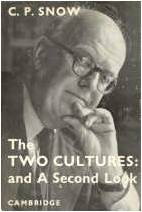
cpsnowThe term ‘Two Cultures’ was coined by Sir Charles Snow more than fifty years ago in his 1959 Rede Lecture to describe the gulf that existed then and persists today between scientists and non-scientists.  He equated not knowing the second law of thermodynamics to never having read anything by Shakespeare.  A number of my posts have referred to the Second Law of Thermodynamics because it explains why engines run and chemical reactions occur but to quote Peter Atkins, it is also ‘the foundation for understanding those most exquisite consequences of chemical reactions – acts of literary, artistic and musical creativity that enhance our culture‘.

Snow, C.P., The Two Cultures: and A Second Look, Cambridge University Press, Cambridge, 1964.

Atkins, P., The Laws of Thermodynamics –  A Very Short Introduction, Oxford University Press, Oxford, 2010.

Something for nothing?

Let’s try a thought experiment, following on from my previous post (Beyond Zero on 20th February, 2013).  Imagine two equal amounts of matter, A and B at -350 Kelvin and 350 Kelvin respectively.  We would expect heat to flow from the hot one, that’s B to A, the cold one.  This would cause the internal energy of B to decrease with a corresponding rise in the internal energy of A so that B gets colder while A gets hotter, i.e. they both move closer to absolute zero with corresponding decreases in entropy.  The Second Law of Thermodynamics does not allow this to happen and in fact the reverse would occur, i.e. heat would flow from the cold one A to B, lowering the temperature of A and raising the temperature of B so that they both move away from absolute zero with corresponding increases in entropy.coldgraph2

IF we could actually make this happen then we would able to design engines with efficiencies higher that 100%.  One corollary of the Second Law of Thermodynamics is that heat cannot be converted into work without some of the heat being wasted or lost as entropy.  In a power station, heat is taken from a hot source (e.g. a nuclear reactor, solar concentrator or gas furnace) and some of it converted into shaft work, which turns a generator to produce electricity, while the remainder is dumped into a cold sink usually the environment via cooling towers.  However, if our cold sink was at a negative temperature on the Kelvin scale then we could take heat from the cold sink and the hot source at the same time!  Why aren’t we doing this?  Well, we don’t have any naturally occurring cold sinks at below zero Kelvin and to create one uses more energy than we would gain in our super-efficient power station – that’s the Second Law kicking in again.  So you can’t have something for nothing.

Lincoln on equality

I watched Steven Spielberg’s movie ‘Lincoln’ recently.  Lincoln is portrayed as quoting Euclid on equality: ‘Things that are equal to the same things are equal to each other’.  This is from Euclid’s book ‘Elements’ which was in common use until modern times as a mathematics textbook and is believed to have sold more copies than any other book besides the Bible.  In the movie Lincoln extends the meaning of this first of Euclid’s ten axioms from mathematics to embrace the equality of men.  Since I am teaching thermodynamics at the moment, I was struck by its similarity to the zeroth law of thermodynamics, which states that ‘two systems in thermal equilibrium with a third system  are also in thermal equilibrium with each other’.  The concept of the zeroth law is sometimes accredited to Rankine who lived in the middle of the 19th century, or more than two thousand years after Euclid (380BC – 260BC).  It is reputed to be called the zeroth law because it was only recognised as being of fundamental importance to thermodynamics after the first and second laws were well-established and to rename them would have caused confusion.  The zeroth law allows temperature and temperature scales to be defined.  It seems to me to be a special case of Euclid’s first axiom ‘Things that are equal to the same things are equal to each other’, and that it is remarkable that it took the fathers of thermodynamics so long to recognise it, especially when they were probably brought up on Euclid’s ‘Elements’ as their mathematics textbook at school.