Category Archives: Learning & Teaching

Slam dunk

CIMG0176Here is another lesson plan for use in teaching engineering science.  This one is based on the stress generated by a slam dunk in basketball.  Sports provide many potential Everyday Examples but caution needs taken in selecting them because not all students are interested in or participate in sports.  Research has shown that the context of examples should be familiar to all students in a class.  Otherwise students will be worrying about the context and will not be listening to the explanation of the engineering science.  Examples will be perceived as tedious intellectual exercises unless that allow questions to be posed that have interesting or useful answers.  Student motivation is closely linked to their perception of the usefulness of the exercise.

When Everyday Examples are set in a familiar context and yield fruitful outcomes, then the level of student engagement and learning is not influenced by the level of difficulty.  So there is no need to idealise a scenario to an elementary problem prior to applying engineering principles.  And here is the proverbial slam dunk, instructors who successful incorporate appropriate Everyday Examples into their lectures are likely to be rated more highly by their students, regardless of the associated level of difficulty.

Lesson plan: 5EplanNoS9_eccentric_loading

See the Everyday Examples page on this blog for more lesson plans and more background on Everyday Examples.

March Madness

basketballSome of you will be familiar with ‘March Madness’ which starts next week.  It is a couple of weeks in March when US universities play a knockout basketball competition.  At Michigan State University, where I used to be a professor, there would be huge disappointed if we did not make it into the final sixteen and great excitement if we were in the final four or even the final.

Basketballs can be a useful, and in the USA in March topical, prop to use in teaching dynamics.  In the lesson plan below angular momentum is used to investigate a basketball rolling over an obstacle, which could be someone’s foot rather than wooden block used in the example.  Of course, with 91 days to go until the start of the FIFA World Cup in Brazil, you could easily switch to a football.

5EplanNoD9_Impulse&momentum_methods

See the Everyday Examples page on this blog for more lesson plans and more background on Everyday Examples.

Smart machines

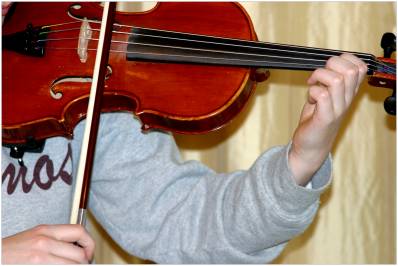
violinMy enthusiasm for the concert we went to some weeks ago is only just beginning to fade [see Rhapsody in Blue posted on 5th February, 2014].  I have one of Michel Camilo’s pieces still going around in head [listen here].  On the subject of playing the piano, people are trying to build robots that can play the piano using rubbery fingers although they have had more success with a robot that can play a violin [see this Youtube clip].

These robots might be clunky or primitive compared to a maestro like Michel Camilo, but nevertheless smart machines are coming.  Professor Noriko Arai is developing a computer, called Todai-Kun, that could ace college entrance exams.  She hopes that by 2021 Todai-Kun will pass the entrance exam for Tokyo University, which is the top university in Japan.  It is tough for graduates to find jobs at the moment, so imagine what it will be like if computers are as smart as graduates!

Mechanisation destroyed jobs on the farm, robots have replaced assembly-line workers and now smart computers are going to replace white collar workers.  In the future, if you want a well-paid job you are likely to need niche skills that involve a combination of creativity, innovation, problem-solving and leadership.  I am probably biased but that sounds like a professional engineer.

In the same context, David Brooks has suggested that, what he calls the ’emotive traits’ will be required for success, i.e. a voracious lust of understanding, an enthusiasm for work, the ability to grasp the gist and an empathetic sensitivity for what will attract attention, which with the exception of the last one also sound like the attributes of a professional engineer.

I have used the violin playing robot as the focus for a 5E lesson plan on the Kinematics of Rigid bodies in 3-dimensions see: 5EplanNoD10_Kinematics_of_rigid_bodies_in_3D .  Not quite an ‘Everyday Example’ but one with which many students can connect.

Sources:

http://www.nytimes.com/2013/12/30/world/asia/computers-jump-to-the-head-of-the-class.html?_r=0

http://www.nytimes.com/2014/02/04/opinion/brooks-what-machines-cant-do.html?_r=0

Floods: an everyday example

floodingI wrote this post before going to the concert at the Philharmonic Hall which inspired the post on February 5th [Rhapsody in Blue].  So, this post is not quite as timely as planned originally but it is still raining frequently here and the Somerset levels remain flooded.

Since before Christmas news bulletins in the US and UK have been dominated by reports of extreme weather events.  Earlier this month the sea on the south coast of the England swept away a substantial length of the main railway line between London and the South-West of the country.  Large areas of the south of the UK have been flooded by storms that rolled across the Atlantic having first caused disruption in North America.  There seems to be plenty of everyday evidence from these events that our climate is changing and this appears to have been confirmed by the Chief Scientist at the UK Metrological Office.

The Intergovernmental Panel on Climate Change has stated ‘Warming of the climate system is unequivocal, and since the 1950s, many of the observed changes are unprecedented over decades to millennia.  The atmosphere and oceans have warmed, the amounts of snow and ice diminished, sea level has risen, and the concentrations of greenhouse gases have increased.’  They go on to say ‘It is extremely likely that human influence has been the dominant cause of the observed warming since the mid-twentieth century’.  Despite these assertions, our governments have been unable to make significant progress towards limiting global warming to 2 degrees Celsius compared to pre-industrial levels.  The delegations from most of the developed countries walked out of talks at the Warsaw climate conference last November, followed by representatives from the Green groups and NGOs the next day.  As a consequence, Kofi Annan [Climate crisis: Who will act? in International NYT  November 25, 2013] has called for a global grass-roots movement to tackle climate change and its consequences.  We need to act as individuals whenever we can to reduce global warming and mitigate its impact both directly in our personal and professional lives and indirectly by lobbying our political and industrial/commercial leaders.

In the UK, politicians and the media are beginning to talk about the need for engineers to protect us against flooding and some engineers are responding by highlighting that the cost will be very high and that if climate change continues then we will have consider abandoning some areas.

At a simpler level, those us working in the classroom can use the flooded roads and overwhelmed drainage systems to create topical, and perhaps increasingly everyday, examples focused on flow in drainage ditches, gutters etc., as in the lesson plan below.

5EplanNoF10_open_channel_flow

See also the Everyday Examples page on this blog for more lesson plans and more background on Everyday Examples.